Click here to sign up for our free daily newsletter
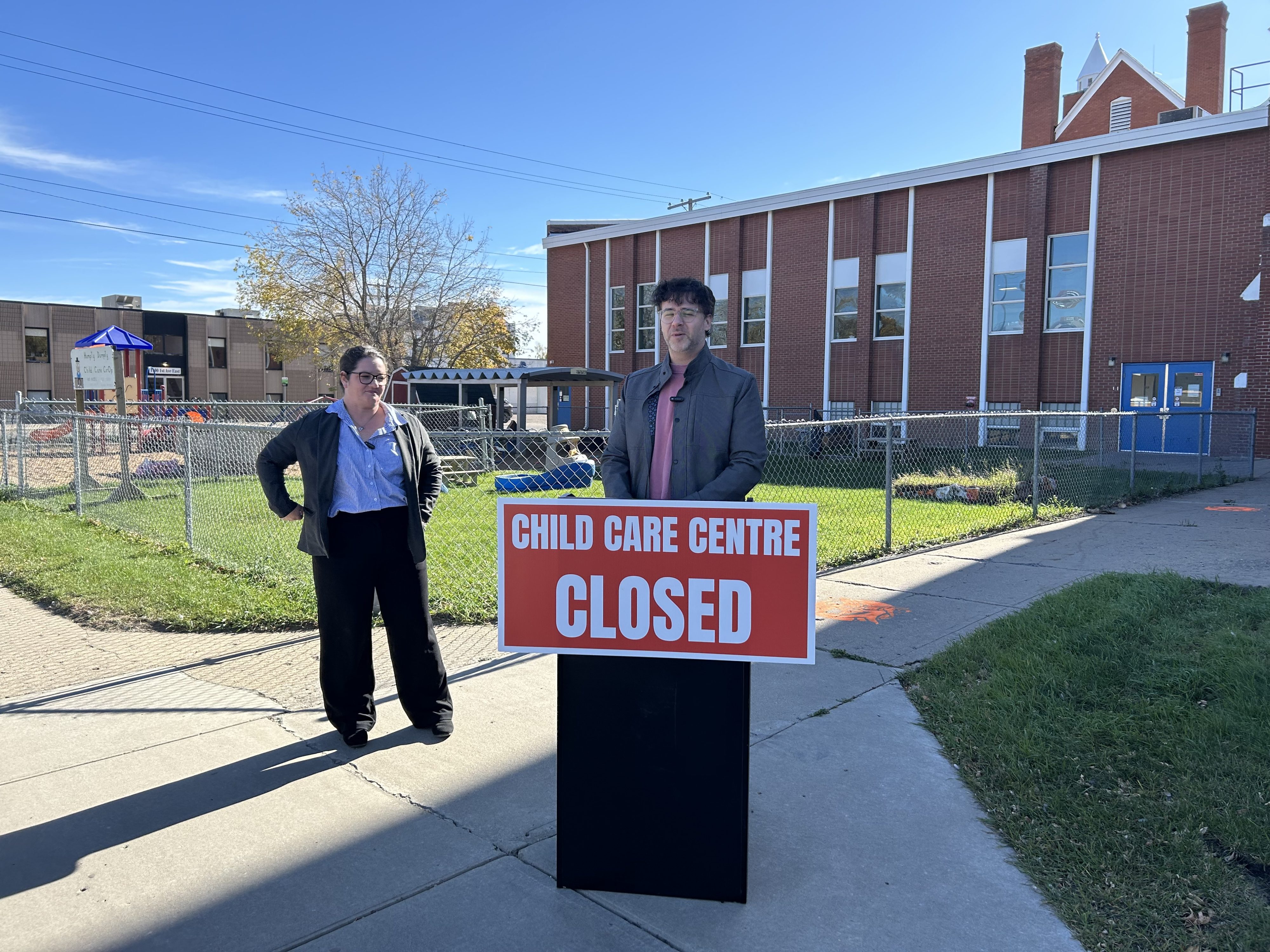
Cara Werner (left) and Kent Peterson address the provinces' childcare cuts in front of the Humpty Dumpty Child Care Centre in Prince Albert. (Image Credit: paNOW Staff/Nick Nielsen)
sask childcare

CUPE calling for changes to Saskatchewan childcare

Oct 9, 2026 | 3:03 PM

Child care advocates brought their concerns about affordability, staffing and access to Prince Albert on Thursday, wrapping up a provincewide series of town hall meetings.

CUPE Saskatchewan and Child Care Now organized the meetings to discuss provincial funding changes introduced July 1 and hear from families, educators and providers.

CUPE Saskatchewan president Kent Peterson said workers are concerned about the pressures facing the sector.

“Our members work on the frontline of Saskatchewan’s childcare system. When things are bad, we hear about it, and things are bad in childcare in Saskatchewan. We are here today because childcare is in crisis.”

Cara Werner, chair of Child Care Now Saskatchewan, said the changes have not addressed the difficulties families face finding care.

“Families are already struggling to find childcare; wait lists remain long across the province and in some communities licensed spaces simply aren’t available,” she said.

Werner said providers are also struggling with operating costs, including food, utilities and wages. She argued funding needs to better reflect the cost of delivering care.

Her concerns follow those raised by Prince Albert daycare operators in July, when they warned changes to provincial grants could reduce flexibility for families and put additional pressure on their budgets.

One change limits monthly Parent Fee Reduction Grants based on enrolment and the number and types of licensed spaces at a facility. Providers can still share spaces among families within their regulated capacity, but the province says grants will not cover enrolment exceeding the total number of licensed spaces.

Werner said she is particularly concerned about the implications for rural communities, where families may already have limited options.

“It’s very difficult to hire ECEs in rural Saskatchewan, so we see struggles every day,” she said.

She also questioned whether changes to training support would make it harder to attract and retain educators.

For the 2026–27 academic year, the province is focusing tuition-free early childhood educator training opportunities on Level I qualifications, saying the approach is intended to help more people enter the workforce.

Werner said the cost of further education and concerns about wages could discourage people from pursuing a career in the field.

Province says changes support sustainability

The provincial government said its changes are intended to address funding shortfalls and support the long-term sustainability of regulated child care.

In a statement provided to paNOW for its July coverage, the Ministry of Education said it was shifting from rapid expansion toward stabilizing the system for operators and families.

The ministry said the changes followed consultation with providers and that it would continue working with operators to answer questions about their circumstances.

The province’s current information says eligible families continue to pay a base child care fee of $10 a day or $217.50 a month, with government grants supporting the reduced parent fees.

It also says facilities with the lowest approved fee schedules are receiving increased grants to help reduce funding differences across the sector.

—

nick.nielsen@pattisonmedia.com