Click here to sign up for our free daily newsletter
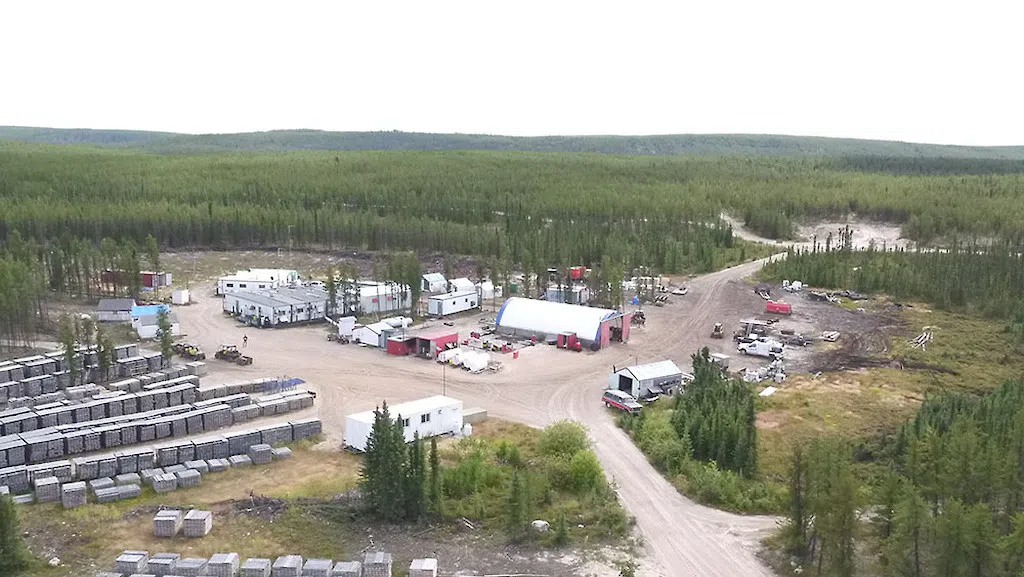
Denison's Wheeler River uranium mine will begin construction soon after being approved by the Canadian Nuclear Safety Commission. (Image Credit: Denison Mines website)
Last major hurdle cleared

Nuclear Safety Commission greenlights Wheeler River uranium mine  

Feb 20, 2026 | 6:02 AM

The Canadian Nuclear Safety Commission has given the green light to a planned uranium mine in northern Saskatchewan, the last regulatory hurdle needed before the mine could start construction.  

According to Denison Mines, Wheeler River is the largest undeveloped uranium deposit in the eastern portion of the Athabasca Basin and getting the NSC approval now allows them to start construction, which they will do immediately.  

“The Commission decision to approve the EA and issue the licence represents a landmark achievement for Denison, as well as our staff, shareholders, Indigenous partners, and other stakeholders in the Project.  We thank the Commission and CNSC staff for promptly delivering the positive results of the recently completed public hearing and extensive federal regulatory review process,” said David Cates, president and CEO of Denison.  

Hearings were held in Saskatoon in December and Gatineau, Quebec in October. The license is valid until February 28, 2031. 

Denison’s application is split into two parts, one for the Phoenix In-situ recovery and the second called Gryphon.  

This approval is for the Phoenix location, which will be the first Canadian uranium mine to be approved for in situ recovery.  

The process is considered more environmentally friendly and involves injecting solutions into the ground where the uranium is, dissolving it and then pumping it to the surface as a liquid.  

Advantages include very little surface disturbance and no waste products like tailings or waste rock. Traditional mining methods mean digging the mineralized rock up, breaking it up and then treating it to get the minerals out.  

“Owing to the use of the ISR mining method, Phoenix has the potential to generate strong economics while also achieving a superior standard of sustainability when compared to conventional mining methods,” said Cates.  

“With an approximately 2-year construction timeline, the timing of this approval means that the Project remains on track for first production by mid-2028.” 

In anticipation of the approval, Denison already awarded the construction project to Wood Canada Limited, an offshoot of a UK-based firm that designs and decarbonizes industrial assets around the world.  

The NSC commission approval is for construction activity. Before actual mining can proceed, Denison will need to submit one more application to the Commission and will need a hearing before being approved.  

One of the biggest advantages of the Wheeler River project is its proximity to the McLean Lake and Cigar Lake uranium mines, which means infrastructure like roads and electricity are already nearby.  

Provincial environmental approval was given in mid 2025. 

Canada is currently the world’s second largest producer of uranium, all of which is mined in northern Saskatchewan in the Athabasca Basin.  

susan.mcneil@pattisonmedia.com