Click here to sign up for our free daily newsletter
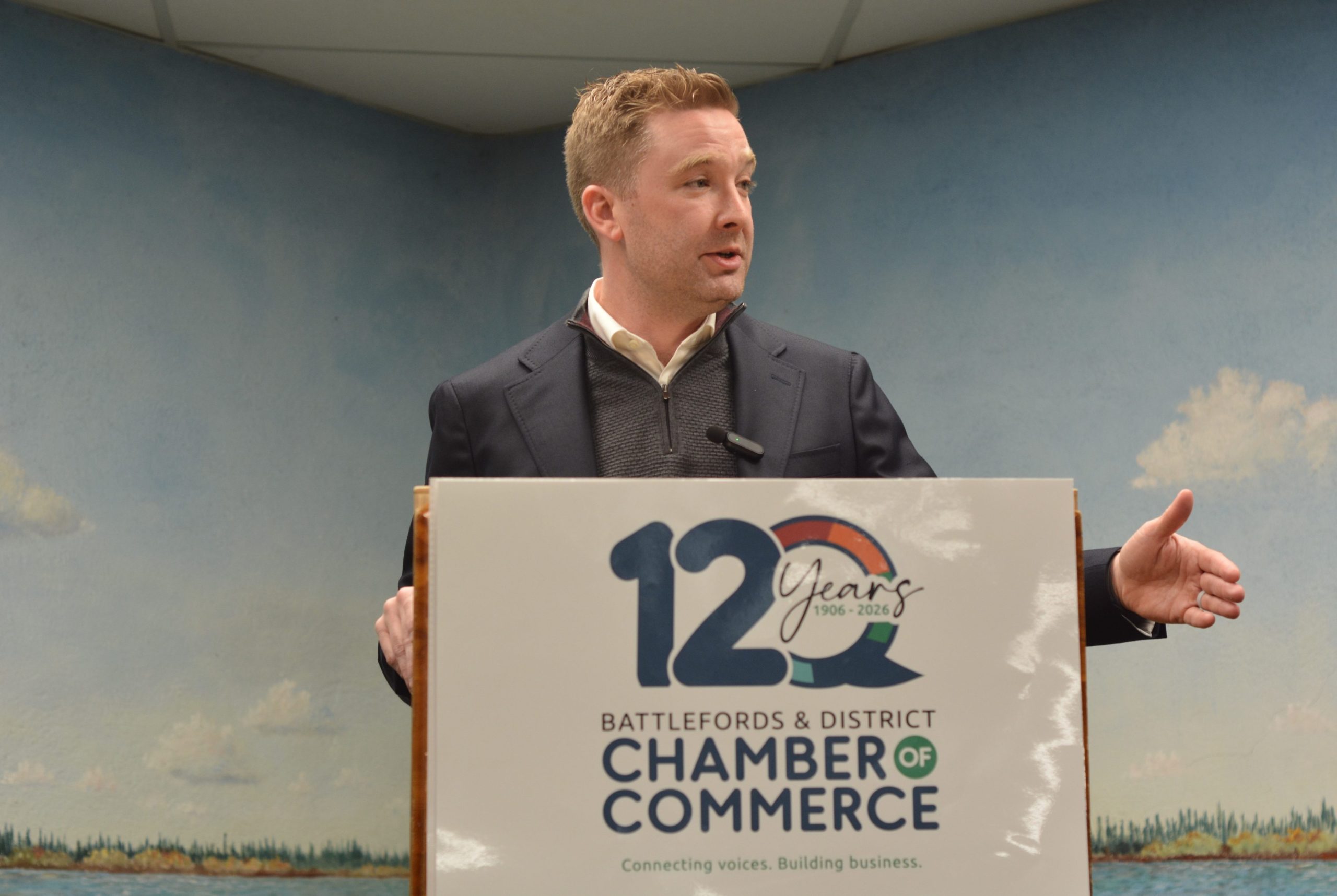
Battlefords MLA Jeremy Cockrill speaks at a previous Battlefords and District Chamber of Commerce event. (Image Credit: File photo/battlefordsNOW staff)
COCKRILL

Battlefords MLA highlights what 2026 throne speech means locally

Oct 30, 2026 | 4:43 PM

Expanded addictions treatment and more ways to access primary care could give Battlefords residents additional options for getting help, local MLA Jeremy Cockrill says.

Cockrill, also Saskatchewan’s health minister, highlighted 250 additional addictions treatment spaces promised province-wide in the Oct. 27 throne speech.

“Our government’s priority for those folks is to help them find recovery and help them get back to a better way of life in their community and with their families,” he said.

The additional spaces would bring the provincial total to 1,250, including 500 original recovery spaces and 500 previously promised treatment spaces. According to the speech, 412 of the previously promised spaces are operating, with all 500 to be operational by March 2027.

Cockrill said the expansion would build on existing treatment partnerships, supporting access to detox, treatment and care after treatment.

Planning is also underway for a complex-needs facility in North Battleford. The speech identifies North Battleford and Prince Albert as locations for facilities to stabilize people, including those with addictions who may be a danger to themselves or others. Cockrill said its opening depends on the location selected and work required.

He said compassionate intervention will roll out early in 2027 under the Compassionate Intervention Act passed during the previous legislative session, helping people with severe addictions who cannot decide to seek help and pose a danger to themselves or others.

Cockrill said the government expects to announce more about virtual care for the Battlefords in the coming weeks. He said additional ways to get medical advice, including outside normal business hours, could ease pressure on emergency departments.

He also anticipated possible nurse-practitioner contracts for the Battlefords in the near future. The speech says 54 nurse-practitioner primary care contracts established provincially are expected to serve more than 43,000 patients.

Planned legislation would allow several health professions to provide more services within their training. Cockrill pointed to ear-infection services and strep-throat testing at the Battleford Co-op pharmacy as an example, potentially saving patients an emergency visit or doctor’s appointment.

He said the Patients First Health Care Plan will be updated as existing commitments are completed and highlighted Saskatchewan training opportunities in occupational therapy, speech-language pathology and respiratory therapy.

“Like any good to-do list, you got to add more items on the list because there’s no finish line when it comes to improving access to healthcare.”

On community safety, Cockrill highlighted support for RCMP and First Nations policing, police and crisis teams, trafficking response teams and the Saskatchewan Marshals Service. He said community safety and economic development are recurring topics in discussions with local mayors.

The proposed Mandatory Testing and Disclosure Act would allow first responders or crime victims who reasonably believe they face exposure to hepatitis B or C, or HIV, following contact with another person to apply for court-ordered testing of that person.

Cockrill said the proposal would help affected people access care sooner or have greater certainty about potential exposure.

“We can’t remove all the dangers from their job, but this is one of those areas where we can help make their job hopefully a little bit safer.”

He also said constituents had requested additional safeguards around medical assistance in dying. The speech promises a Medical Assistance in Dying Additional Safeguards Act that would prohibit MAID for certain individuals, including people under 18 and those whose sole underlying medical condition is a mental illness.

Cockrill said the throne speech’s message of strength and steadiness reflects Saskatchewan’s efforts to maintain stability amid international uncertainty, citing wars, upcoming U.S. midterm elections and trade challenges. He said the province engages directly with trading partners.

“We don’t just wait for the federal government to do that on our behalf. We’re out there around the world advocating and really engaging on behalf of our agricultural producers, on behalf of our mining companies, forestry companies, manufacturing companies to really talk about what Saskatchewan has to offer and why they should trade with Saskatchewan and invest in Saskatchewan at the end of the day,” he said.

He said that approach helps Saskatchewan withstand international uncertainty and make further investments in services for residents.

“I think there are some incredibly exciting years ahead for our province, and certainly our region too.”

—

Kenneth.Cheung@pattisonmedia.com