Click here to sign up for our free daily newsletter
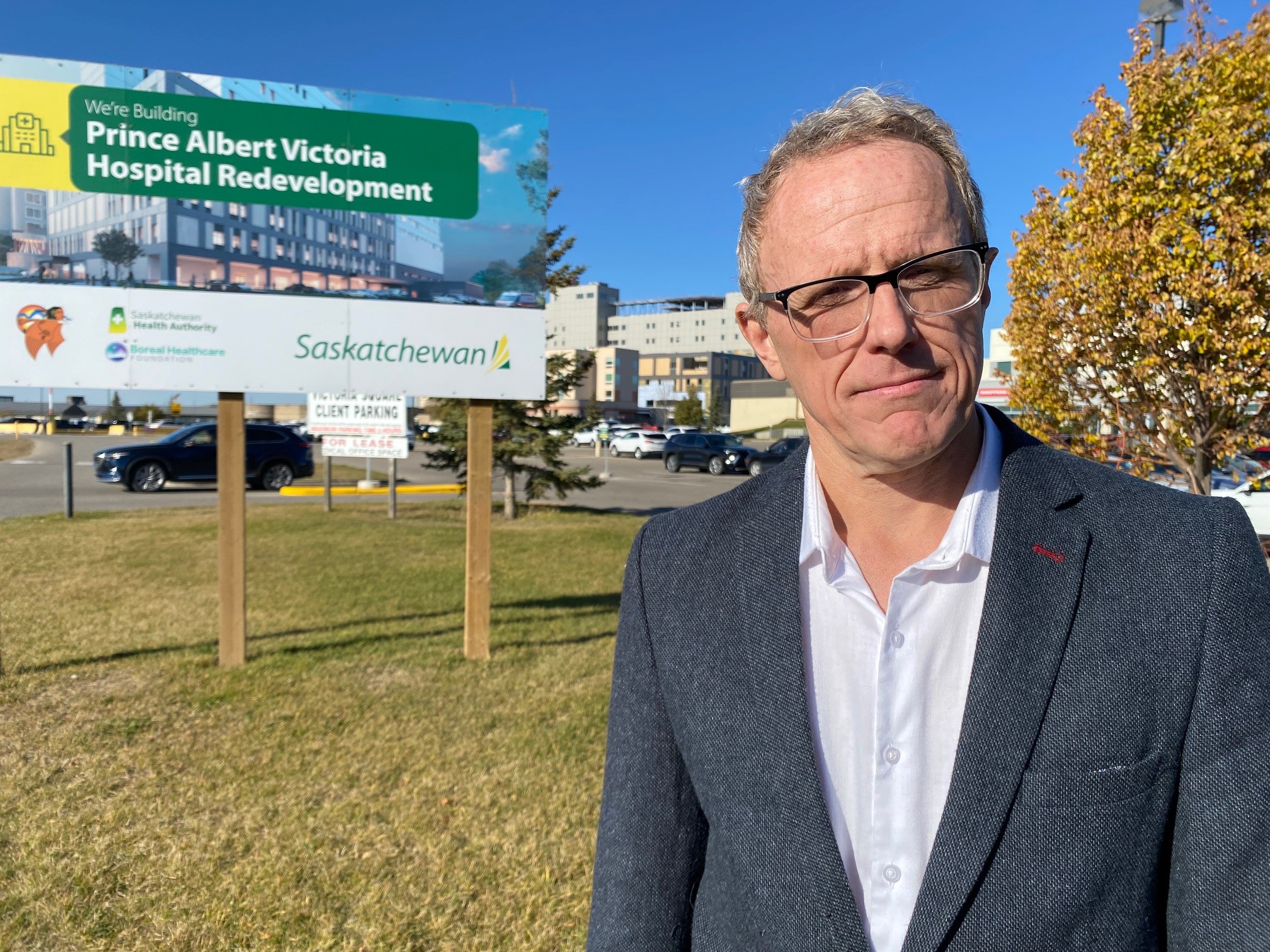
Sask NDP MLA Keith Jorgenson, Associate Shadow Minister for Health, spoke to reporters in Prince Albert Thursday about how the party would revitalize healthcare for residents in the area. (Image Credit: paNOW Staff)
Primary care

NDP pitches primary care teams to ease pressure on Victoria Hospital, northern Sask.

Oct 22, 2026 | 4:52 PM

Connecting more Saskatchewan residents with primary care teams would help ease pressure on hospital emergency departments, the provincial NDP argued during a stop in Prince Albert Thursday.

Keith Jorgenson, the Opposition’s associate health shadow minister, outlined how the party’s proposed healthcare changes could affect Prince Albert and northern communities as Victoria Hospital undergoes an expansion that will increase inpatient capacity by about 40 per cent. Staffing is expected to grow by more than 500 positions when the new acute care tower becomes operational.

Jorgenson’s visit came a day after NDP Leader Carla Beck unveiled the first phase of the party’s plan in Saskatoon.

“We have a plan to provide every single person here in PA with access to a primary healthcare provider so you can get the care that you need, when you need it, where you need it, right here at home,” Jorgenson said.


He argued that giving patients a regular place to seek treatment would help address health concerns before they require emergency care.

The proposal would connect residents with primary care teams responsible for coordinating their care based on where they live. Those teams would be linked to services such as home care, mental health and addictions treatment, diagnostics and specialists through health-care hubs.

Asked whether the promise meant every resident would have a family doctor, Jorgenson described teams of professionals working together, with patients seeing the provider best suited to their needs.

“So there might be a time when it’s most appropriate for someone to see a doctor and for a different situation, maybe it’s more appropriate that they work with a nurse practitioner or a pharmacist or what have you,” he said.

“But by having those people co-located, working together as a team, you get the most out of each profession.”

In its release, the NDP pointed to the Prince Albert Co-operative Health Centre Community Clinic as an existing example of team-based care.

The proposal also calls for expanded HealthLine 811 services, virtual care, community paramedicine and mobile nursing to improve access in rural, remote and northern communities. A connected health information system would allow patients and providers to access the records they need.

Work continues on the new acute care tower at the Victoria Hospital. This photo is from August 2026.
Work continues on the new acute care tower at the Victoria Hospital. This photo is from August 2026. (Image Credit: Boreal Healthcare Foundation/Facebook)

With Victoria Hospital expanding, Jorgenson was asked how an NDP government would recruit the additional doctors, specialists and nurses needed when the Saskatchewan Party government has struggled to fill positions.

He said the immediate priority would be keeping existing workers, arguing burnout, unresolved collective agreements and strained relations with the government are contributing to staff leaving.

Reaching agreements with health-care unions and listening to employees would help stabilize the workforce, he said, while team-based care would make better use of each profession’s skills.

“And lastly, we need to recruit … and we need to train more doctors,” he said.

Asked where the money would come from to support recruitment, retention and collective agreements, Jorgenson argued the province could redirect existing spending toward front-line care.

“So I think that in government, spending money is about choices,” he said.

He cited sending patients to Calgary for mammograms and spending on Saskatchewan Health Authority (SHA) administration as examples of expenditures he believes should be reconsidered.

Jorgenson did not provide a cost estimate, recruitment targets or a firm implementation timeline, saying changes to staff relations could bring short-term improvements while other measures would take months or years.

For smaller and northern communities, he also emphasized a commitment to maintaining care when a doctor or another provider retires or moves.

Under the proposal, he said, responsibility for finding a replacement would rest with the government and SHA rather than individual patients.

“It’s not their job to find a new healthcare provider. It’s the government’s job to find them a new healthcare provider,” he said.

Saskatchewan’s Minister of Health responded to the NDP’s healthcare plan through a post on his social media. Jeremy Cockrill said, “Carla Beck’s new healthcare plan comes with no real actions and a price tag she’ll maybe tell you later.”

“Assigning patients to a team by postal code doesn’t just magically create another doctor or nurse. You actually need people to deliver the care,” he said.

In an email to paNOW, the government wrote that since the launch of Saskatchewan’s Health Human Resources Action Plan, more than 7,500 health professionals have chosen to work in Saskatchewan.

“While the NDP has spoken about their “big, bold changes” to health care, they did not outline a plan to staff and recruit additional health care professionals.

Our government remains committed to ensuring residents have access to a primary care provider closer to home by 2028. Saskatchewan has added more than 1,300 physicians since 2007, including significant growth in both family physicians and specialists. We are also expanding the role of nurse practitioners through our primary care contracts. To date, more than 50 primary nurse practitioner contracts have been signed.”

In response to Jorgenson’s example of expenditures he believes should be reconsidered, including administrative costs within the SHA, the government said out-of-scope pay bands have not increased since April 2022.

“In 2025, the SHA reduced administrative costs by $10.4 million and moved those savings into frontline care, including the creation of 77 new and enhanced frontline positions and 47 clinical manager roles,” the government wrote.

—

panews@pattisonmedia.com