Click here to sign up for our free daily newsletter
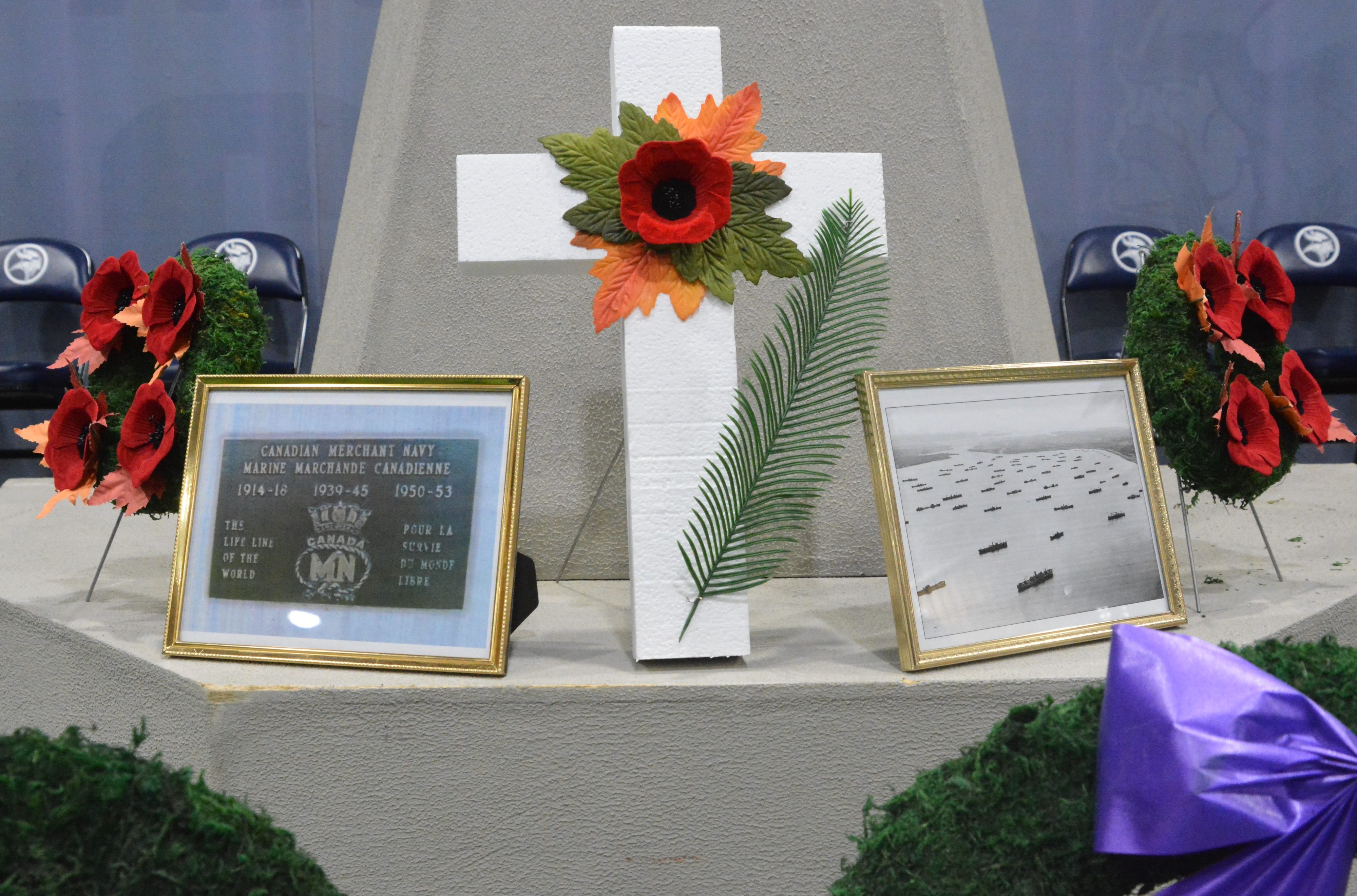
Framed images honouring Canada’s Merchant Navy are displayed at the base of the cenotaph during the Remembrance Day service at North Battleford Comprehensive High School in North Battleford on Nov. 11, 2026. (Image Credit: Kenneth Cheung/battlefordsNOW)
lest we forget

Risking their lives to keep others alive: North Battleford remembers Canada’s merchant navy

Nov 11, 2026 | 1:41 PM

“If war came, would you have enough non-perishable food and water to last 10 to 14, even up to 90 days? Not just for yourself, but also for your family, friends, and neighbours, and even for the stranger.”

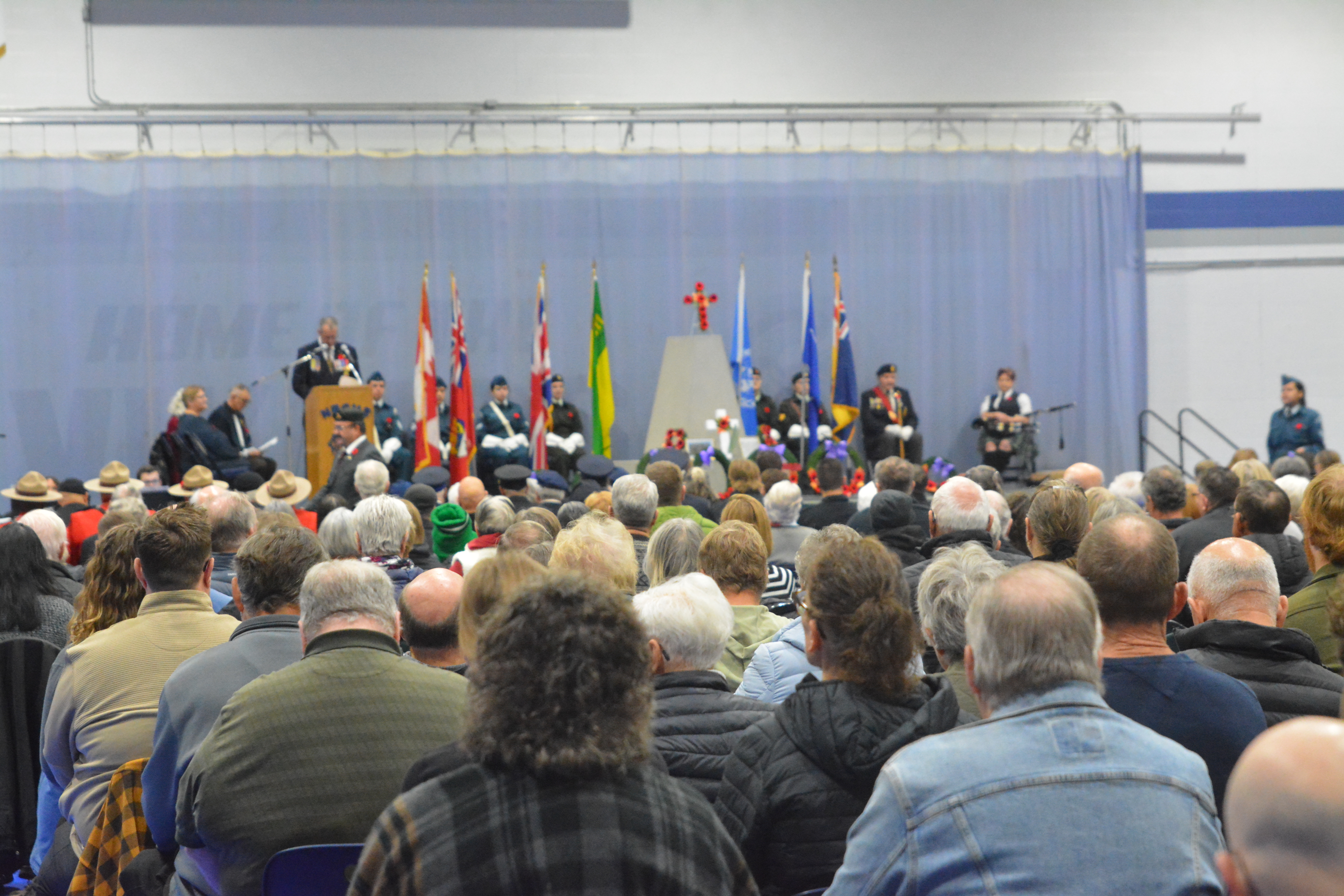
Rev. Trevor Malyon, chaplain of Royal Canadian Legion Branch 70, posed the question during the branch’s Nov. 11 Remembrance Day service in North Battleford.

From those basic needs, Malyon turned to the people who had risked their lives supplying them – the civilian mariners of Canada’s merchant navy during the Second World War.

Food, water, ammunition, medical care and fuel were necessary to keep armies operating, Malyon said. Without a reliable supply, troops would exhaust their rations, vehicles could be left stranded and wounded soldiers could not be evacuated or properly treated.

Malyon said Canadian merchant vessels made well over 25,000 voyages from North America to Britain, transporting military and civilian supplies.

Some of that cargo came from Saskatchewan. Wheat, barley, oats and animal products from the province were shipped to the United Kingdom, he said.

The ships also carried clothing, steel, aluminum and lumber, along with aircraft, tanks, trucks and munitions, he said. The supply effort required an expansion of the fleet: Canada had 38 oceangoing merchant ships when the war began, and Canadian shipyards produced 410 cargo ships by its end, according to Malyon.


(Image Credit: Kenneth Cheung/battlefordsNOW)

(Image Credit: Kenneth Cheung/battlefordsNOW)

Most people who served in the merchant navy took part in the Battle of the Atlantic, which he described as the struggle between the Allies and the Germans for control of the ocean.

German forces and their allies targeted Canadian convoys, Malyon said, seeking to cut off supplies and bring about surrender and defeat.

Crews faced mines, submarines and aircraft. Malyon said many slept with their life jackets on.

“Even though merchant crews were not compelled to sail on the dangerous ocean passages, most indeed did.”

His account of the merchant navy’s service also extended beyond Atlantic crossings. Canadian merchant seamen carried cargo to and from Africa, Asia, Australia, New Zealand, Europe and the Far East, he said.

Malyon spoke about the human cost of war in terms of the people who did not return and the families left behind.

“We remember the cost of war and ongoing conflict. The loss of fathers, mothers, daughters, and sons, who would not return, leaving broken families and lost love.”

For merchant navy veterans, the end of the war did not bring immediate official recognition, Malyon said. They were denied veterans’ benefits and recognition for many years, he said, and were officially recognized as veterans in 1992.

He also described Parliament’s designation in 2003 of Sept. 3 as a day to recognize the Canadian merchant navy’s contributions and sacrifice.

In remembering that service, Malyon drew a distinction between honouring those who died and celebrating the fighting itself.

“Remembrance is a solemn time when we do not glorify war, the battles, even the victories. But we remember and honour those who gave their life in service for their country.”

—

Kenneth.Cheung@pattisonmedia.com