Click here to sign up for our free daily newsletter
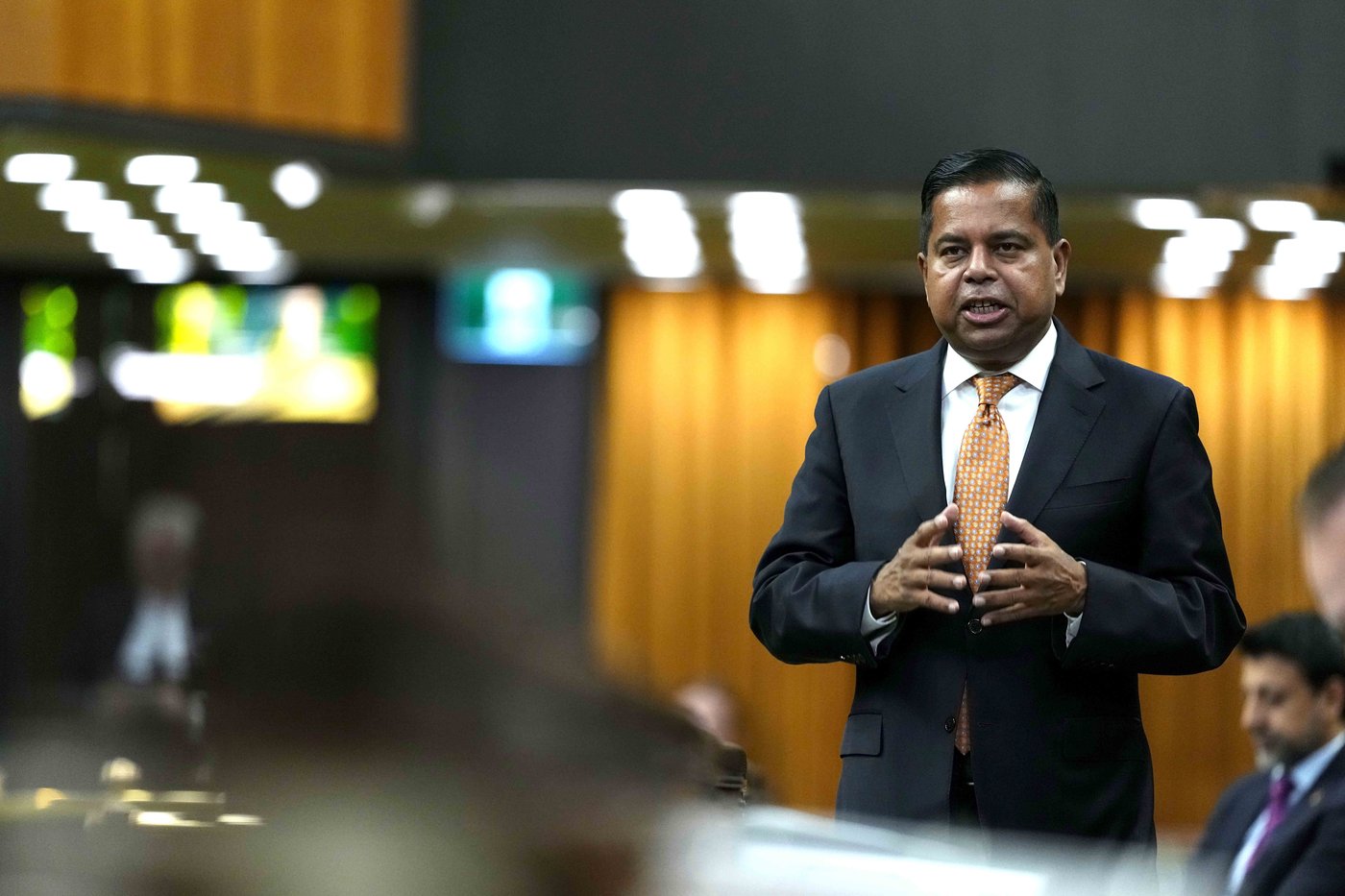
Minister of Public Safety Gary Anandasangaree rises during question period in the House of Commons on Parliament Hill in Ottawa on Friday, Sept. 25, 2026. THE CANADIAN PRESS/Justin Tang

Security screening mostly ‘unimpeachable’ but ‘there are gaps’: Anandasangaree

Oct 5, 2026 | 11:14 AM

OTTAWA — Public Safety Minister Gary Anandasangaree acknowledged gaps in Canada’s security screening process on Monday after confirming a Canadian charged with espionage was given a security clearance.

Anandasangaree was called to answer questions at the House of Commons national security committee, which is studying Canada’s security screening process following the arrest of a Canadian NATO intern in Belgium in July.

The minister said the woman was given a security clearance by Global Affairs Canada. He said about half a million people have some form of security clearance and government departments process about 200,000 applications annually.

“By and large, our security apparatus does a comprehensive job with respect to security screening,” Anandasangaree told the committee Monday.

“By and large, it is an unimpeachable record. Of course there are gaps here and I recognize that there are gaps, and that’s what I think we need to improve on.”

Vanessa Lloyd, CSIS deputy director, told the committee she could not comment specifically on the suspect but the type of NATO internship she held normally involves a “secret” level of clearance.

The Belgian prosecutor’s office described the suspect as “a Canadian national of Chinese origin.” She was arrested on charges of espionage and participation in a criminal organization in late July.

A federal source not authorized to speak publicly about the issue previously said officials in Canada were proceeding on the basis the suspect is Biwei Zhang — also known as Claire Zhang — who was previously employed by Canadian government agencies.

The suspect is in pretrial detention in Belgium.

Anandasangaree and government officials told the committee they could not answer specific questions about the suspect because they do not want to jeopardize the criminal investigation. The minister added Canadian security officials are co-operating fully with their Belgian counterparts.

The minister said he was first informed of the espionage allegations about a week before they were made public. In a media scrum after the meeting, he said Canadian officials monitored the situation but knew there was no risk to individuals or information before the arrest was announced.

“It was based on the fact that individual was apprehended or was going to be apprehended and there was monitoring by the Belgian authorities. So at that point, I was quite confident that there was no public risk based on that individual,” Anandasangaree said.

“What happened before is something I think is now the subject of the investigation. But from the time I understood and learned about this to the time the formal announcement took place, I was quite comfortable that individual was secured and it would be minimal if no risk to the public.”

Opposition committee members pressed the minister to explain how the espionage suspect was able to get a security clearance despite being found to have committed fraud in 2023.

Court records said the Public Service Commission of Canada found in 2023 that Zhang committed fraud in an appointment process for a position with the Canada Border Services Agency. The Federal Court dismissed her application for judicial review of the decision the following year.

She submitted a letter of apology during the investigation into her actions.

Responding to a question from Ontario Conservative MP Rhonda Kirkland, Anandasangaree said taking part in any kind of criminal offence “could preclude individuals from serving in government.”

Anandasangaree said deputy department heads are responsible for granting security clearances, which can be based on information provided by CSIS and the RCMP.

He said his office has received recommendations from both of those security agencies and he is actively reviewing them.

Anandasangaree said he is not sure whether the espionage suspect still has a security clearance and deferred that question to Global Affairs Canada when asked by media following his testimony.

He also deferred questions about whether there have been any repercussions for the person who granted the espionage suspect a security clearance.

Adam Hatfield, Treasury Board Secretariat acting assistant deputy minister, told the committee applicants for base level security clearance go through a variety of screens, including — but not limited to — a criminal record check, a credit check and an internet search for questionable public activity. Higher clearance levels go through more rigorous screening.

He added security officials around the world are grappling with the same complex and globalized threat environment.

“Very frequently when we learn lessons, it isn’t at the level of policy. It’s at the level of training a security official, the tools that they had, the criteria that they use. These are judgment decisions that are made,” Hatfield said.

“You can look at a judgment decision between two different government organizations where one would say, ‘Based on our threat environment we would have said yes,’ and another would say, ‘Well, given our circumstances we would have said no in that situation.’ And there are always cases that are right on that edge.”

Hatfield said the “vast majority” of the more than 200,000 people who undergo security screening for Canada are reliable public servants.

The committee is scheduled to continue its study of the security screening process Wednesday.

This report by The Canadian Press was first published Oct. 5, 2026.

— With files from Jim Bronskill.

David Baxter, The Canadian Press