Click here to sign up for our free daily newsletter
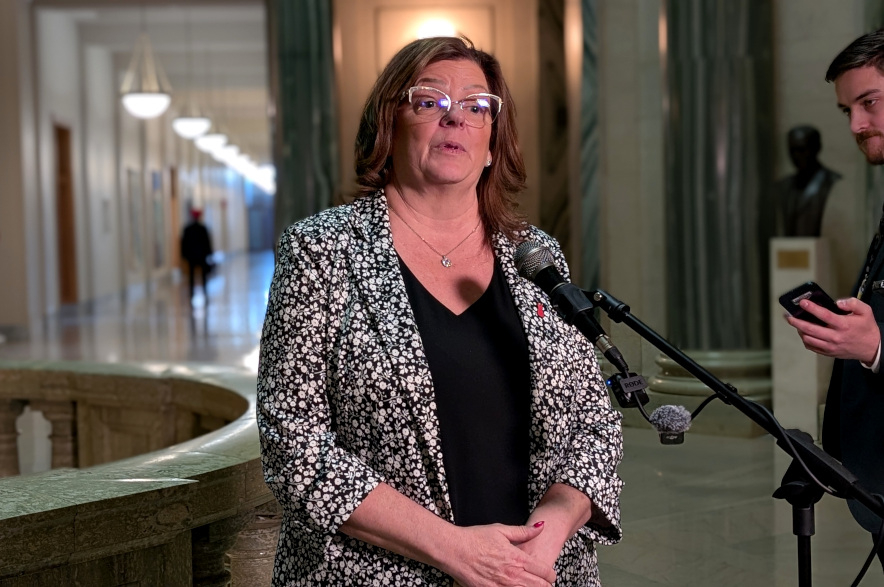
The Government of Saskatchewan said it would be represented by Lori Carr, Minister of Mental Health and Addictions, Rural and Remote Health and Seniors at the Canada Health Transfers meeting. (Image Credit: File photo/CJME)
Health Funding

Saskatchewan at the table for federal meeting about health transfers

Sep 29, 2026 | 9:59 AM

OTTAWA — Health ministers from across the country are set to meet Tuesday to warn they’re headed toward a “fiscal cliff” if federal funding agreements for things like home care and mental health are not renewed, Ontario’s health minister said.

Sylvia Jones told a provincial committee meeting on Monday that she and her counterparts are planning to hold an emergency meeting, and said it appears the federal government is walking away from a portion of the Canada Health Transfer.

In response to an inquiry from CJME News, the Government of Saskatchewan said it would be represented by Lori Carr, Minister of Mental Health and Addictions, Rural and Remote Health and Seniors not Minister of Health Jeremy Cockrill.

In a statement the government said Saskatchewan currently receives approximately $36.6 million annually under a 2017 bilateral agreement between the federal government and provinces and territories, set to expire on March 31, 2027.

“Saskatchewan remains committed to ensuring residents have access to high-quality mental health, addiction treatment, home care, and community-based services. The government looks forward to working with provincial, territorial, and federal partners to secure sustainable funding for these essential programs,” senior media relations officer Jesse Knisley said in the statement.

The federal government pledged a total of $200 billion in health funding over 10 years in the 2023 budget, intended to help expand access to primary care, reduce surgery backlogs, improve mental health and addiction services and modernize the health system, following widespread issues in health care across the country during and after the COVID-19 pandemic.

As part of that sum, $4.8 billion was set aside for improvements to home care, community care and mental health and addiction services. It’s set to end in 2027.

Another $3 billion funding package meant to improve long-term care safety was set to sunset in 2026, and $1.7 billion for personal support workers wages will be paid out by 2028.

Last year’s federal budget also outlines a planned reduction in the growth of the federal Canada Health Transfer after March 2028.

That transfer increases each year in line with a three-year average of the nominal gross domestic product.

That is guaranteed to grow by at least five per cent per year until fiscal year 2027-28. After that, it is set to return to a minimum growth rate of three per cent per year.

After Prime Minister Mark Carney’s government released its first budget last November, health advocacy groups warned that the Liberals highlighted the end of funding agreements in the coming years as part of their plan to get spending in check.

Jones said she and her counterparts want federal Health Minister Marjorie Michel to understand that the sunsetting of bilateral funding agreements next year will have a real impact on patients.

“These are not capital projects. These are programs, these are services,” she said.

“These are people who have been receiving programming from the provincial government with a half a billion dollars (of) support from the federal government.”

Premiers also warned of a “fiscal cliff” if those agreements expire without renewal.

In a joint statement following a meeting of the Council of the Federation in July, the premiers said they need the health transfer to continue growing at a rate of five per cent per year and called for a long-term commitment to “flexible and sustainable funding.”

In an emailed response to questions, a spokesperson for Michel said she’s prepared to talk with her counterparts about building a strong and sustainable public health care system at a meeting next month.

“Following the first ministers meeting in July, the prime minister and premiers directed the deputy ministers of finance and health to work together on long-term health funding and productivity of the health care system,” said Alexandre Bergeron.

The federal government is set to release its budget later this fall.

— with files from CJME News