Click here to sign up for our free daily newsletter
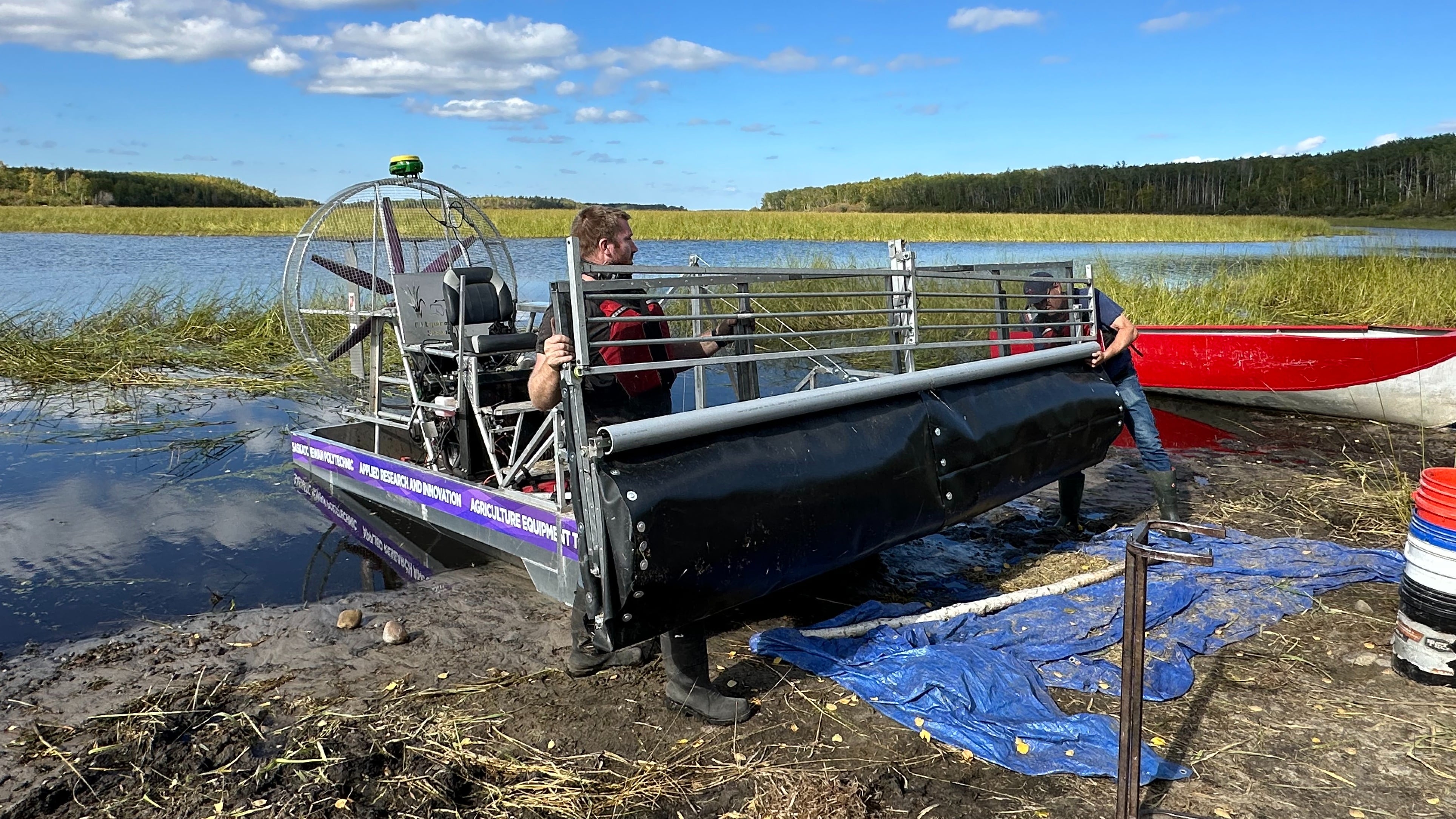
An improved wild rice airboat built by Saskatchewan Polytechnic near Beauval. (Image Credit: Derek Cornet/larongeNOW Staff)
Wild Rice Series

From lake to plate: Sask. Polytechnic bringing innovation to tired industry

Apr 21, 2026 | 2:00 PM

Wild rice is an important economic crop for First Nations and Métis people across Western Canada. The industry is particularly significant in Northern Saskatchewan, where approximately 70 per cent of the Canadian crop originates. Considered a sacred grain to Indigenous Peoples for centuries, it was first introduced in Northern Saskatchewan in the 1930s and has since become a premium product sold for top dollar in international markets. This is part two of a four part series.

A new design for a wild rice harvester could disrupt the industry in Northern Saskatchewan, which has long stalled when it comes to innovation.

Traditional wild rice harvester boats are small propeller-driven airboats powered by recreational motors like those from snowmachines. Historically, they have been known to fail, and can be costly to replace and difficult to repair. The new prototype boats built by Saskatchewan Polytechnic in the last couple of years use industrial-grade components which are more economical and easier to maintain.

“There has not been much innovation in harvesting,” said Chris Thomson, the head of Sask. Polytech’s Agricultural Equipment Technician Program based in Saskatoon.

“The original literature, and we have studied lots of it, there’s lots of stuff on taking the snowmobile engine out of your snowmobile, go harvest rice and then put it back in your snowmachine, that dates back to like 1978. That’s kind of the latest and greatest literature on wild rice harvester innovation. There are pontoon boats that are really big and really heavy, there’s the lighter runabout boats that use the 580 Rotax and a little bit bigger engines, and there is such a discrepancy in size of a big pontoon boat and small one.”

For the past three years, Thomson and his team focused on modernizing equipment for the NWC Wild Rice Company’s Indigenous producers in Northern Saskatchewan.

“We opted to use our shop during COVID to allow someone to bring in a wild rice boat to scan it, so they could do some research on how to make a better header collector system,” Thomson said.

“As soon as it was in our shop, me and my staff all kind of looked and it and thought we can work to do better and that’s when I got involved in the program to come up with a way to essentially help them out with a better sustainable harvesters. That led to applying for grant money and then that particular application was positive ($400,000 from PrairiesCan) and we were able to get some funding where we developed a sustainable drive system, meaning an engine that can be bought and services and be efficient, and then we reshaped the hull around that.”

The hopper, also known as catch basin, is also wider on the protype boats. This one is capable of folding together.
The hopper, also known as catch basin, is also wider on the protype boats. This one is capable of folding together. (Image Credit: Derek Cornet/larongeNOW Staff)
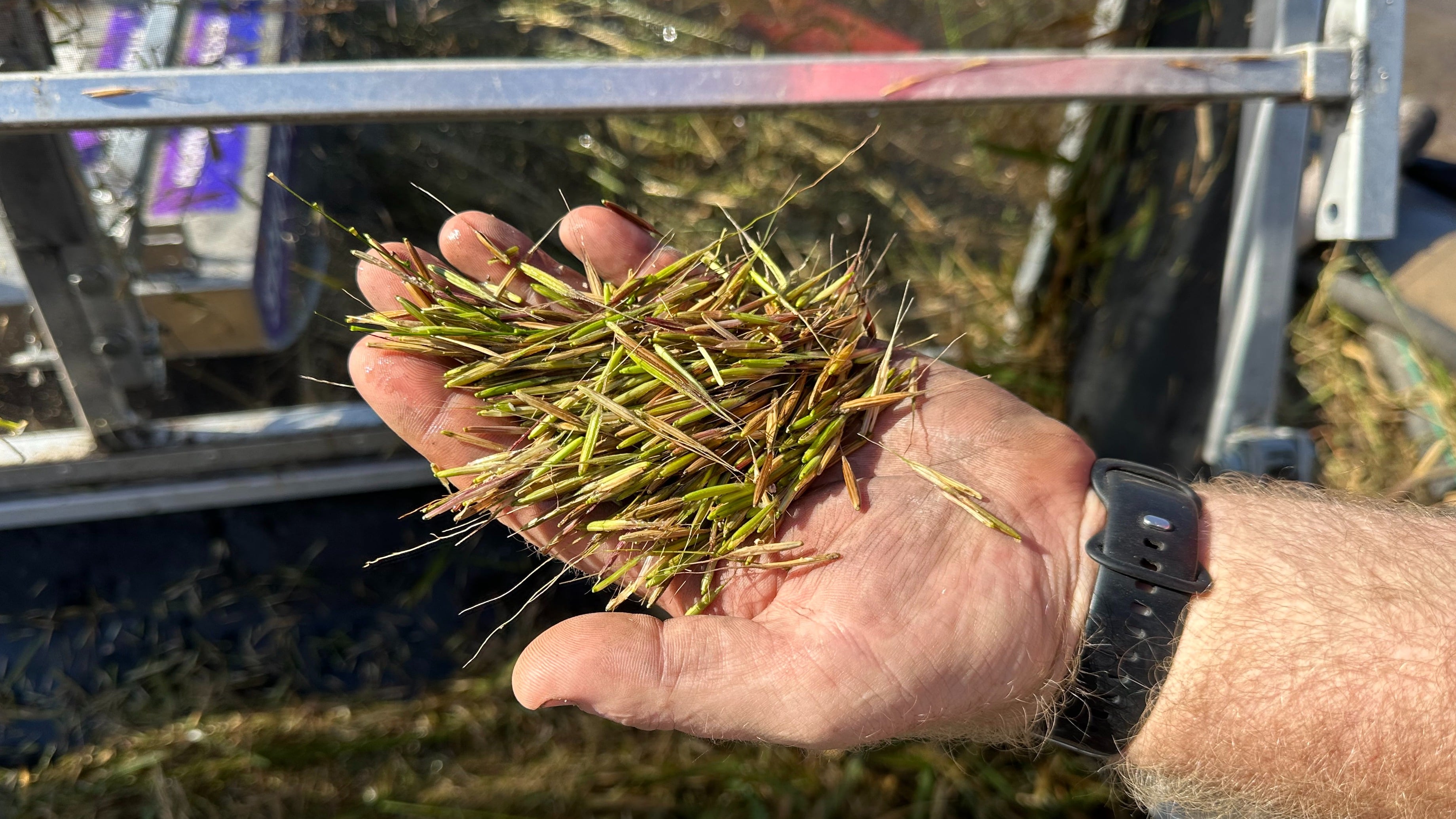
Green wild rice immediately after its been harvested.
Green wild rice immediately after its been harvested. (Image Credit: Derek Cornet/larongeNOW Staff)

The boats feature custom-built hulls, redesigned propulsion systems, and precision agriculture technology adapted from farm equipment. Each is powered by a 4.3-litre V6 industrial emission-controlled engine.

The hopper, also known as catch basin, is also wider on the protype boats. Thomson explained traditional boats harvest two to two-and-a-half bags per hit and the protype in testing brought in five-and-a-half to six bags.

“We’ve been able to get a lot of information from the producers, even just what it is like to harvest. The harvester’s information of what we got from them about what is it like to harvest really made this possible,” he noted.

“I’m just thrilled on behalf of Sask. Polytech that we have been able to take a agricultural equipment program that could have stayed in its row its whole life and just done farmwork in the South, but I am really happy we are able to branch out and help northern farmers.”

derek.cornet@pattisonmedia.com