Click here to sign up for our free daily newsletter
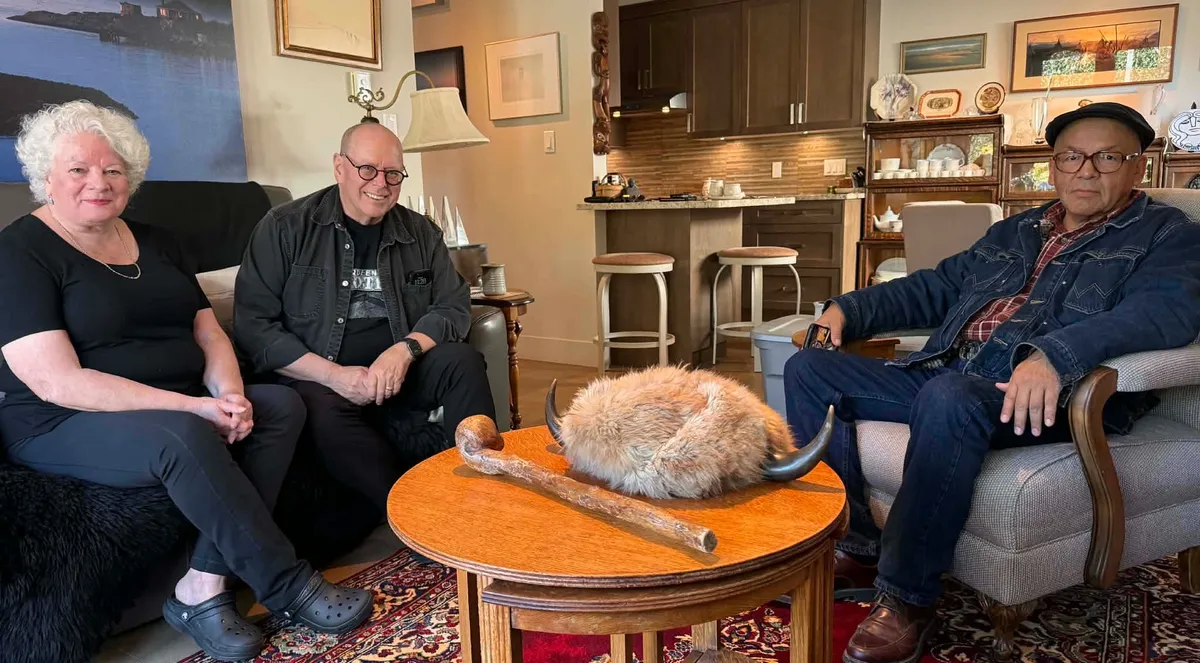
From left, Carol (Burdett) Hewitt and Bob Hewitt sit at their home in Victoria, B.C., with the historical artifacts on the day Floyd Favel visited to collect them in February 2026. (Image Credit: Floyd Favel)
From the Battlefords to Victoria, B.C. and back

Century-old artifacts return home to Poundmaker Cree Nation

Apr 1, 2026 | 5:51 PM

For decades, they were kept in private hands: a buffalo horn headdress and a carved wooden club, carefully stored, rarely questioned.

They were seen as artwork, but would come to be understood as something more.

The items had travelled far from where their stories began.

Long before they reached Bob Hewitt’s home, they were tied to Solomon Bluehorn, a Cree man who would visit Hewitt’s family in North Battleford when he was a child in the 1950s.

Bluehorn would stop by once or twice a year, sitting for tea and conversation. He always brought stories with him – sometimes about Indigenous warriors, their ways of fighting, or the land. Sometimes, he brought items. Hewitt isn’t sure if they were gifts or sold to his mother. Whatever the case, she preserved them with care.

“As a child, it was a novelty, and I didn’t have a full appreciation of what it might represent,” Hewitt said.

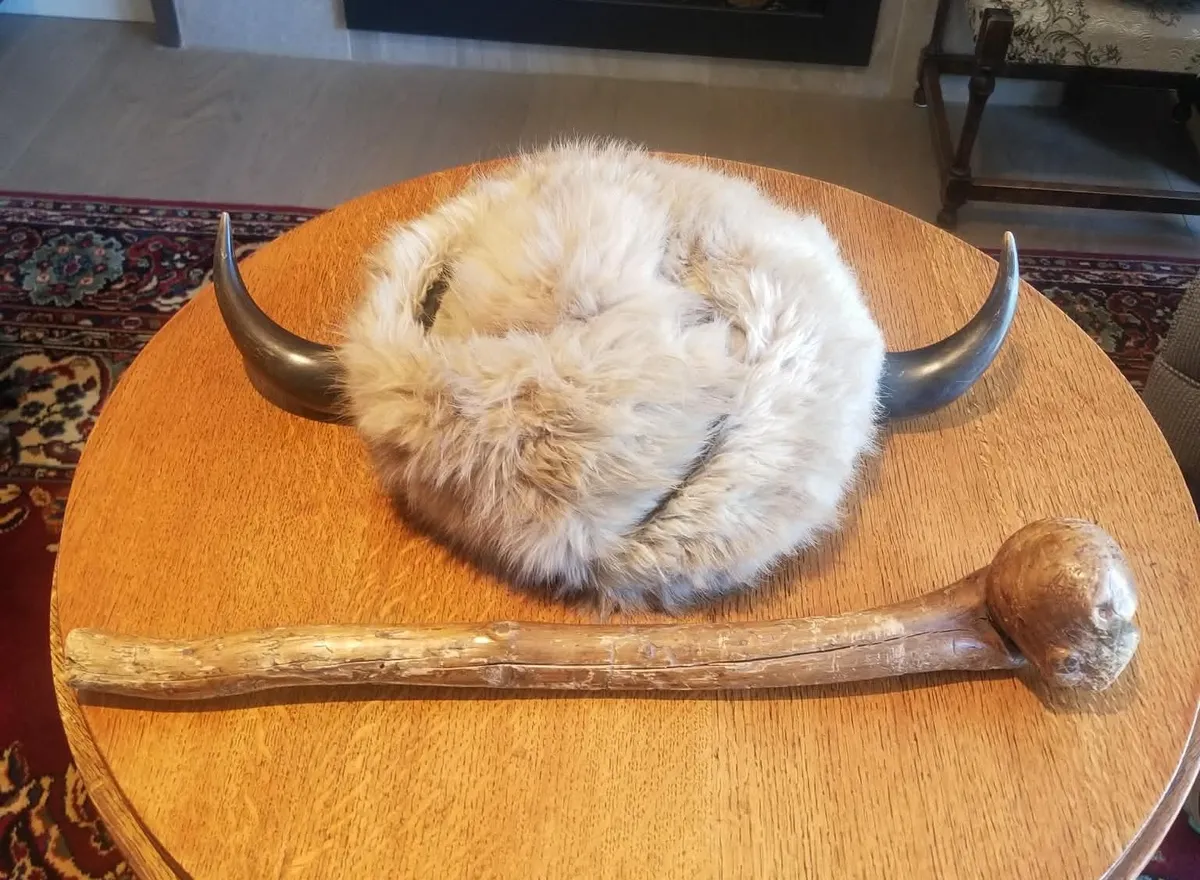
A buffalo horn headdress and a wooden club - historical artifacts recently returned to the Poundmaker Museum and Gallery.
A buffalo horn headdress and a wooden club – historical artifacts recently returned to the Poundmaker Museum and Gallery. (Image Credit: Floyd Favel)

They were kept safely, brought out occasionally, and appreciated for their craftsmanship. Over the years, Hewitt moved west, eventually settling in Victoria, B.C., where the items remained with him.

He visited an exhibit in Victoria last year, and that’s when something shifted in how Hewitt saw the headdress – not as art alone, but as something carrying memory, connection and meaning.

“I began to think that perhaps they were more valuable from a cultural perspective,” he said.

What had once been displayed now felt out of place.

“They are more than art.”

Unsure what to do next, Hewitt reached out for guidance.

That led him to Gerald McMaster, a curator from Red Pheasant Cree Nation with roots in the Battlefords, who has worked at major institutions, including the National Museum of the American Indian in Washington, D.C., and the Canadian Museum of History.

McMaster pointed him toward the Poundmaker Museum and Gallery – a place, he believed, where the items belonged.

This February, curator Floyd Favel travelled to Victoria to collect the items and bring them back.

“I’m happy to see that they are going back to the place and the people who – it’s where they belong, really,” Hewitt said.

From left, Carol (Burdett) Hewitt, Bob Hewitt and Floyd Favel sit at the Hewitt home in Victoria, B.C., in February 2026 with the historical artifacts.
From left, Carol (Burdett) Hewitt, Bob Hewitt and Floyd Favel sit at the Hewitt home in Victoria, B.C., in February 2026 with the historical artifacts. (Image Credit: Floyd Favel)

At the museum, the objects are understood in a different context.

They’re part of something larger that Favel explained, “…adds to our cultural legacy, our cultural library, our history.”

The headdress, made with buffalo horns and fur, would have been worn by someone of importance, such as a war leader, a medicine person, or someone with a defined role within the community. The wooden club, shaped from bent wood, reflects deliberate craftsmanship.

While the exact age of the items is not confirmed, Favel said they are old and believes they may date back to the late 1800s, based on their materials and condition.

They are also connected to Bluehorn, who came from a notable family tied to Chief Poundmaker, and who was the last holder of a Cree tattooing bundle –  a collection of tools and knowledge now housed in the American Museum of Natural History in New York City.

For generations, much of that history was not openly shared.

“Our history was underground for many years,” Favel said.

Today, the museum serves as a place to bring those stories forward.

“Every community should have a museum that becomes the centre of your community,” he said.

“The museum, in fact, becomes a sort of, you could say, a temple or the place of the muse, which is the original name of the museum. A museum is a place of the muse spirit, energy.”

“So I would say we’re an incarnation of the original meaning of the word museum by having all these objects.”

In total, the museum houses a small but significant collection, including six historical artifacts – four linked to Chief Poundmaker – along with stone tools dating back thousands of years and an eagle war staff from the 1860s.

Established in 1996 by the chief and council, it was later carried forward by early curators Don Favel and Vera Kasokeo Weenie. It received national recognition in 2018, earning the Indoor Indigenous Cultural Experience Award from the Indigenous Tourism Association of Canada for its gallery space and exhibits.

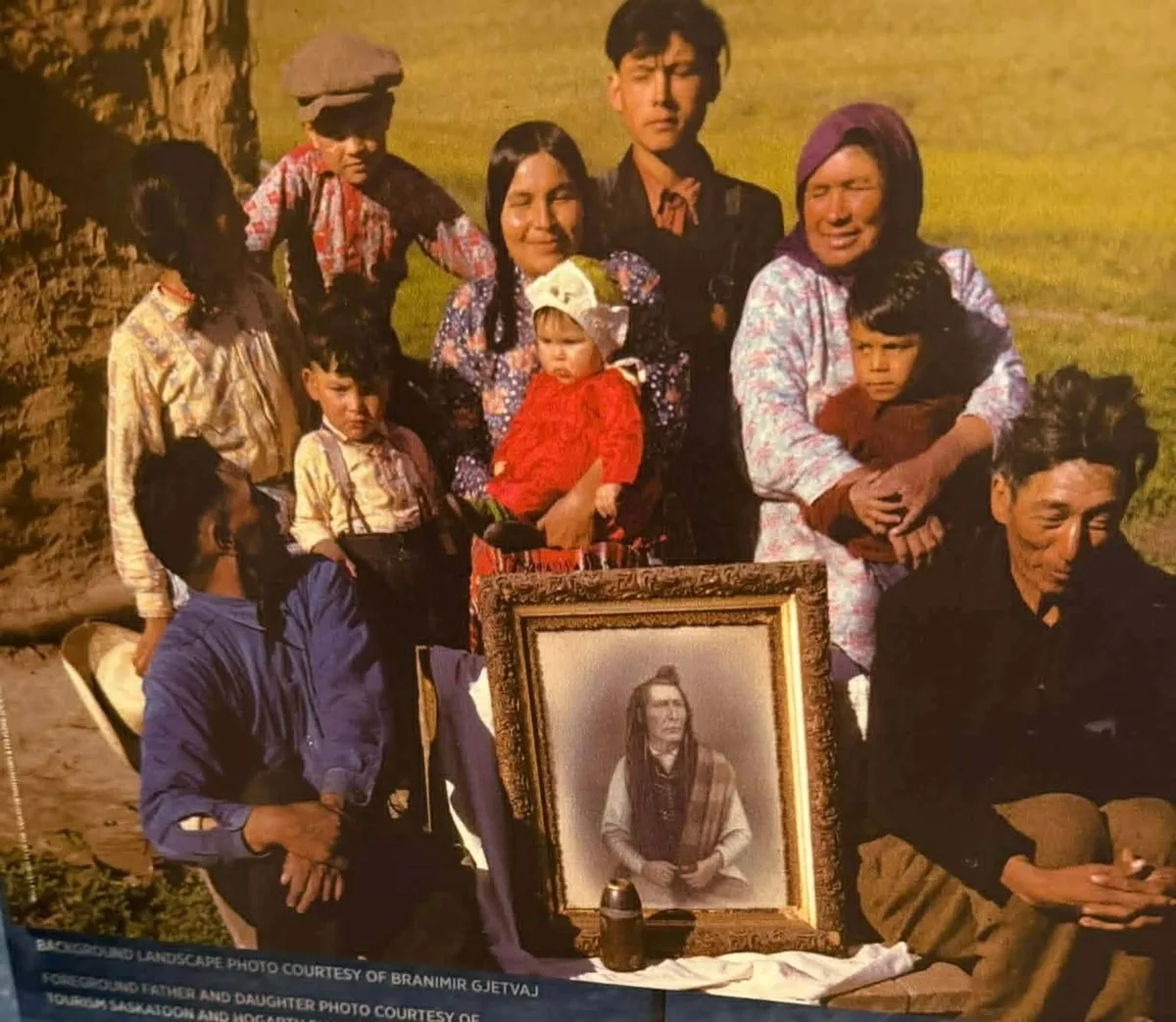
Solomon Bluehorn, lower right, visits with the family of Adam Tootoosis.
Solomon Bluehorn, lower right, visits with the family of Adam Tootoosis. (Image Credit: Floyd Favel)

At a time when many are working to return Indigenous artifacts, the items at Poundmaker have come back through donation, rather than being reclaimed.

The museum is preparing climate-controlled cases to preserve them, with plans to display the items when it opens for the season on May 1.

For Hewitt, the journey of the objects has come to a close.

“I’m confident that she would be pleased to see that they would be returned,” he said of his mother.

“Long after I’m dead and gone, these will still play a significant role in the storytelling of the culture of Poundmaker Cree Nation. So, that’s great.”

Once kept in a private home, the items will now be displayed where their history can be more fully understood.

The stories connected to them, once shared on a set of back steps, will now continue in a place where they can help inform and educate future generations.

Kenneth.Cheung@pattisonmedia.com