Click here to sign up for our free daily newsletter
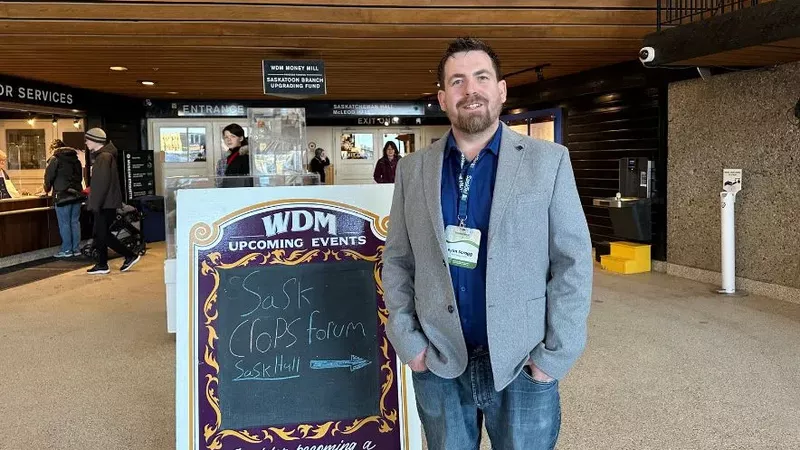
Ryan Scragg, a farmer at Solar Valley Farms, said tariff market pressures have him considering a change in crop strategies for this year’s growing season at the Western Canadian Crop Production Show in Saskatoon on Jan. 13, 2026. (Libby Gray/650 CKOM)
Ag strategies

Farmers considering conditions, tariffs and market swings heading into 2026 growing season

Jan 14, 2026 | 10:40 AM

Saskatchewan farmers are collectively rethinking seeding plans and crop strategies this year as they anticipate what 2026 could bring in terms of crop markets, tariff impacts and weather conditions.

Ryan Scragg farms wheat, canola, peas, barley and oats northeast of Prince Albert at Solar Valley Farms.

He said tariffs have been impacting his operations.

“The price of peas has been absolutely knocked to crap,” he explained, noting that tariffs have dropped that crop’s value by almost 40 per cent since they came into effect last year.

Likewise, Scragg said canola has seen a 25 to 30 per cent drop in value.

The market value is just one piece of the puzzle for producers like Scragg. He says the market itself has made certain crops difficult to sell.

“Both (canola and peas) are essentially unprofitable at the prices they’re at right now,” Scragg said.

Ian Epp, extension agronomist for Sask Oilseeds and a grain farmer in the province said he’s seen the same concerns with canola prices, saying they’re “not where we would hope they would be.”

How Epp is approaching marketing grain and his plan for the next year is also up in the air more than previous years due to tariffs.

With crops slightly above average for Epp this past year, he said the good yields help buffer the lower prices, but can’t be expected.

It’s leading to a stressful time for Scragg and his operation. While he’s not yet worried at this point in the year, he is starting to strategize about the upcoming growing season differently than if tariffs were not impacting his fields.

“I’d be looking to cut back significantly on peas,” Scragg said. “Sadly, canola, even with its value right now, is probably the most profitable even though it’s unprofitable.”

If many farmers have similar thoughts to Scragg, he acknowledged that could mean a shorter supply this year of certain crops.

“It’s the wild swings that happen when you have market disruptions like this,” he said.

With canola still factoring into his spring seeding rotation plans in a significant way, the lower price of that and all commodities will continue to cause farmers like Scragg problems this growing season.

“Although we’ve had record yields across the province, it’s really translated into, you know, a break-even kind of situation for the farms of the province.”

Scragg said it hurts producers’ bottom lines, but also hurts everything connected to agriculture, from equipment manufacturers and retail sales to seed and fertilizer sellers.

“It really just drives down investment in rural Saskatchewan,” Scragg said.

Drought decisions

2025 brought the first good crop in a while for Epp’s farming operations. He said between hail and drought, this past yield was one of the first better crops he’s enjoyed in a few years.

“Snow is always good,” Epp said. “I won’t say no to moisture at any point. That being said, early season, snow like this doesn’t always translate into next year being a great crop, but it’s a good start, right?

“We’ll hope this should hopefully give us enough moisture to germinate the next crop, and we’re going to need some timely rains,” he said, thinking ahead to his 2026 growing season.

Scragg hasn’t had to worry too much about conditions. He said northern farms like his have been “fairly lucky” with rainfall.

“We’ve been seeing close enough to adequate to get average crops,” he said of the moisture impacting his operations.

Having spoken with many farmers in the course of his work, Epp says he’s seeing growers “going through the motions” as they prepare for another seeding season and amend plans.

“Canola seed, a lot of it was bought last fall. Rotations get set fairly early on. Fertilizer gets bought. Fertilizer prices were high. Farmers are trying to figure out what to do with that, so there is a lot of uncertainty, I guess, going into the year, right?

“Farmers are making the plans the best they can, but we’re not sure exactly what the year is going to bring,” he said.

Scragg certainly agrees it can be hard to plan ahead perfectly, but he also holds out hope for the season to come.

“It’s hard to be pessimistic in January. You shouldn’t be pessimistic in January,” Scragg said with a smile.

“Seeing snow outside and it looks like winter, it’s cause for optimism.”