Click here to sign up for our free daily newsletter
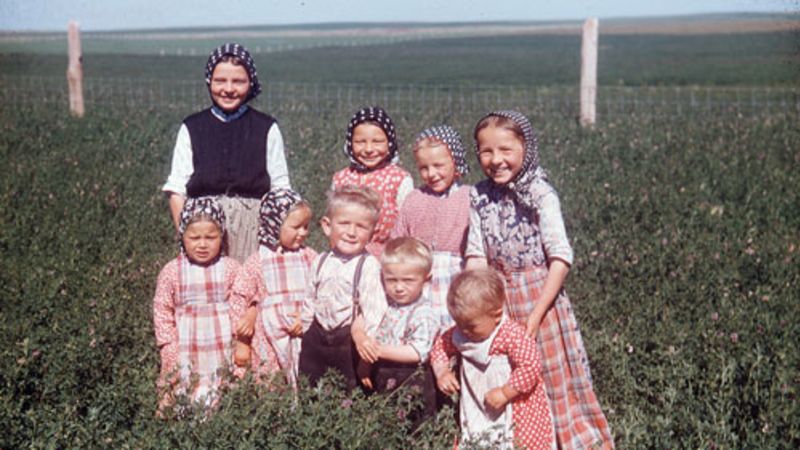
Hutterite children, North Fork, July 1954. (The Encyclopedia of Saskatchewan)
Culture

From communal life to mainstream society: the complex reality of leaving a Hutterite colony

Jan 10, 2026 | 9:00 AM

For seven years, Daniel Roy has been helping Hutterites across the Canadian prairies leave their colony and find meaningful employment.

It was an initiative he started after a negative business interaction left him feeling curious about life on a colony. He said he heard from several Hutterites who expressed concerns about the control they faced and working for minimal payment.

“I got calls from all over Canada saying, ‘I get five bucks a month’, ‘You don’t know what it’s like living here,’ he said.

His Colony to Society Association, a registered charity, will pick up Hutterites who want to leave the colony for free, find them employment and housing, and give them some money to start their transition into everyday society, Roy said, however, it’s not that easy.

“It’s very frowned on to leave the colony. So, if you leave, mom and dad call you every day and in some cases every hour crying, begging you to come back because they’re convinced, you’re going to hell because you’re not on the colony,” Roy explained.

Although he’s unable to provide specific numbers, Roy said the organization has placed many people in jobs throughout Saskatchewan.

“I’ve actually put lots of Hutterites in North Battleford, in Turtleford, in Meadow Lake. We have a big presence in North Battleford; I bet you I’ve got a dozen Hutterites there right now from different colonies,” he said.

Mary-Ann Kirkby has experienced the reality of leaving a colony first-hand. The Prince Albert-based author has written two books about her own personal experience; one of which is I am Hutterite – an award-winning, national best seller.

“Do individuals or families who want to leave because of a conflict, they want a higher education or a less restricted way of life, deserve support? Absolutely, I should know. My family left the Fairholme Hutterite Colony in Manitoba in 1969 because of a conflict,” Kirkby said.

“I can tell you from personal experience, it was extremely difficult and lonely to go from a communal way of life to life in mainstream. But it was enormously helpful that our parents demonstrated that leaving a conflict did not mean ditching your culture.”

Over the years, Kirkby has kept strong ties to her family while keeping her language and traditions of singing and storytelling. She explained that although complex challenges arise on the colonies, it is an enviable way of life with the right leadership.

Before painting every colony with the same brush, she encouraged the public to seek a better understanding of Hutterite culture.

“A bit of cross-cultural training should be mandatory for a registered charity like his because trust me, the outside world with all its freedoms is not all it’s cracked up to be,” she said.

Roy said some of the Hutterites that he’s helped have gone back to their colonies after a couple months, while others have been settled into their new way of life for years.

“We don’t call people and ask them to leave. They have to call us,” Roy said.
“There are people who take it upon themselves to go out to colonies and hand out business cards and just politely let them know that we’re here. But we don’t recruit them. It’s our policy. So, if they’re calling me, chances are they saw a job posting, or they’d like to know more information about how it works.”

And as long as he continues to receive those requests for help, Roy said he’ll be there.

alyssa.rudolph@pattisonmedia.com