Click here to sign up for our free daily newsletter
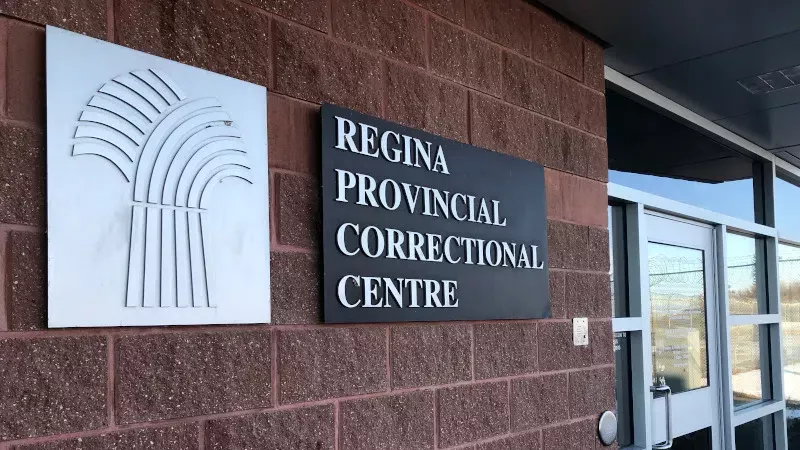
Like other provinces, Saskatchewan’s guidelines around inmate disciplinary hearings used to require that guilt be determined on a balance of probabilities, but a Supreme Court of Canada decision last year found it needed to rise to guilt beyond a reasonable doubt. (CJME file photo)
Court

Sask. changes inmate discipline rules after Supreme Court ruling

Jan 9, 2026 | 8:00 AM

When an inmate at a provincial jail is brought up on disciplinary charges, the committee hearing then will now have to decide whether the inmate is guilty “beyond a reasonable doubt.”

The previous standard had been that the inmate had committed the infraction on a balance of probabilities.

“So that is just, essentially, saying this individual has to be more likely guilty than not,” said Grace Gardner, public legal counsel with the John Howard Society of Saskatchewan.

The change was made in the Saskatchewan regulations in December after a Supreme Court of Canada ruling in the spring last year, which found the balance of probabilities standard wasn’t high enough.

The John Howard Society took it to the country’s highest court after losing its bids for change at the King’s Bench and Appeals Court levels in Saskatchewan.

The society brought the case forward after a 2019 ombudsman’s report gave a series of recommendations based on complaints from correctional centre inmates that the discipline process was “unfair and panel members were biased.”

The disciplinary hearing manual was quoted in the King’s Bench decision, explaining how a balance of probabilities was used.

“If it is unclear, or the probability of the event occurring/not occurring are equal, then the balance of probabilities has not been met. Further, when assessing probability, it is important to note that the burden of proof – the obligation to prove one’s case – is on the correctional facility to demonstrate the inmate committed the offence,” read the section.

Sanctions for a disciplinary offence could range from a reprimand to segregation to a cell, or additional days of incarceration.

While the lower courts disagreed, the Supreme Court found if a person’s loss of liberty could result, then a balance of probabilities is not a high enough burden of proof.

In federal prisons, the standard of reasonable doubt was already in use, but Gardner said the balance of probabilities standard was the status quo across provincial systems.

Gardner explained that one of the main goals of the John Howard Society’s public legal counsel program is to make sure inmates are provided with procedural fairness – something she said everyone in Canada is entitled to to some extent, and isn’t something you lose when you’re an inmate.

“When somebody is being detained, or somebody is being punished for a crime or a disciplinary offence that they have committed, they deserve to have their day in court as fairly and as neutral as any other individual would be entitled to,” she said.

In a statement, the Government of Saskatchewan said it made the regulation updates to ensure its processes align with the constitutional requirements and evolving legal standards.

“These changes clarify procedural expectations for disciplinary hearings and support consistent, fair decision-making across correctional facilities. They also help ensure that internal processes remain responsive to recent court decisions, including guidance from the Supreme Court of Canada,” read the statement.

It said it will implement the changes over the next several months.

Gardner said the John Howard Society is excited to see these changes come into effect, saying it’s been a long time coming.

“Definitely (a step) in the right direction, it’s the first step at creating healthier atmospheres within the prison between inmates and guards or staff in general,” she said.

The society will be watching to see how things play out, according to Gardner.