Click here to sign up for our free daily newsletter
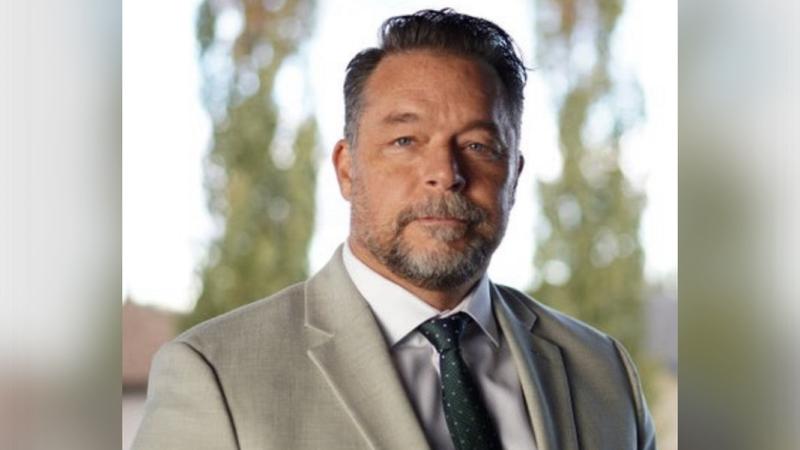
Dr. Jonathon Penny, vice-president, academic at North West College, has more than 20 years of post-secondary teaching and leadership experience in Canada and abroad. (submitted/North West College)
EDUCATION

‘I want to challenge us as a college’ new VP says as North West College looks beyond trades and health

Jan 6, 2026 | 3:53 PM

North West College (NWC)’s new vice-president, academic, says the institution needs to think more ambitiously about its role in Northwest Saskatchewan, expanding beyond trades and health training to become a broader academic and community hub.

Dr. Jonathon Penny said while trades and health programs remain critical, the college should continue moving into areas such as education and social work to better meet the long-term needs of students and communities.

“I want to challenge us as a college to think more ambitiously and beyond what has been, and to build on that as we move forward,” Penny said.

Penny officially began his role last December, bringing more than two decades of post-secondary teaching and leadership experience in Canada and abroad. He has previously held senior academic roles at institutions in Alberta, British Columbia and the United Arab Emirates.

He said one of the strengths that drew him to NWC was its close connection to the communities it serves, including municipalities and First Nations across the region.

“That’s not just a pretense, that’s not something that we merely say,” he said. “It’s something that the people at North West College are living every day in pretty meaningful ways.”

Penny said recent developments, including the growth of health programming and a newly ratified agreement with the University of Regina to offer bachelor of education programming, signal a shift toward a more comprehensive academic role.

“It also signals that our ambition is to be a full spectrum college,” he said.

He said regional colleges play a crucial role for students who want to remain close to home while pursuing post-secondary education.

“Folks, especially in remote areas or semi-urban areas, small cities like we have here in the region, are generally tied to the community in some significant way,” Penny said.

“They’re hoping to establish themselves and their families with employment and with security and with opportunity to serve in the communities where they live and that they care for.”

Penny also offered a broader critique of how post-secondary education has evolved in recent decades, warning against defining success primarily through budgets and revenue.

“The real return on investment of post-secondary education is what happens when people graduate,” he said. “They take that knowledge, they take the formation and development that they’ve experienced as human beings, back out into community.”

He said graduates strengthen communities not only economically, but socially and civically.

“They’re also leading in their communities,” he said. “[They’re] volunteering, and they’re participating in elections and campaigns and they’re voting and doing all of those important things that help our societies move forward.”

Looking ahead, Penny said his immediate focus is learning the Saskatchewan regional college system while deepening existing partnerships and expanding new ones.

“Priority one for me is to learn the system, to learn the constraints and opportunities that the regional colleges have within the Saskatchewan system,” he said.

He said he wants the college to be seen as more than a place for job training.

“I see North West College as more than a training institution,” Penny said. “I see it as a hub of intellectual, social and cultural life in the communities where we are embedded.”

Kenneth.Cheung@pattisonmedia.com