Click here to sign up for our free daily newsletter
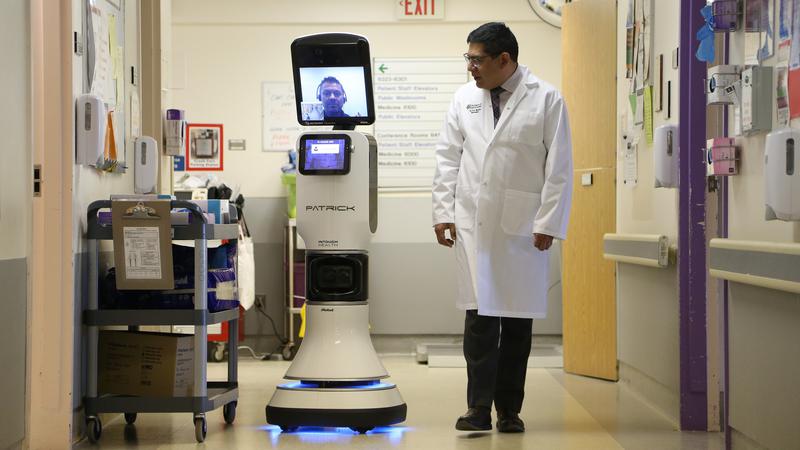
Dr. Ivar Mendez with a robot at Royal University Hospital in Saskatoon. (Submitted/Bridges photo by Michelle Berg)
making an impact

Virtual technology expected to lower preventable mortality rates in Northern Sask.

Dec 18, 2025 | 6:00 AM

Northern residents have twice the preventable mortality rates than their southern counterparts when it comes to cancer, diabetes and cardiovascular diseases, but medical professionals believe that gap can be narrowed by harnessing the power of technology.

Dr. Ivar Mendez is a Saskatoon-based neurosurgeon, who is the director of the Virtual Care and Remote Presence Robotics and the Virtual Health Hub with the University of Saskatchewan. In order to make health care more equitable for all residents, he’s working to shift the current centralized model to one that is more distributive.

“There has been many studies over the years, and specifically in Saskatchewan, that have indicated the mortality rate and the outcomes for individuals living in these communities that are underserved by health care systems have a higher rate of mortality and poorer outcomes than populations that have access to tertiary care centres,” he explained.

“This is one of the reason I have been working on the idea of really shifting the model of health care from a centralized model like the one that we have now. Really the default is the emergency room in our tertiary care centres in Saskatoon, Regina and Prince Albert are overcapacity in terms of the emergency rooms and really the availability of beds. That is because we have this centralized system where if you don’t have access to a primary care physician, you need to go to the emergency room.”

While the percentage of people in Saskatchewan who do not have access to a primary care physician is approximately 15 per cent, that number is higher particularly for people living in remote, northern communities. That contributes to higher preventable mortality rates as access to specialists or diagnostic imaging like MRIs, CT scans and ultrasounds are harder to come by.

“We’ve been working with the Virtual Health Hub (which is opening in early 2027) to really shift data the type of model of care to a distributive model where we can use the power of technology, which includes virtual health care technologies that will allow us to examine and manage patients in distant locations,” Mendez remarked.

“For example, if an individual comes to a nursing station in Northern Saskatchewan with chest pain, we have the technology … to be able to see the patient, listen to their heart, listen to their lungs, do an electrocardiogram, do laboratory work, all using these technologies that can be deployed in a portable fashion to any community.”

Mendez has been developing the technology for at least the past decade, and he believes it will bring down the rate of preventable mortality in the North. He noted the technology isn’t meant to replace humans, but rather support health care workers like nurses with doctors and specialists who can assist them in real time.

Mendez noting closing that gap even more so is multifactual, adding work also needs to be done to raise the socioeconomic status of people living in northern communities.

“The first thing is we need to have access to health care that is easier than the current situation,” he said.

“Eventually as that improves, then you can start going to what is really the main issue which is the prevention of diseases. That is a complex issue because it has to do with the socioeconomic status of the population. You need to have proper nutrition, you need to have access to education… but you really need to look at the situation from both sides. From the side of prevention, improving the quality and standard of living of remote populations, and at the same time, providing them with quicker and more rapid access to health care.”

derek.cornet@pattisonmedia.com