Click here to sign up for our free daily newsletter
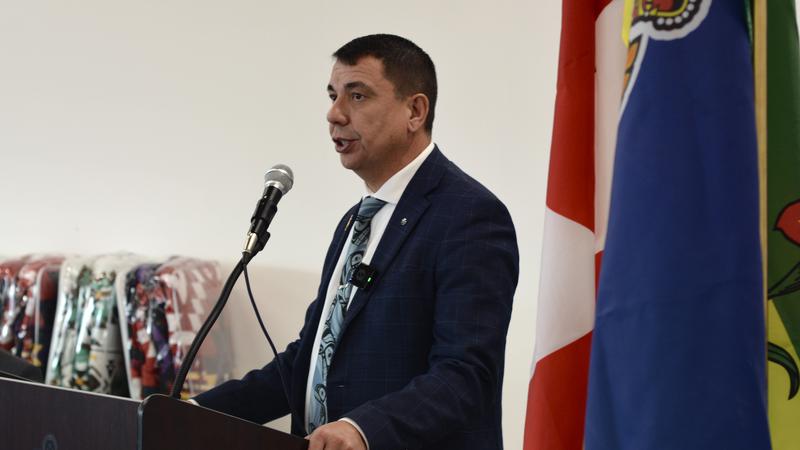
Superintendent Teddy Munro speaks during the Saskatchewan Marshals Service (SMS)’s memorandum of understanding signing ceremony with Red Pheasant Cree Nation on Oct. 20 in North Battleford. (Kenneth Cheung/battlefordsNOW)
POLICING

Meet Teddy Munro, the First Nation officer shaping Saskatchewan’s Marshals Service

Oct 22, 2025 | 12:32 PM

When Teddy Munro looks at Saskatchewan’s newest police service, he sees more than a new badge.

He sees an opportunity to rebuild trust between law enforcement and Indigenous communities.

The veteran RCMP officer, who joined the Saskatchewan Marshals Service (SMS) in October as superintendent of First Nation, Métis policing and special initiatives, says Indigenous leadership must be at the heart of how the agency grows.

“One of my mandates is to bring in First Nation and Métis individuals to be part of policing,” Munro said. “It’s very important for us to develop that recruiting tool to bring Indigenous people into the [SMS].”

Munro, who spent 30 years with the RCMP, said representation isn’t just about numbers — it’s about changing how policing feels in communities that have often felt alienated by it.

“That’s why I’m here as a First Nation person coming over,” he said.

“We as the Marshals have been able to take the past things that have happened negatively to First Nations and the good things that have happened, we can take and learn from that. We don’t have that history, but we can develop off that history to make things extremely positive.”

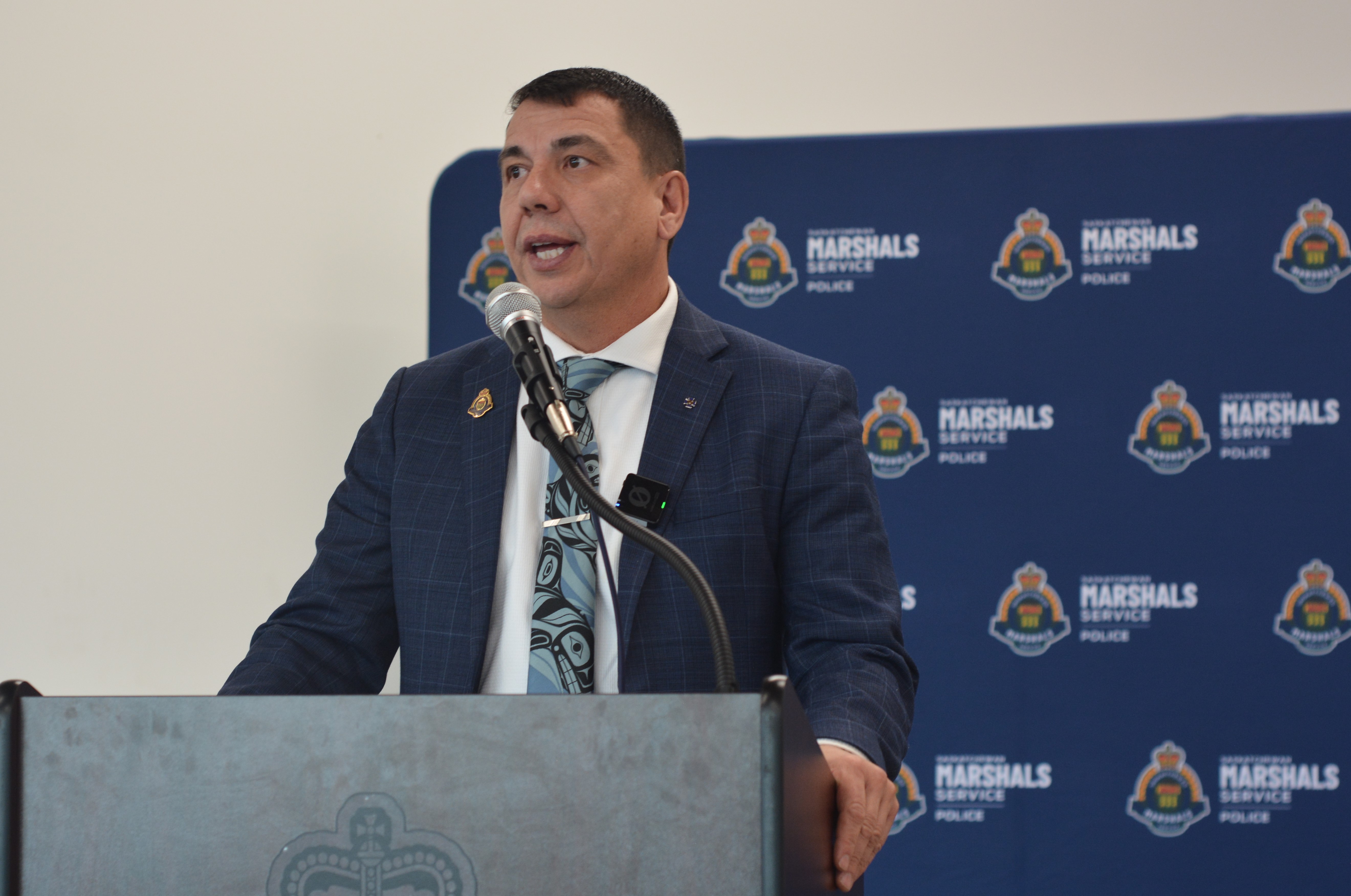
Superintendent Teddy Munro speaks during the Saskatchewan Marshals Service (SMS)’s memorandum of understanding signing ceremony with Red Pheasant Cree Nation on Oct. 20 in North Battleford. (Kenneth Cheung/battlefordsNOW)

He said the Marshals are working with the RCMP Academy in Regina and the Saskatchewan Police College to train new Indigenous recruits, who will begin joining regional hubs starting in the Battlefords, which is expected to start operating by December.

“We’ll start off at a bit around 10, with the anticipation of getting them up to 20,” he said. “So it’ll be a hub right here in this area that will assist the RCMP and policing operations.”

Read more – Sask. Marshals first regional headquarters to open in North Battleford this fall

Munro said the goal is not to replace existing forces but to build culturally competent policing that communities can relate to and call on directly.

“We have the ability to pivot very quickly and to assist First Nation and other communities with policing issues,” he said.

He added that part of that flexibility comes from formal agreements with First Nations, allowing direct communication between local leadership and the SMS.

“Signing these historical agreements gives us that bilateral communication,” Munro said, referring to the memorandum of understanding (MOU) the SMS signed with Red Pheasant Cree Nation on Oct. 20.

“The chief has the ability to contact our chief and say, ‘Hey, we would like the Marshals to come in and assist the RCMP in targeting prolific offenders.’ Right now, the Marshals can pivot like that and can go. That’s what makes us unique where other police agencies don’t have that ability to pivot so quickly.”

He believes that by bringing Indigenous officers to the forefront, they can help reshape relationships strained by decades of mistrust.

In a statement, the SMS said Munro’s leadership “marks a bold step forward for SMS in advancing reconciliation, cultural competency, and stronger relationships with Indigenous communities.”

“We’re proud to have his vision and experience guiding us in bridging the gap toward a more inclusive and responsive future.”

The SMS, launched in 2022, is a provincial police agency that works alongside the RCMP. It focuses on rural crime, warrant enforcement and complex investigations.

Its provincial headquarters is in Prince Albert, while its first regional office will be based in the Battlefords with an inspector, 10 officers and support staff.

The first class of nine recruits has been sworn in and is already on the ground, and the service expects to have about 50 officers on duty by the end of 2026, with another 20 to be hired the following year.

Kenneth.Cheung@pattisonmedia.com