Click here to sign up for our free daily newsletter
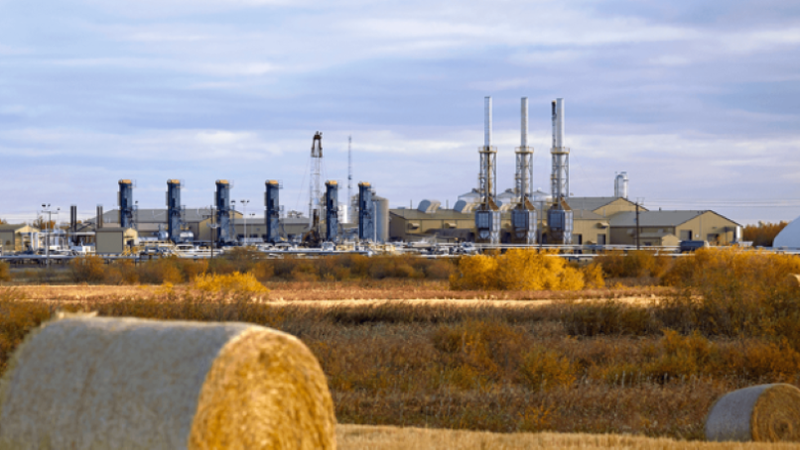
Photo of the Rush Lake 2 facility. (Cenovus Energy/Website)
Cenovus Energy

Well release now under control at Rush Lake 2 facility

Jul 31, 2025 | 1:10 PM

Cenovus Energy has officially confirmed that the uncontrolled well release at its Rush Lake 2 thermal facility is now under control, putting an end to the incident that began nearly three months ago.

The release, which started on May 7, stemmed from a casing failure in an injection well at the facility, located near Lloydminster in the R.M. of Paynton. For more than two months, a large vapour cloud containing hydrogen sulfide (H₂S) billowed from the site, drawing concern from nearby residents who reported symptoms such as headaches and dizziness and raised alarms about the strong rotten egg smell associated with H₂S emissions.

In a press release issued Thursday, Cenovus confirmed that as of July 28, the well has been safely brought under control. “With the well now under control, we continue to perform completion activities to fully isolate the well and are preparing for cleanup and remediation of the site,” the company said. It added that the vapour cloud, which had caused widespread odours in the region, dissipated on July 17.

Cenovus said the complex nature of the response extended the duration of the incident and acknowledged the disruption it caused to local communities. “We sincerely apologize for this and we’ll continue to communicate with the people and communities to provide updates as new information becomes available.”

The Ministry of Energy and Resources, Saskatchewan’s provincial oil and gas regulator, confirmed the progress made by Cenovus and verified that steam and fluids have ceased surfacing at the site. The ministry also stated that its own air quality monitoring has not indicated any levels of H₂S that pose a public health risk.

“The ministry will require Cenovus to continue closely monitoring the site and measure air quality in the area,” the ministry said in its own statement. “Once the ministry is confident the well has been fully abandoned and isolated from the reservoir, it will begin a full investigation into the incident.”

Cenovus is also expected to submit a detailed report to the ministry outlining the root cause of the incident and proposed actions to prevent future occurrences.

The well that failed had been in operation since 2018. In the early days of the release, Cenovus shut down both its Rush Lake 1 and Rush Lake 2 operations “for the foreseeable future” as a precaution, and both are still shut down without plans to reopen.

While Cenovus maintained throughout the incident that air quality monitoring did not show harmful levels of H₂S, the company acknowledged the impact of the prolonged odour and public concern.

“We are committed to continuous improvement, and what we learn from this incident investigation will assist us in further enhancing overall safety and performance at our thermal operations,” the company said.

Environmental remediation efforts are now underway, and both Cenovus and the Ministry of Energy and Resources have committed to keeping the public informed as the investigation of the cause progresses.

austin.mattes@pattisonmedia.com

On X: @AustinMattes