Click here to sign up for our free daily newsletter
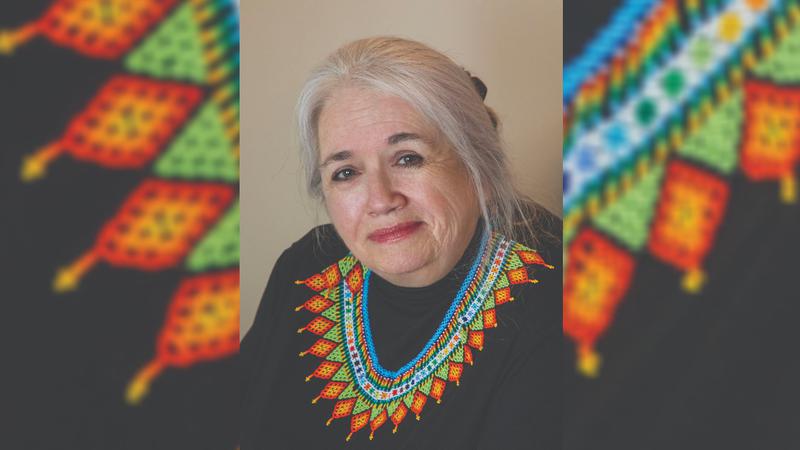
Author Michelle Good. (Submitted photo/Kent Wong Photography)
Award recipient

Acclaimed Red Pheasant Cree Nation author honoured with GG Literary Award for Fiction

Jun 1, 2021 | 5:53 PM

Author Michelle Good has been awarded the $25,000 Governor General’s Literary Award for Fiction for 2020 for her novel “Five Little Indians,” that deals with the impact on survivors of residential school abuse.

Good was also recently honoured with the $60,000 Amazon Canada First Novel Award for her book.

A member of the Red Pheasant Cree Nation, Good spent nine years working on her first novel.

Before focusing on her writing career, Good was previously a practicing lawyer. She is currently a part-time legal professional as she continues with her work as a writer.

“I’ve been writing all my life,” she said. “It’s a key way that I process the world. I’ve been threatening to write this book for a long time so I just got down to it.”

Good’s novel examines the lives of five characters who are residential school survivors.

“The whole point of the book is not to focus so much on the time in the school and the experiences in the school but rather to focus on the challenges these kids faced in terms of trying to have even a modest life after those experiences at the school, because that is something I don’t think people really understand,” she said. “Especially in Saskatchewan where you have such a racist response to anything related to Indigenous people. That’s not controversial, it’s just true.”

Good’s mother attended a residential school in Onion Lake and her grandmother at the Battleford Industrial School. Good says she is also a survivor.

“I am an intergenerational survivor of that experience,” she said. “It’s time people understand that that trauma was planted in our communities and continues to echo through all aspects of our lives really.”

Good resides in Kamloops, B.C., where the community is still reeling after the unmarked graves of 215 children were recently discovered at the former residential school site there.

The shock is difficult to take.

“This business out of the Kamloops school, it’s so infuriating,” Good said. “Imagine your toddler being taken thousands of miles away. Kids from the local area didn’t just go, they often sent kids from the north to southern schools. Imagine your child is taken away, you have no power to stop it. Then, they just don’t come home, and nobody tells you anything. You never know. Imagine that. Imagine how that is going to impact your life and how you are in the world. It’s genocide. It just never stops.”

Good says work needs to done to account for the missing children and burial information from Canada’s Residential Schools, as part of the Truth and Reconciliation Commission’s Calls to Action.

She would like to see the federal government and churches that were involved with these schools provide funding for First Nations to be able to do this necessary work of properly identifying these children and giving them a proper burial.

“Why they haven’t done it is just beyond me,” she said. “I don’t know how anyone could not think of this as one of the most important things that needs to be done.”

Angela.Brown@pattisonmedia.com

On Twitter: @battlefordsnow