Click here to sign up for our free daily newsletter
Despite a few storms rolling through the area, the region experienced a dry and cool summer. (Tyler Marr/battlefordsNOW Staff)
cool and dry

A below average summer in temperature and precipitation for Battlefords area

Sep 4, 2019 | 5:00 PM

With fall fast approaching it is an opportune time to look back at the summer season in the Battlefords.

The area saw a colder and dryer than average June, July and August.

The monthly mean temperature for the three months was 14.9 Celsius, a full 2 C cooler than the average for that time of year.

Environment of Canada Meteorologist Terri Lang said the jet stream was a contributing factor to the colder temperatures.

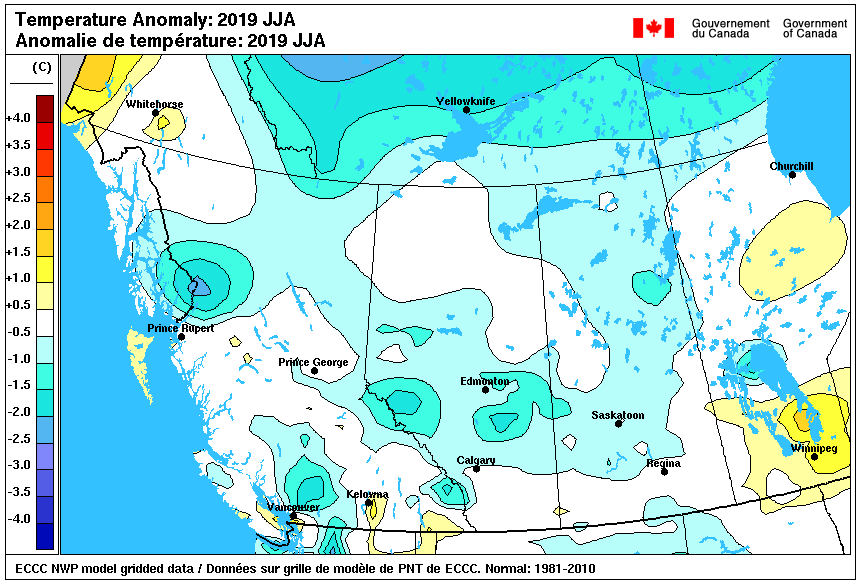
“It had to do with where the jet stream backed most of the summer. Most of Western Canada was cooler than average. That means the jet stream was a little bit off to the West. We often look for a big ridge to come in and that brings us the warmer weather but we never had those really big stretches of hot dry weather because that ridge never moved over top,” she said.

Temperature statistics (supplied photo/Environment Canada)

The majority of Saskatchewan was below or just at normal temperatures during the summer months.

“Everybody came in with below average temperatures across the board in Saskatchewan so it wasn’t just one area that was really suffering,” Lang said.

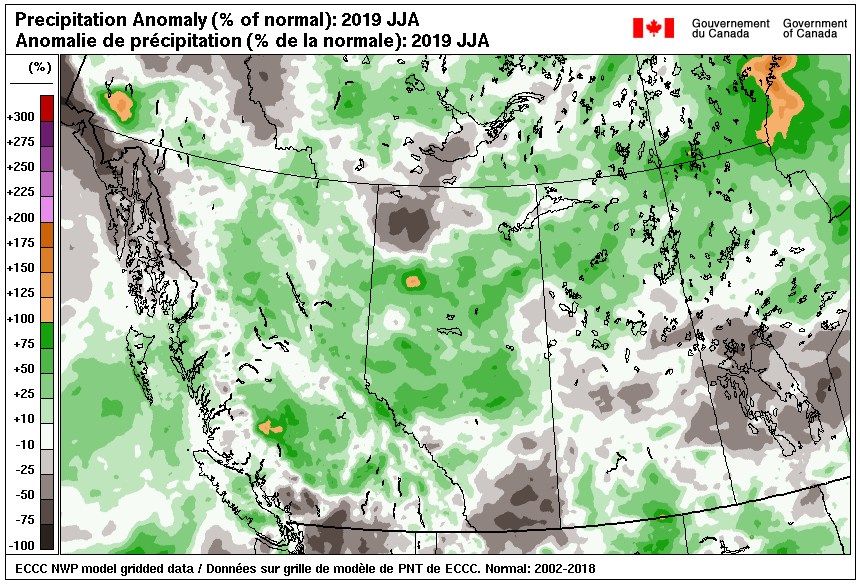
The Battleford area also saw a dryer than average summer with only an average of 24.2 mm of monthly precipitation. That is only 42 per cent of the average of 57.9 mm which is the norm for that time of year.

The majority of the province saw a wetter than average summer season but the central strip from Meadow Lake and the Battlefords over to Prince Albert and Yorkton saw a dryer summer.

“It was wet across the North, particularly the forested area. We know they really came in with some wetter weather across the South as those storms started tracking along the US border,” Lang said. “Through the middle we seemed to miss a lot of the storms, they seemed to go North or South so that is why we had that dry patch through central Saskatchewan.”

Precipitation statistics (supplied photo/Environment Canada)

Lang said that one season does not necessarily affect the next one. The dry and cool temperatures we have had through the summer should not affect the fall.

The forecast for the fall actually shows an above average season in terms of temperatures.

Keaton.brown@jpbg.ca

On Twitter: @battlefordsnow