Click here to sign up for our free daily newsletter
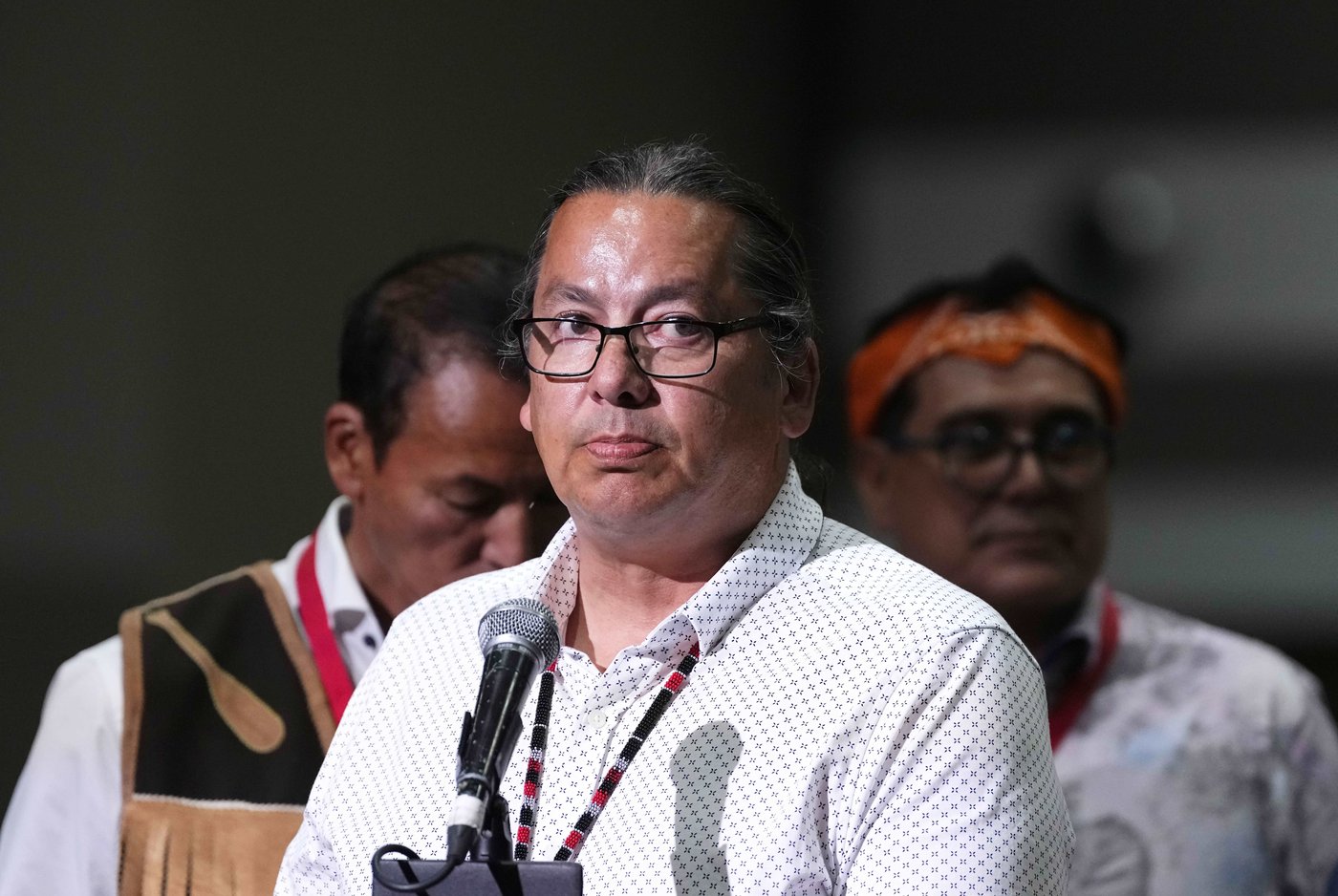
Chief Kelsey Jacko of Cold Lake First Nations speaks during the Assembly of First Nations (AFN) 2026 Annual General Assembly in Ottawa on Tuesday, July 14, 2026. THE CANADIAN PRESS/Justin Tang

Cold Lake First Nations seeks judicial review of Pacific Link pipeline designation

Oct 8, 2026 | 11:58 AM

OTTAWA — Cold Lake First Nations filed an application for judicial review in Federal Court on Thursday challenging Ottawa’s decision to designate the Pacific Link pipeline as a project in the national interest.

Prime Minister Mark Carney and Alberta Premier Danielle Smith announced last week the pipeline from Alberta to British Columbia would be fast-tracked under the Building Canada Act.

The designation as a project of national interest does not eliminate requirements to consult on the impact of the project itself . Rather it streamlines the process to make it quicker. The goal is to complete the required reviews and consultations over the next year so construction can begin next September.

Cold Lake First Nations Chief Kelsey Jacko previously told The Canadian Press his community was left out of consultations on the pipeline designation, despite the fact that his community is situated in the oilsands region.

In an interview Thursday, Jacko said his community was left with no other choice than to turn to the courts after what he called a chronic ignorance from the federal government, including Carney.

“I’m here to protect the best interests of my people and for the ones yet to come,” he said.

“They’re going to use by backyard as a garbage dump.”

In the application for judicial review, Cold Lake First Nations’ lawyers said the designation breached Canadian law and is inconsistent with the honour of the Crown.

“Increasing oilsands production will have significant adverse effects on the ability of CLFN members to maintain their Luechogh Tue Denesuline way of life as promised by Treaty no. 6,” the application said.

“Canada has made no effort to understand or mitigate the massive cumulative effects of oilsands development on CLFN’s Luechogn Tue Denesuline treaty rights.”

The First Nation is asking the court to quash the national interest designation and to declare that Canada has a duty to consult with the community on the pipeline.

Indigenous communities along the route for the pipeline were given just two months for consultations on whether the pipeline should be designated a project of national interest — and that was still more than the government had planned.

At first, the consultations were to take place over one month. They were extended to two months after Indigenous leaders raised concerns about the tight timeline.

A summary of those consultations posted online by the federal government says Indigenous groups decried a lack of information about the project, which they said prevented them from fully assessing its impact.

The Assembly of First Nations told The Canadian Press last week it had identified “many red flags” in the pipeline’s national interest designation and said the federal government appears to be predetermining outcomes and approving projects in advance of meaningful consultations.

Carney promised his major projects agenda would not interfere with Canada’s obligations under the United Nations Declaration on the Rights of Indigenous Peoples. Indigenous leaders have warned his government risks violating their rights with “national interest” designations through the Major Projects Office and the controversial Building Canada Act.

Cold Lake First Nations is also concerned about the Pathways Project, which is a multibillion-dollar plan to transport and store oilsands greenhouse gas emissions. The carbon-capture and storage project is linked to the pipeline, with Smith saying one would not be able to proceed without the other.

The court filing says if the national interest designation for the pipeline stands, Ottawa will have granted pre-approval of Pathways without meaningfully consulting with Cold Lake.

“Since March 2023, CLFN has repeatedly written to Canada seeking engagement with the relevant federal ministers regarding the Pathways Project. Canada has not responded in any substantive or meaningful way,” the filing says.

The court filing says Cold Lake First Nations has made multi-generational sacrifices for Canada’s “national interest” through the relocation of the community for military actions and training, and the failure of Canada to meaningfully include them in resource revenue generated from their territory.

“We trusted them before, and now we’re expected to trust them again?” Jacko said.

“We’re trying to work with Canada. We keep trying, but nobody’s trying with us.”

This report by The Canadian Press was first published Oct. 8, 2026.

Alessia Passafiume, The Canadian Press