Click here to sign up for our free daily newsletter
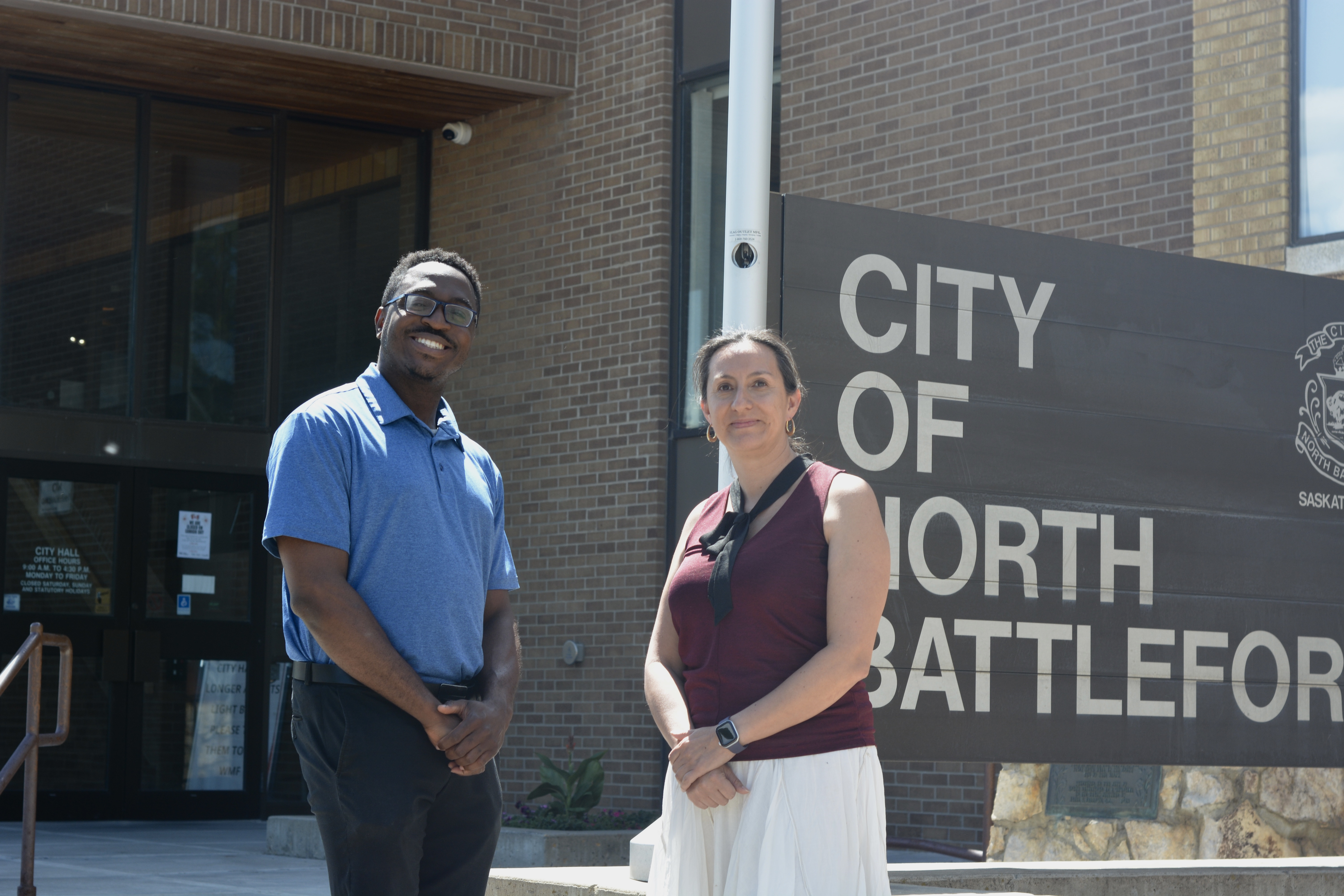
City of North Battleford finance supervisor Bankole Lumor, left, and director of finance Margarita Pena pose outside City Hall in North Battleford on June 25, 2026, after speaking with battlefordsNOW about their experiences as immigrants building careers and lives in the Battlefords. (Image Credit: Kenneth Cheung/battlefordsNOW)
immigration

Why more newcomers are choosing to build their lives in the Battlefords

Jun 27, 2026 | 12:00 PM

More than 10,000 visits from countries including China, Singapore and Germany showed up in North Battleford’s website analytics last year – an unexpected finding in the city’s 2025 annual report that prompted a closer look at how the prairie community is quietly becoming more international.

The answer isn’t found in website traffic alone. It’s unfolding across workplaces, schools and neighbourhoods, where more immigrants are choosing not only to begin their Canadian lives in the Battlefords, but to build them here. 

“It’s much more affordable for people to live in the smaller areas, so they’re actually coming here from the bigger cities, settling here,” said Annette McGovern, executive director of the Battlefords Immigration Resource Centre (BIRC).

“There are a lot of opportunities, a lot of amenities – like this city, for the size of it, is amazing.”
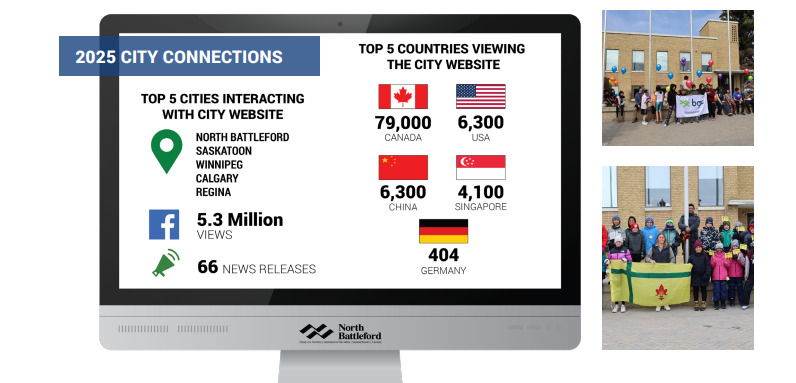
A page from the City of North Battleford’s 2025 annual report shows website traffic by country and social media statistics for 2025.
A page from the City of North Battleford’s 2025 annual report shows website traffic by country and social media statistics for 2025. (Image Credit: City of North Battleford)

She said the trend has become increasingly visible over the past decade.

Since McGovern joined the centre more than 11 years ago, staffing has grown from five employees to 12 as demand for settlement services increased. The centre now serves newcomers across a regional service area stretching from Borden to Kindersley, Maidstone and Hafford, helping them navigate housing, employment, schools and community life.

“We are expanding our programs as the need appears, and I can’t really see it changing in the near future, because there seems to be more and more need as more and more people come,” McGovern said.

The growing demand is reflected in the numbers.

Yevheniia Pyshuk, a provincial settlement worker, said the provincial settlement program alone typically welcomes more than 300 new clients each year while providing ongoing support to a few thousand returning clients across North Battleford and surrounding communities. 

McGovern said the federally funded program serves upwards of 350 new permanent residents annually, while provincial services assist more than 4,000 clients each year, depending on the level of support required.

“We have the settlement workers in schools, because they are now not just the parent is coming, they’re bringing the spouse and the kids and the entire family,” McGovern said.

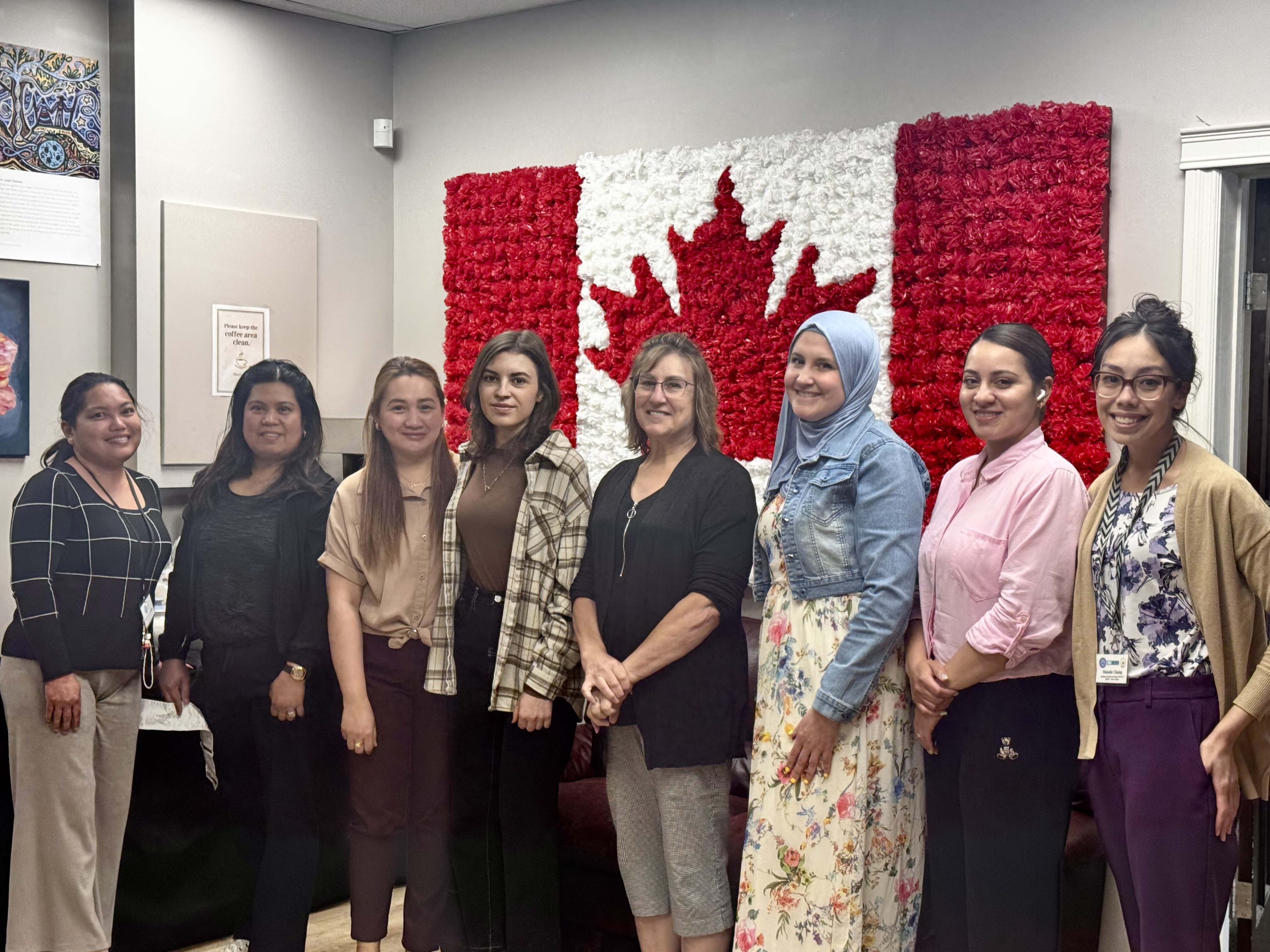
Staff with the Battlefords Immigration Resource Centre pose for a group photo at the centre in North Battleford on June 25, 2026.
Staff with the Battlefords Immigration Resource Centre pose for a group photo at the centre in North Battleford on June 25, 2026. (Image Credit: Kenneth Cheung/battlefordsNOW)

For Pyshuk, who is originally from Ukraine, one of the community’s greatest strengths is that it offers internationally trained professionals a realistic path into their careers.

“There are lots of employment opportunities, especially in government-related agencies,” she said.

She said internationally trained teachers, nurses and other professionals can often secure conditional job offers while completing Canadian certification requirements – opportunities that can be harder to find in larger centres because of greater competition.

Many newcomers arrive expecting North Battleford to be a stepping stone, Pyshuk said. Instead, many end up staying.

“Lots of people are staying here specifically to get the experience… and then later on they love the city, they fall in love with it, and they stay for the whole life.”

That experience closely mirrors Margarita Pena’s own journey.

Originally from Colombia, the City of North Battleford’s director of finance had already built a career in New Zealand and Australia before moving to Canada. Like many internationally trained professionals, she found the path into Canada’s workforce was more accessible in a smaller community than in larger centres such as Toronto.

“I knew I needed to start at a smaller place, because the opportunity was going to be there,” she said.

Nearly a decade later, Pena has advanced from finance manager to director of finance, but says career growth wasn’t the only reason her family stayed.

“The city has given me the best opportunity to spend time with them,” she said, pointing to short commutes, affordable housing and the ability to be involved in her daughters’ school and extracurricular activities.

“I wouldn’t really hesitate to… move to North Battleford.”

Bankole Lumor’s path followed a different route but led to the same conclusion.

After arriving in Canada from Nigeria as an international student, he lived in Prince Edward Island, worked in the Northwest Territories and later moved to Saskatchewan. Despite receiving a job offer in Saskatoon, Lumor chose North Battleford instead.

“I saw the opportunity to learn more was here,” he said.

Working in a smaller municipality gave him opportunities to better understand local government, work alongside senior leaders and become part of the community more quickly.

“The people made it a lot more enjoyable to even be here and work here and live here.”

He also discovered something familiar in an unfamiliar place – a Nigerian community that gathers for cultural celebrations and community events.

“You’ll still be able to have little bits of home when you come.”

City of North Battleford finance supervisor Bankole Lumor, left, and director of finance Margarita Pena pose outside City Hall in North Battleford on June 25, 2026, after speaking with battlefordsNOW about their experiences as immigrants building careers and lives in the Battlefords.
City of North Battleford finance supervisor Bankole Lumor, left, and director of finance Margarita Pena pose outside City Hall in North Battleford on June 25, 2026, after speaking with battlefordsNOW about their experiences as immigrants building careers and lives in the Battlefords. (Image Credit: Kenneth Cheung/battlefordsNOW)

That growing diversity is also changing how City Hall serves residents.

City officials say employees collectively speak languages including Tagalog, Yoruba, Serbian, Afrikaans, Punjabi and Hindi, alongside Indigenous languages such as Cree, Dene and Anishinaabe. Staff members often help residents communicate when English is not their first language, while city employees from immigrant backgrounds have also helped translate information for newcomers navigating municipal services.

Beyond helping newcomers settle, BIRC connects them through community events, assists employers facing labour shortages and often provides guidance even when clients fall outside formal funding eligibility.

“We have never turned anybody away,” McGovern said.

She said helping newcomers succeed strengthens both the workforce and the community.

“It keeps your people here when they come here. If you’re helping them and they have a successful settlement, they’re more likely to stay here.”

For Pyshuk, that willingness to help is one of the Battlefords’ greatest strengths.

“Usually in bigger cities… if you’re eligible, you will get help. If you’re not, it’s most likely you won’t get any assistance,” she said. “But here we try to help everybody.”

The city’s growing diversity is also shaping its own priorities.

Candace Toma, the city’s public and intergovernmental relations co-ordinator, said the annual report has highlighted how much the city’s workforce has evolved and is prompting discussions about how North Battleford can better support employees moving through the immigration process.

She said the work builds on the city’s membership in the Coalition of Inclusive Municipalities, a commitment aimed at fostering accessibility, diversity and inclusion across the community.

“I think internally we’ll have some exciting work to do moving forward.”

Kenneth.Cheung@pattisonmedia.com