Click here to sign up for our free daily newsletter
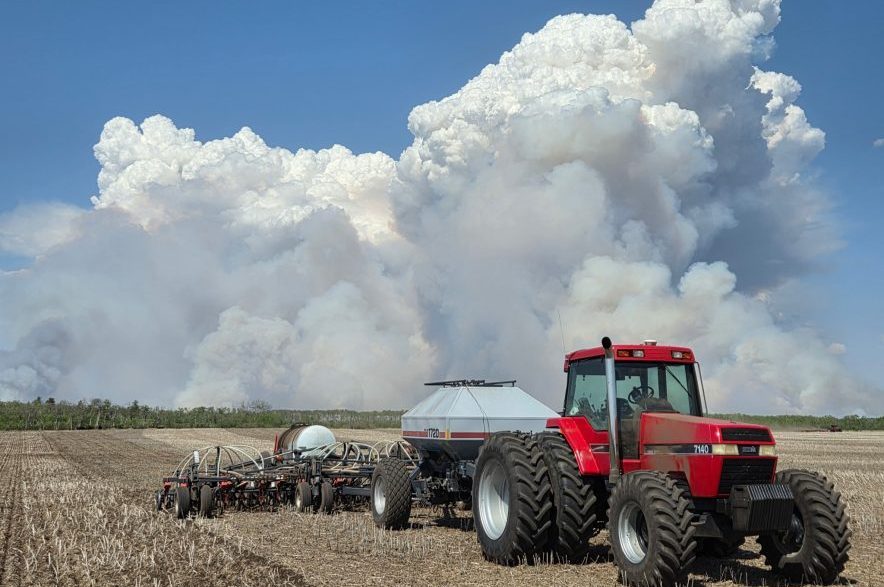
The Lobstick Fire nearing the property of Colleen and Matt Neufeld. (Image Credit: Submitted/Matt Neufeld)
"We really need to err on the side of caution."

SPSA issues sweeping fire ban as Lobstick wildfire crosses North Sask. River

May 29, 2026 | 4:59 PM

Standing at the kitchen window, Colleen Neufeld watched as the flames from the Lobstick wildfire grew ever closer.

The familiar prairie sunset she knows, filtered through a dark haze of smoke.

On Friday afternoon, the Saskatchewan Public Safety Agency (SPSA) issued a fire ban that covers a large portion of the province.

Residents like Neufeld hope it’s not too little, too late.
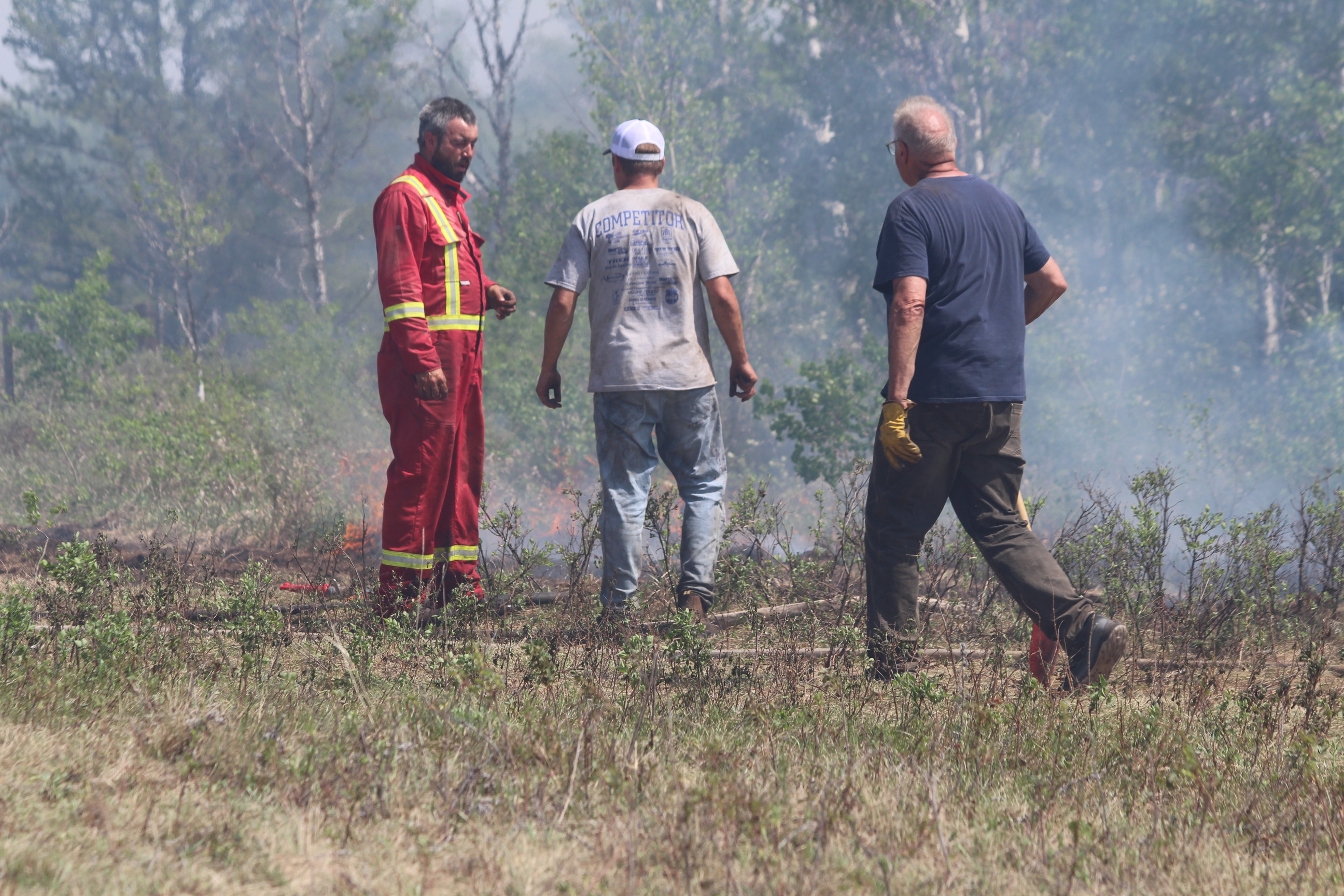
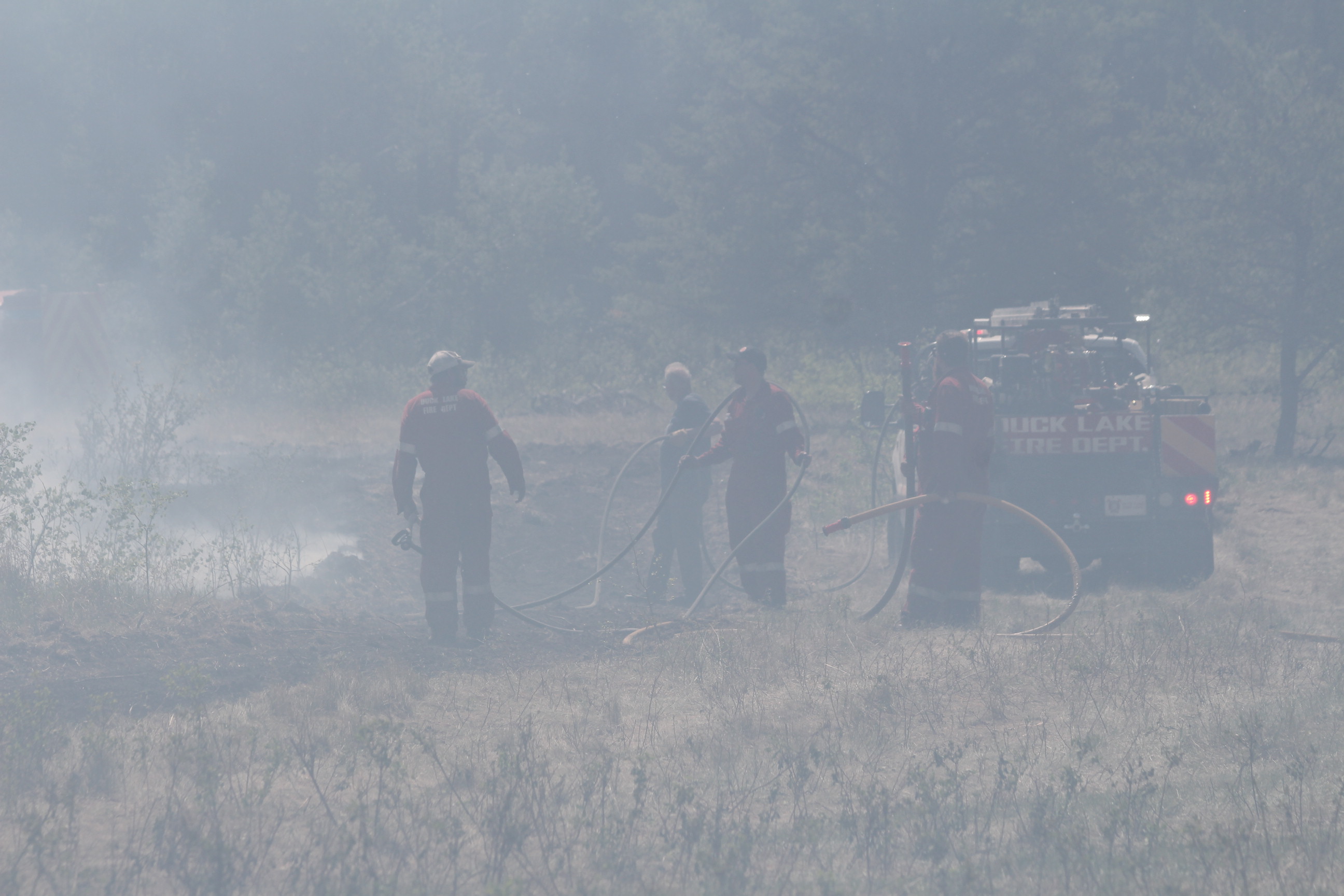
Firefighters and local farmers work together to put out a spot fire in the R.M. of Duck Lake on Friday, May 29, 2026.
Firefighters and local farmers work together to put out a spot fire in the R.M. of Duck Lake on Friday, May 29, 2026. (Image Credit: Nick Nielsen/paNOW)

“It’s all quite overwhelming and emotional, a little stressful,” Neufeld told us from her home. “We had some things packed in case we needed to evacuate. There was never an evacuation order for us, but there was at one point, that they were like, it’s getting close, like, what buildings you want us to save, and so that was a little scary for me and our kids.”

Neufeld and her husband live north of Duck Lake. Their property borders the Nisbet Forest, southwest of Prince Albert. An evacuation order was issued for part of the RM Thursday night, but was later downgraded to an alert. The RM issues the alerts based on recommendations from the SPSA.

As helicopters and planes circle around the property, Neufeld admitted it has been a very stressful time.

Read more:

“I’m going to get emotional. It’s crazy when it’s this close to home. We’ve seen forest fires before, but I pinned the one corner I was standing on out on a bush line that was on fire, and I pinned it to our property … the distance told me it was 500 meters (away), so that was like a little nerve-wracking, and then stressful.

“It’s kind of just watching all the time to see if the wind’s going to change,” Neufeld said.

It has been particularly traumatic for Neufeld’s children, who are nine and ten years old.

“My kids, for sure, they’re young, they don’t like not knowing what’s going on exactly, and we can’t tell them a ton either,” she said.

“When I told them to pack stuff, they definitely just grabbed all of their mini farm toys and their Lego sets, they were pulling out what to them was important, and so I was like, yep, you do that, that’s okay.”

Smoke from the Lobstick wildfire near Duck Lake.
Smoke from the Lobstick wildfire near Duck Lake. (Image Credit: Submitted/Rodney Reidt)

Neufeld is, like many in the area, closely monitoring the wildfire.

Rodney Reidt farms on the south side of the forest.

“Hopefully it will rain this weekend and hopefully it will slow it up,” he said.

“My son has a house on the edge of the forest, so we are watching that and my sister has a house up in the Lily Plain area, so that’s another one,” he explained. “We have a neighbour who has the fire creeping up to his place and we have trucks with water waiting.”

Tyler Smith is a farmer working north of Wingard Pasture. He said the fire moved towards that Lily Plain area; the biggest flames are to the north.

“That’s where I think the provincial fire crews are working right now,” he shared. “There’s a lot of houses up there in the Lily Plain area. There’s lots of patrons that have cattle in there, and there are some fires in there. It’s mostly contained, it’s in the low areas, boggy areas that are hard to get at.”

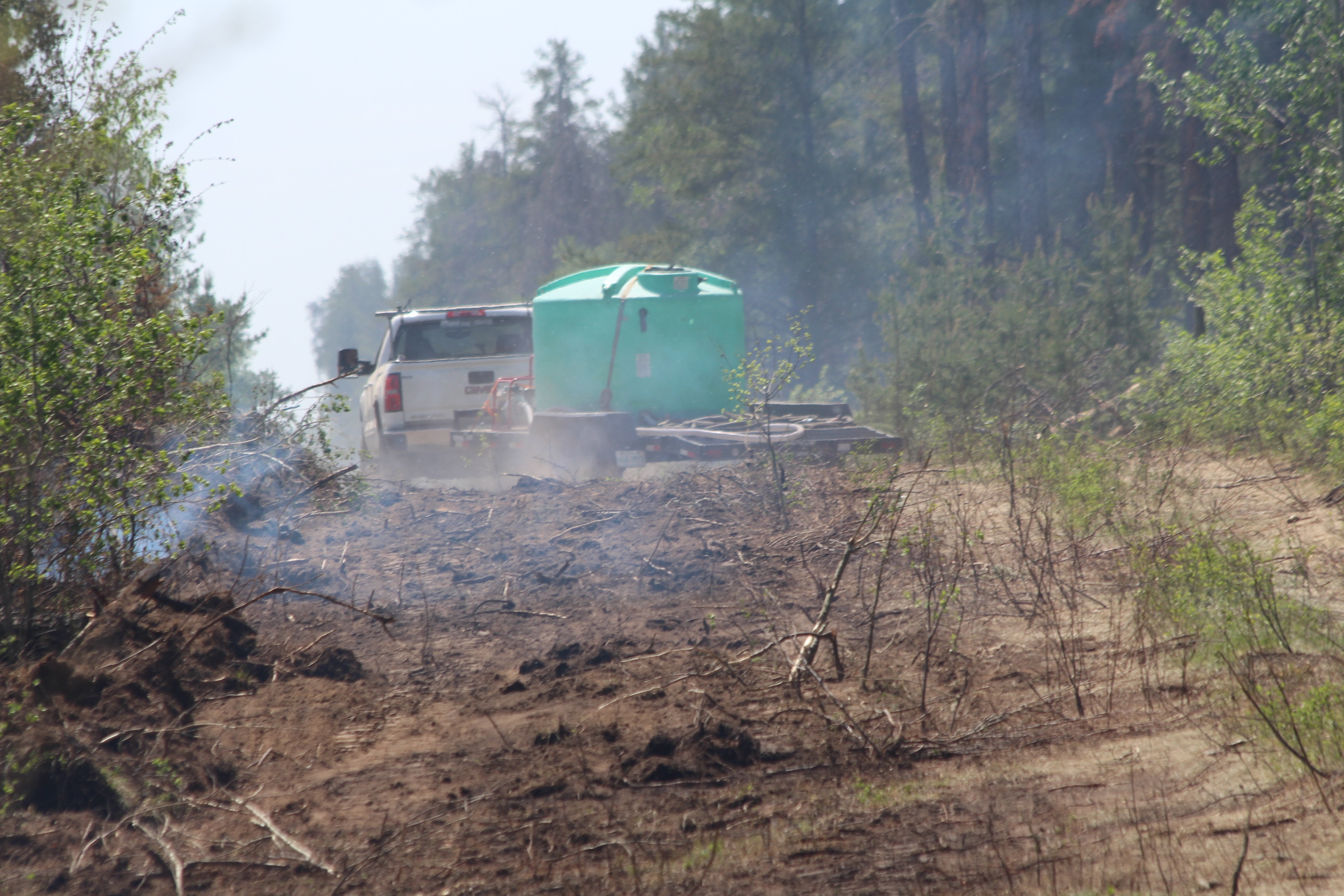
Residents have been hauling in their own water tanks to help fight the Lobstick blaze.
Residents have been hauling in their own water tanks to help fight the Lobstick blaze. (Image Credit: Nick Nielsen/paNOW)

Smith, who is also a councillor for the RM, said the Duck Lake and MacDowall fire departments don’t have a lot of equipment to work with that could fight the main blaze, but the firefighters, residents and volunteers are doing what they can by bringing in their own equipment like water tanks. He said it’s been difficult to make any headway.

 “You think it’s ok, and then the wind conditions or environmental conditions change, and then it starts to get out of control again,” he said.

SPSA Response

At an SPSA news conference Friday afternoon, Public Safety Minister Michael Wegar confirmed the Lobstick fire has crossed the North Saskatchewan River. It has so far damaged two outbuildings.

Originally thought to be human-caused, investigators now believe it was sparked by lightning.

“We really need to err on the side of caution regarding the wildfire risk we’re facing right now and please be very, very careful and if you’re unsure you’re in a fireban area, just assume you’re in a fireban area,” Weger said.

Members of the Duck Lake fire department have to contend with extremely smoky conditions with winds gusting up to 50 km/h Friday.
Members of the Duck Lake fire department have to contend with extremely smoky conditions with winds gusting up to 50 km/h Friday. (Image Credit: Nick Nielsen/paNOW)

The Lobstick fire is not contained and spans approximately 13,000 hectares. SPSA personnel, including Type 1 and Type 2 crews, are working alongside local fire departments and the SPSA Emergency Response Team (ERT).

“Additional resources, including heavy equipment, helicopter and air tanker support, have been working on this fire for multiple days. Crews have established several dozer guards and continue setting up sprinkler systems (ie. value protection units).”

As of 4 p.m. Friday, there were 6 active wildfires in Saskatchewan; only two are considered contained.

In the meantime, area residents like Neufeld and her husband continue to be on standby, moving cattle and bulls as needed depending on conditions. She is grateful they are surrounded by people trying to help them.

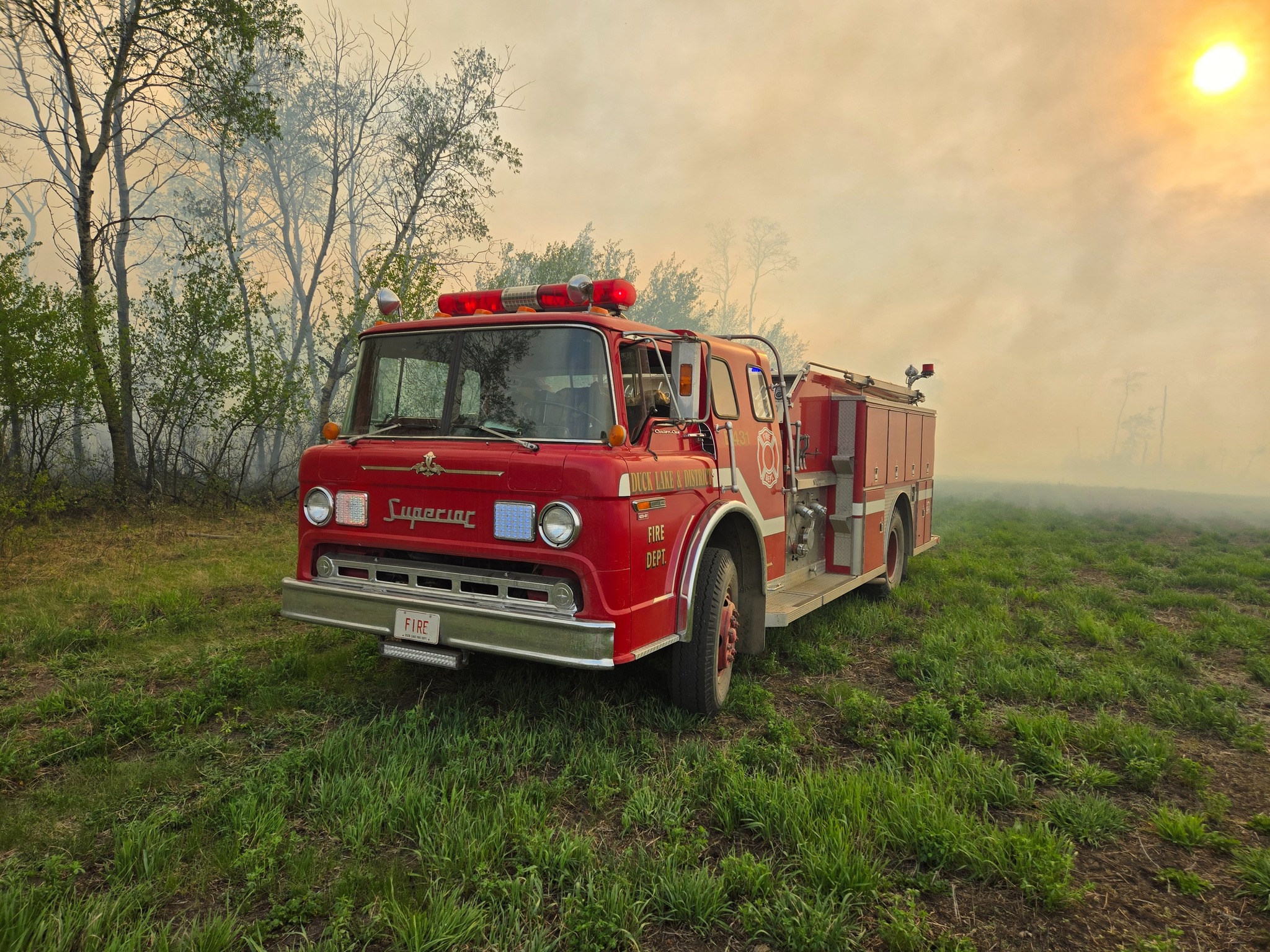
Crews from Duck Lake and MacDowall fire departments have been working long nights to try and prevent the fire from spreading.
Crews from Duck Lake and MacDowall fire departments have been working long nights to try and prevent the fire from spreading. (Image Credit: Duck Lake Fire Department/Facebook)

“I’d like to say a huge thank you to all the firefighters and airplanes, and all of the things, all of the people involved in helping,” she said.

“You see people come up on your yard and different areas, and you’re like, I don’t know you, but they’re helping, so that’s awesome. It kind of warms your heart, seeing everyone step up.”