Click here to sign up for our free daily newsletter
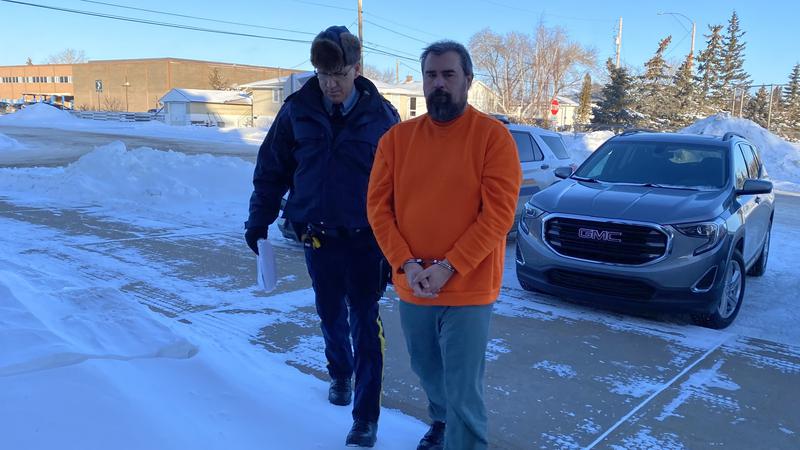
Joseph Sproull was convicted of sexually assaulting two children aged two and three at a home daycare in Marshall operated by his wife, as well as possessing, making and distributing child pornography. (Image Credit: battlefordsNOW staff)
CRIME

Sask. court upholds convictions in home daycare child-sex abuse case

May 29, 2026 | 1:28 PM

Saskatchewan’s highest court has upheld the conviction and 15-year prison sentence of a man found guilty of sexually assaulting two young children attending a home daycare and creating child pornography of the abuse.

In a decision released May 20, the Saskatchewan Court of Appeal dismissed both the conviction and sentence appeals of Joseph Sproull, rejecting claims he was wrongly identified as the offender and that his punishment was excessive.

The case involved two children, aged two and three, who attended a home daycare operated by Sproull’s wife in Marshall, about 121 kilometres west of North Battleford. 

The offences occurred between August 2020 and March 2021. During that time, Sproull worked as a handi-van driver and janitor before his arrest on Sept. 21, 2021.

“There was no doubt that the Crown had found 488 images of child pornography on Mr. Sproull’s cellphone, including nine images taken in his home depicting an adult male at different times sexually assaulting two children, who were two and three years of age,” Justice Neal Caldwell wrote for a unanimous three-judge panel.

Joseph Sproull arrives at the Court of King’s Bench in Battleford on Feb. 10, 2025, ahead of his sentencing, where he was given a 15-year sentence.
Joseph Sproull arrives at the Court of King’s Bench in Battleford on Feb. 10, 2025, ahead of his sentencing, where he was given a 15-year sentence. (Image Credit: battlefordsNOW staff)

Sproull was convicted in Battleford Court of King’s Bench in November 2024 of possessing child pornography, making child pornography, distributing child pornography and two counts of sexual assault. Two sexual interference convictions were stayed under legal rules preventing multiple convictions for the same conduct.

READ MORE: Accused takes the stand at child porn trial

The appeal ruling emphasized the vulnerability of the victims and the position of trust Sproull held within the home where his spouse operated the daycare.

“The victims were two-year-old and three-year-old children,” Caldwell wrote. 

“The children were in proximity to Mr. Sproull only because they were under the regular care of his spouse and, because of that fact, the evidence at trial established that Mr. Sproull had at times watched them, planned their activities and comforted them.”

A central issue at trial was whether Sproull was the person depicted in photographs documenting the assaults.

The appeal court said the trial judge compared physical characteristics visible in the images with photographs of Sproull obtained under warrant and concluded beyond a reasonable doubt that he was the offender. It also rejected defence suggestions that someone else could have accessed his phone or uploaded the material without his knowledge.

“The theories or possibilities Mr. Sproull relies upon here are themselves not evidence, not credible and not exculpatory,” Caldwell wrote.

Sproull also challenged his 15-year sentence, arguing it was excessive. The appeal court disagreed, noting the sentencing judge had initially arrived at a cumulative sentence of 20 years before reducing it to 15 years under the totality principle, which requires courts to ensure an overall sentence is proportionate.

Caldwell said Parliament and the Supreme Court of Canada have directed courts to impose stronger penalties for sexual offences against children.

“Sexual offences against children are among the most profoundly immoral acts an individual can commit,” the ruling states, quoting Supreme Court jurisprudence.

In upholding the sentence, Caldwell wrote that child pornography extends the harm beyond the original abuse through the “continuing exploitation” of victims and the infliction of severe emotional and psychological harm.

Calling the offences “undoubtedly grave,” the court concluded Sproull had failed to show either his convictions or sentence should be overturned.

“For these reasons, I would dismiss the convictions appeal and the sentence appeal.”

Chief Justice Robert Leurer and Justice Jillyne Drennan agreed.

Kenneth.Cheung@pattisonmedia.com