Click here to sign up for our free daily newsletter
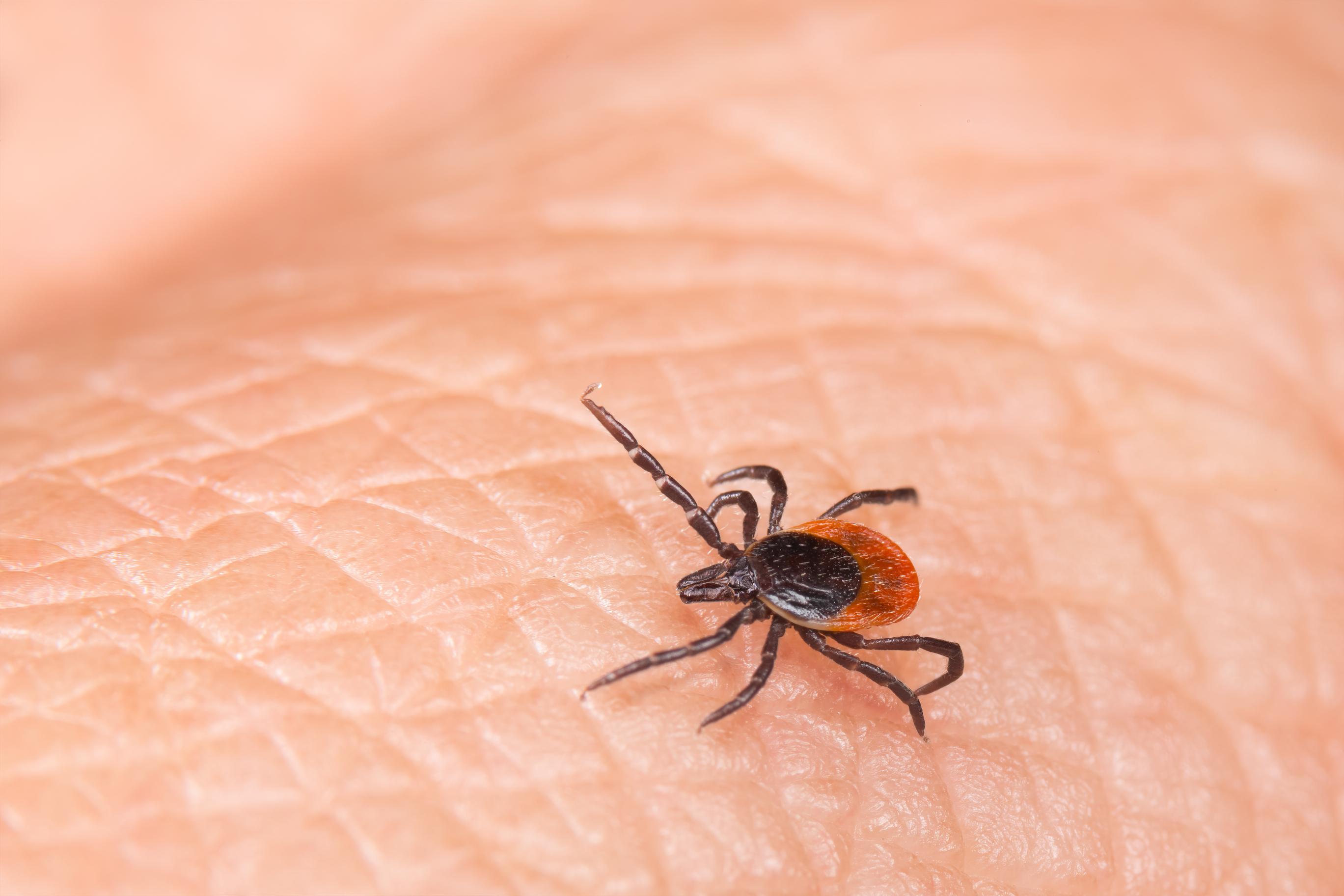
The American Dog Tick, the most common tick found in Saskatchewan. (Image Credit: ID 14341986 © Melinda Fawver | Dreamstime.com)
Reports increasing

Tick season is here for many parts of Saskatchewan

Apr 21, 2026 | 5:00 PM

While the spring weather may be taking its sweet time to take hold of the province, some areas are already seeing an unwanted aspect of the warmer weather. 

Ticks have woken up in parts of Saskatchewan, according to Dr. Emily Jenkins, Professor of Veterinary Microbiology at the Western College of Veterinary Medicine in Saskatoon. 

“We’re starting to get some hits on our monitoring program, which is called eTick, which allows members of the public to report ticks that they’ve found on themselves or their pets,” Dr. Jenkins explained. “I’d say my inbox started filling up in the last week, of reports, so they’re definitely starting to be active in some parts of the province.” 

Dr. Jenkins said the snow packed areas of Saskatchewan likely won’t start seeing larger tick activity until that snow is gone.  April is typically the beginning of tick season across the province. According to Jenkins, temperature, wind conditions, and the amount of snow on the ground all affect tick activity. 

“There aren’t too many ticks that are going to dig their way through a couple of feet of snow to find their prey,” she joked. 

With Tuesday’s warmer weather in central and southern areas, Jenkins said she expects that the number of messages about ticks will increase significantly. 

The main species of tick in Saskatchewan is the dermacentor species, or American Dog Tick, while there are also a few pockets of Rocky Mountain Wood Ticks. These types of ticks are generally getting their start at this time of year, with the peak activity in May and June. Dr. Jenkins said when the hotter weather hits in July and August, those ticks tend to go underground, and there won’t be much activity from them.  

“However, Saskatchewan is starting to get more and more reports of the Black Legged Tick, the one that carries Lyme Disease and other pathogens we don’t really want,” explained Dr. Jenkins. “They’re starting to show up more and more in the province, and those ones tend to be most active in fall.”  

The Black Legged Tick is being found in Saskatchewan more often. It can carry pathogens like Lyme Disease.
The Black Legged Tick is being found in Saskatchewan more often. It can carry pathogens like Lyme Disease. (Image Credit: ID 334921995 © KPixMining | Dreamstime.com)

She said many people have ‘forgotten’ about ticks by that time, and stopped giving their pets tick protection, while also failing to do tick checks on the animals – and themselves.  The Black Legged Tick is most likely to find a host in October and November, before the first hard frost hits. 

“If you are unlucky enough to see a tick then, it’s more likely to be the Black Legged Tick that we’re more concerned about than our normal dog ticks.” 

Dr. Jenkins said they work closely with the province and the public health division to monitor Black Legged Tick activity and spread, though they haven’t fully established a stronghold in Saskatchewan.  

“That’s one we’re certainly monitoring very closely, because it is not supposed to be here, it’s not supposed to be able to establish here, and it’s one that we think is kind of poised on the brink of invading and setting up,” Dr. Jenkins explained. “But that remains to be seen.” 

The habitats in which people tend to pick up the American Dog Ticks include sunny meadows along trails, and wherever there is grass and long shrubs. Dr. Jenkins said those ticks are good at ambushing prey like dogs, deer, and people by hanging out near trails and other similar areas.  Black Legged Ticks are creatures of the forest, and they love deciduous tree litter. 

There are places and times that have more tick activity than others, and Dr. Jenkins recommends keeping an eye out for any that may have latched to your pets or yourself. The most common ticks in the province are fairly large and can usually be picked off of animals relatively easily, according to Dr. Jenkins.  There are also a variety of veterinary products that help protect dogs. 

For humans, wearing long sleeves and long pants tucked into socks on those hikes helps. High concentrations of DEET helps to repel ticks, according to Dr. Jenkins, and it’s always important to do tick checks when in those grassy areas.  

While Dr. Jenkins studies ticks, she says she’d be hard-pressed to say she loves them herself. 

“[Ticks are] part of the ecosystem, and we can work around them,” Dr. Jenkins said.  

She recommends people continue to monitor for ticks, and if possible, sign up for the free eTick program. They can then take pictures of any ticks spotted, especially if it looks different, and submit it to eTick through their app or their website. Dr. Jenkins said that allows them to build data and a better understanding of when tick season is, and what ticks are in the province at any given time. 

– 

cam.lee@pattisonmedia.com