Click here to sign up for our free daily newsletter
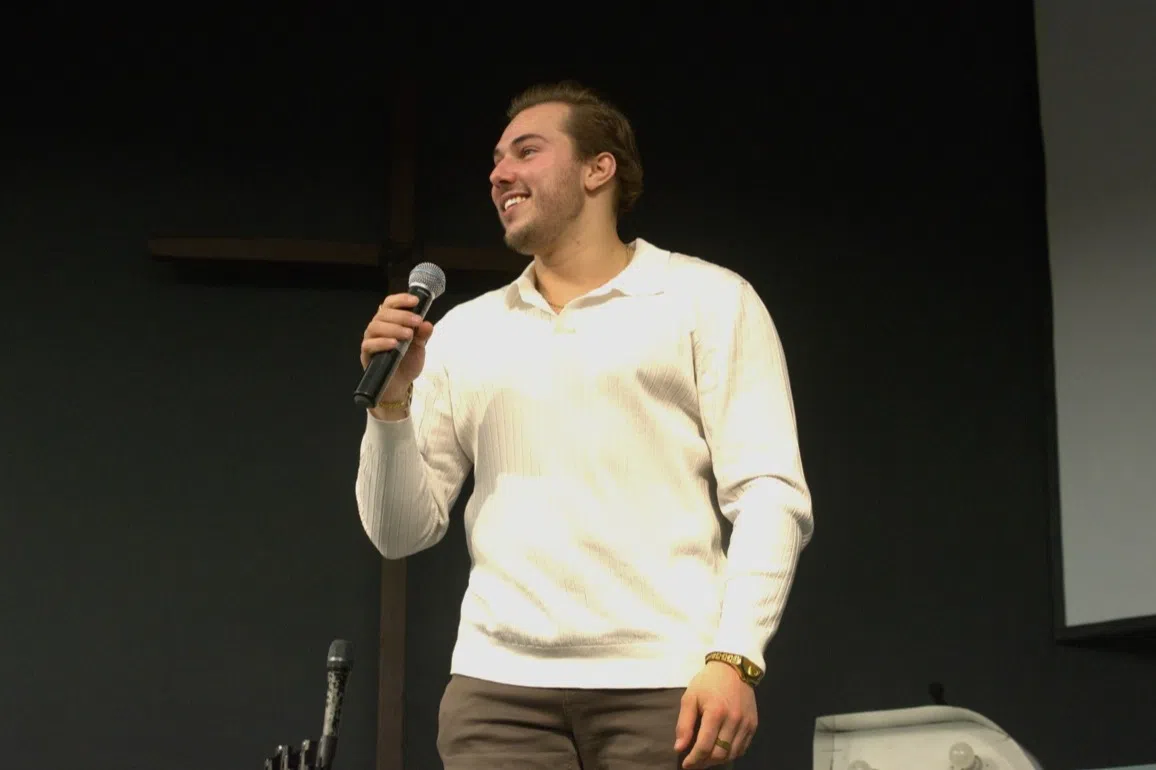
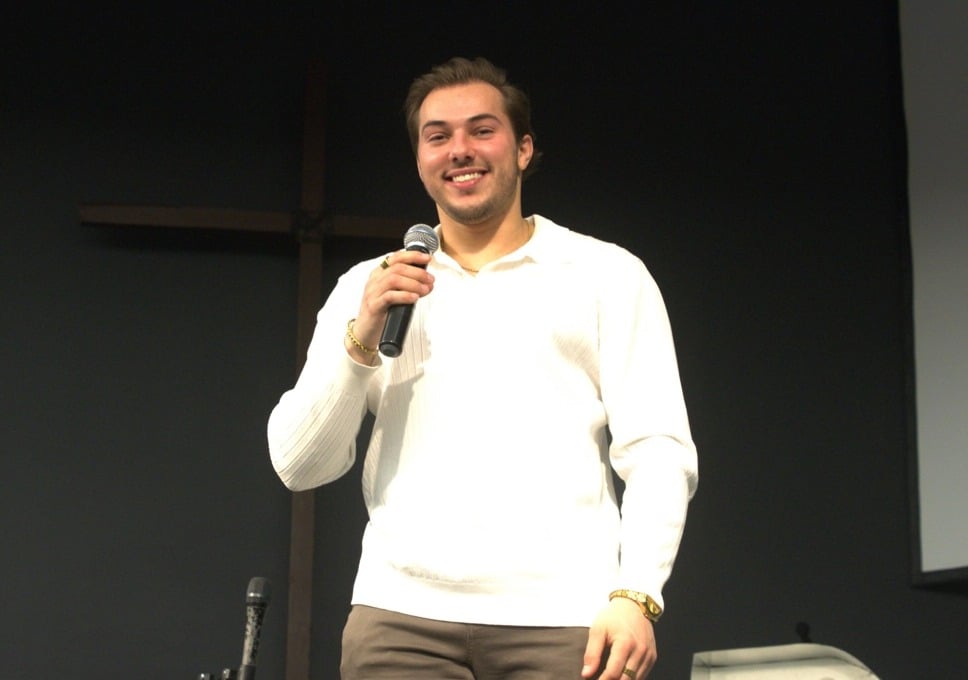
Kaleb Dahlgren, a survivor of the 2018 Humboldt Broncos bus crash, speaks to students during a mental health summit at Living Faith Chapel on Thursday, Feb. 26, in North Battleford. (Image Credit: Kenneth Cheung/battlefordsNOW)
YOUR MENTAL HEALTH MATTERS

Humboldt Broncos bus crash survivor brings message of resilience to Battlefords youth

Feb 27, 2026 | 12:52 PM

“Focus on the things that you can control… life is 10 per cent what happens to you and 90 per cent how you react to it.”

It is a lesson Kaleb Dahlgren learned through experience.

Eight years after surviving the Humboldt Broncos bus crash that claimed 16 lives and injured 13 others, he now shares a message of resilience with youth – one he brought this week to students in the Battlefords during a mental health summit.

“I’m here to help increase mental health for children,” Dahlgren said. “It’s just sharing my story of resilience, adversity and overcoming adversity.”

About 100 local Grade 10 to 12 students gathered Thursday for the Headstrong Summit, a national youth anti-stigma initiative developed by Opening Minds under the Mental Health Commission of Canada. 

Organized locally through the Mental Health Capacity Building programs at Light of Christ and Living Sky school divisions, the day focused on lived-experience speakers, open conversations about stigma and student-led action plans to bring back to their schools.

Dahlgren studied at John Paul II Collegiate and once played for the Battlefords Stars U18 AAA hockey team. For him, the message he carries today has been shaped by a lifetime of navigating adversity.

Diagnosed with Type 1 diabetes at age four, he said he faced stigma and misunderstanding growing up, recalling how some people made false assumptions about his condition or questioned whether he could even play hockey.

Years later, he survived the 2018 Humboldt Broncos bus crash – one of the country’s most devastating sports tragedies – after losing teammates, friends, and a mentor and sustaining severe injuries.

“The story is overcoming these kinds of challenges and making the most of the situation,” he said.

Kaleb Dahlgren, a survivor of the 2018 Humboldt Broncos bus crash, speaks to students during a mental health summit at Living Faith Chapel on Thursday, Feb. 26, in North Battleford.
Kaleb Dahlgren, a survivor of the 2018 Humboldt Broncos bus crash, speaks to students during a mental health summit at Living Faith Chapel on Thursday, Feb. 26, in North Battleford. (Image Credit: Kenneth Cheung/battlefordsNOW)

Standing before students, Dahlgren spoke about resilience not as a distant concept but as something built through everyday choices. 

He encouraged youth to develop what he calls “micro resilience” – small, intentional steps that shape how people respond to life’s challenges through perspective, response and action.

To illustrate, he asked students to imagine receiving a harsh comment online.

“So usually when people make a harsh comment online, they’re in pain, and they’re doing it out of pain to try to bring you down, to make themselves feel better,” he said, explaining that the first step is shifting perspective.

From there come responses, choosing whether to react with anger or kindness, and finally action, whether that means replying with understanding or simply letting the comment go.

He offered another example familiar to many students: failing an exam.

Rather than telling themselves they will never succeed, he encouraged youth to reframe the moment as an opportunity to improve, respond by putting in more effort and take action by seeking extra help or support. Practicing those small shifts, he said, builds habits that make it easier to navigate larger life challenges.

He urged students to see mental wellness as a strength that can be developed over time rather than something to hide.

“I want people to leave here with tools and tricks in their sleeves, so that they’re a better human being and that they view the world a little bit differently,” he said. “Working on your mental health is cool — it should be cool to be mentally strong.”

Inside the room, his message resonated deeply with students.

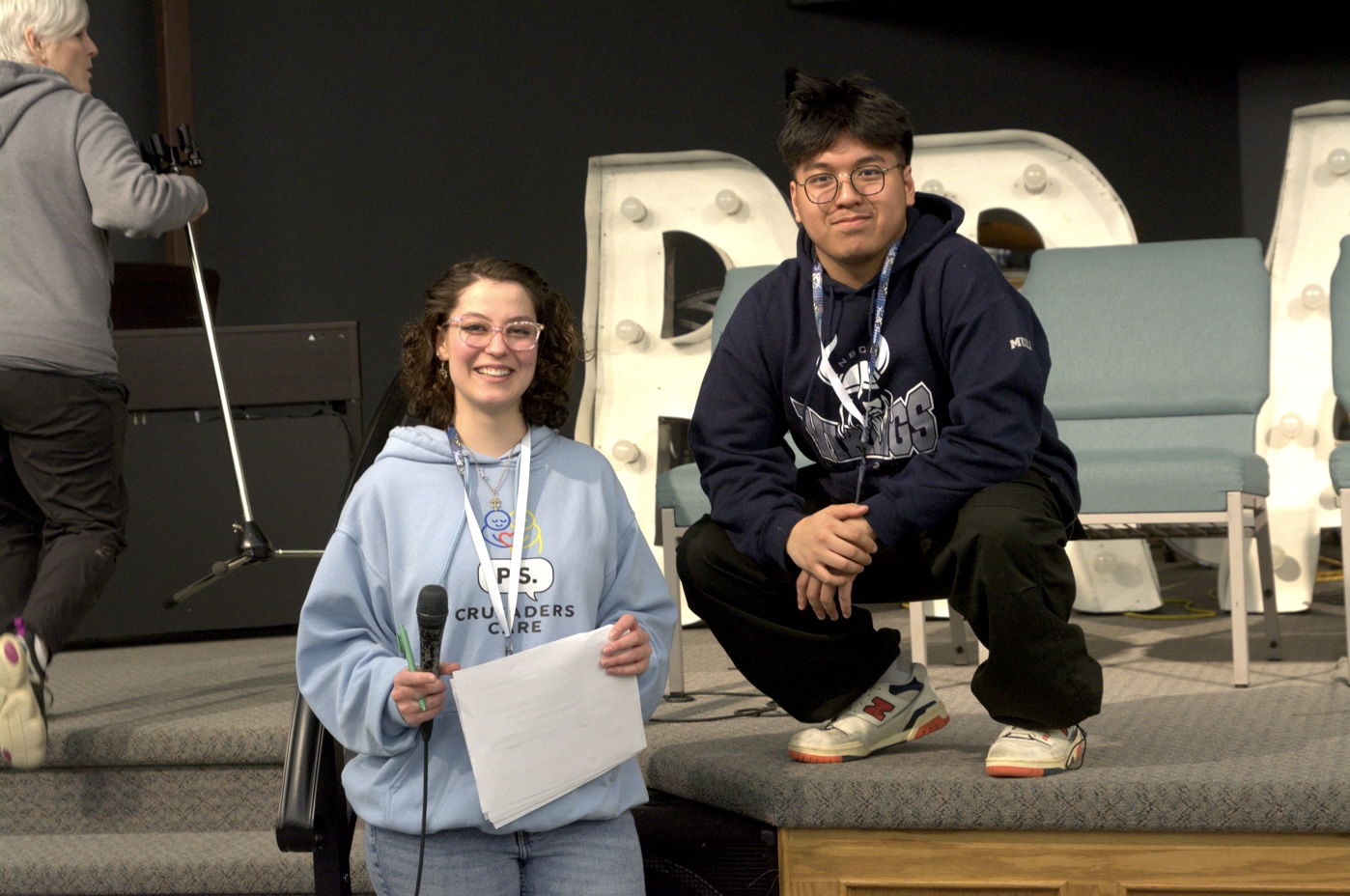
Student MCs Mya Bailey, left, and Brendan Muli during the Headstrong Summit at Living Faith Chapel on Thursday, Feb. 26, in North Battleford.
Student MCs Mya Bailey, left, and Brendan Muli during the Headstrong Summit at Living Faith Chapel on Thursday, Feb. 26, in North Battleford. (Image Credit: Kenneth Cheung/battlefordsNOW)

“Mental health is important to me, because, well, everyone has it, and if we don’t take care of it, we can’t take care of each other,” said Mya Bailey, a Grade 12 student who served as one of the summit’s MCs.

Her co-MC, Brendan Muli, said events like the summit play a crucial role in breaking down stigma that still surrounds mental health.

“I think it’s a real shame that there’s a lot of stigma around that revolves around the idea or concept of mental health,” he said. “And I’m glad I was able to do this, because I am then able to show or disprove those stigmas around mental health, and we can raise awareness around that idea.”

Both students said the lessons shared during the summit extend into everyday life – through small check-ins with friends, peer support initiatives at school, and simply making space for honest conversations.

“One of the first things I will ask when I see someone I know is how they’re doing,” Muli said. “I think it’s important that they know that we’re there for them.”

Bailey believes awareness is growing among youth, though more work remains.

“I think that there’s a good start and that it’s gonna go uphill from here,” she said. “There’s a lot of different groups… but I think even more promotion and awareness for events like these are really important.”

Hearing Dahlgren speak left a lasting impression.

“I really liked what he said about perspective,” Muli said. “There were so many things that he talked about there that I really appreciated, and I’m sure everyone else in the room appreciated too.”

Bailey described his story as difficult to hear, but ultimately hopeful.

“It was really, honestly like his story made me sick to my stomach, just with how traumatic his experiences were,” she said. “But through that, he brought hope, and he brought this resilience, which was really inspiring.”

Organizers say the summit is meant to be a starting point rather than a single-day event. Participating students will receive seed funding to bring mental health and stigma-reduction projects back to their schools, with the goal of fostering cultures of understanding, compassion and resilience across the community.

For those who attended, the message that lingered was one of shared responsibility, that meaningful change often begins with small, everyday actions.

“Each individual matters,” Bailey said. “And each individual has the ability and responsibility to take action to better their community.”

Kenneth.Cheung@pattisonmedia.com