Click here to sign up for our free daily newsletter
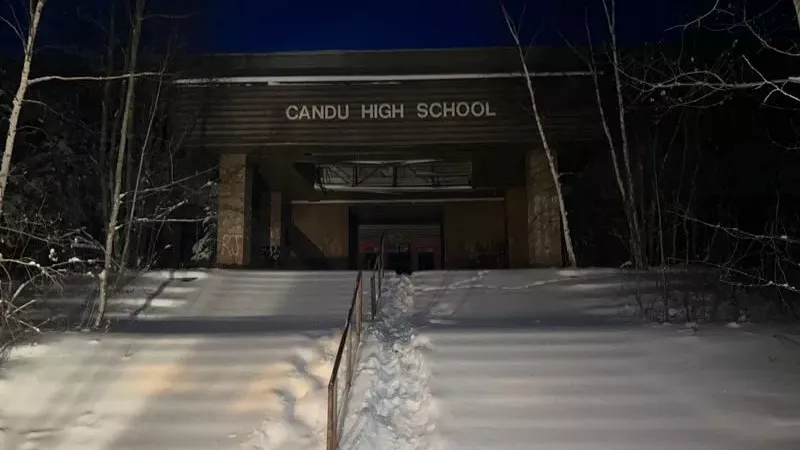
CANDU High School, once full of students, now stands abandoned and overgrown in Uranium City. (Brittany Caffet/650 CKOM)
Northern Memories

Exploring Uranium City: One man’s memories of a Sask. ghost town

Jan 8, 2026 | 9:22 AM

Uranium City, SK — Some people call Uranium City a ghost town.

They see the broken windows, the empty streets, the buildings slowly folding back into the bush. They see a fly-in community at the northern edge of Saskatchewan that lost its reason for being and never recovered. But Dean Classen doesn’t see it that way.

“I came here when I was two years old,” he said. “My dad was a high school teacher here. He came for job. When the town shut down in ’82, my dad moved out because I had brothers and sisters. I stayed.”
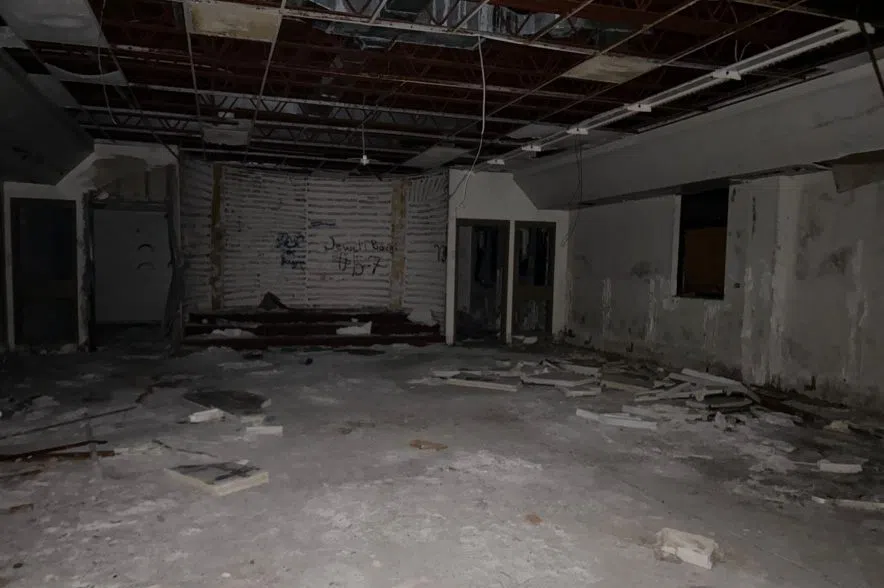
Today, Uranium City’s population hovers around 70, a tiny fraction of the 3,500 people who once called it home. The school, which opened its doors in 1979, closed for good just four years later in 1983. (Brittany Caffet/650 CKOM)
Built in the 1950s during Canada’s uranium boom, Uranium City grew quickly and confidently on the shore of Lake Athabasca. At its height, about 3,500 people lived there. Planes came and went daily. There were grocery stores, a theatre, a bank and a hardware store.

Classen was in Grade 12 then — standing at the edge of adulthood, old enough to understand what the town had built for itself and young enough to assume it would always be there.

But it ended. And that end didn’t come slowly.

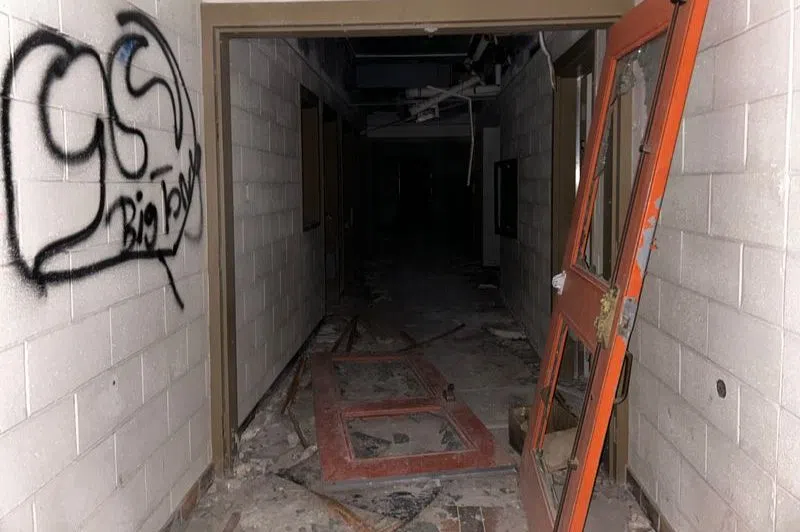
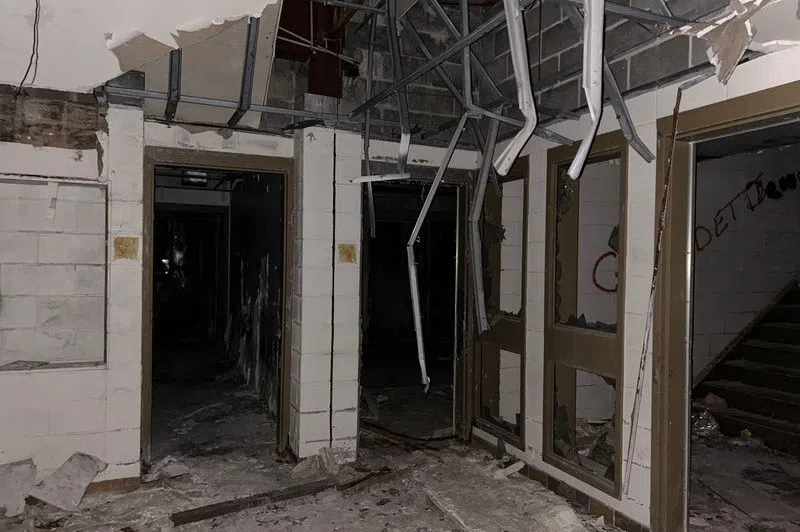
These rooms and halls were once bustling, full of students and teachers. Today they sit empty, destroyed by the elements and vandalism. (Brittany Caffet/650 CKOM)

In 1982, the uranium mine shut down without warning. In an instant, the economic foundation beneath the town gave way.

“They announced the shutdown of the mine on the radio. Everybody in town lost jobs instantly,” Classen said, the memory still heavy more than four decades later.

“Housing values went to zero overnight. Couldn’t get insurance on homes after that. Can’t even get insurance in Uranium City now.”

For the people who called the northern community home, the announcement felt like the sky had fallen on the town they loved.

“Kids in school were crying that day when they announced a shutdown,” he said.

Apart from that shattering day, Classen said his memories of his time at CANDU High School – fittingly named after a Canadian-made, Uranium-powered nuclear reactor – are bright and unforgettable.

“There (were) probably 300 students in high school when I went to school,” he recalled fondly. “Lots of friends, lots of things to do, lots of different clubs – hunting, fishing, sports.”

The high school still stands, but it’s a stark contrast to the bustling place Classen remembers from his teenage years.

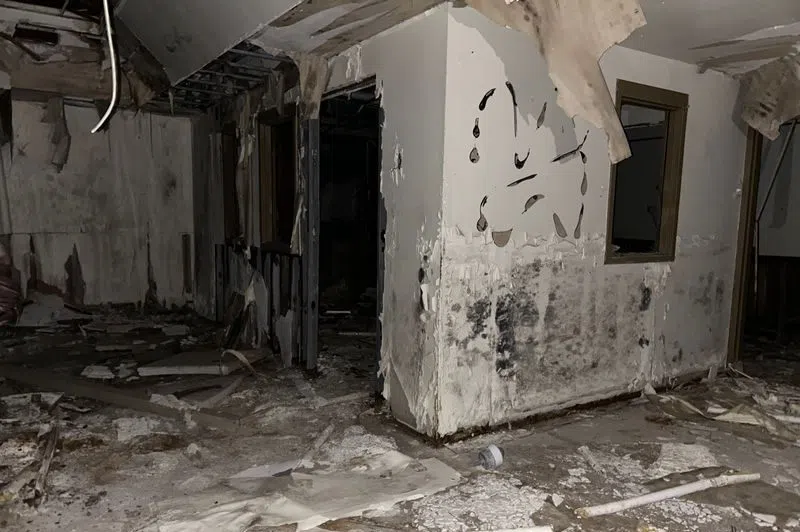
While most items have been taken out of the school, a handful of remnants still remain scattered around the building. (Brittany Caffet/650 CKOM)

The building has no doors or windows. Graffiti coats the walls. Dust and debris cover the floors. The structure is open to the elements, slowly surrendering itself to time.

“It was a modern high school with woodworking labs, art labs, all kinds of stuff,” Classen said, the building alive again in his memory.

He walked carefully through the abandoned halls, moving slowly over the debris. The beam of his flashlight cut through the shadows, illuminating dust motes floating in the still air. But even while standing in the quiet ruin, he didn’t dwell on what had been destroyed.

“I still see my friends running up and down the hallways,” he said. “If you look at all the destruction and things that aren’t there, you’re just…”

His voice faded as he swept his gaze over the empty rooms.

“I look at the good things,” he said. “I’m a positive person, so I think of all my friends and things that we did and things I learned in the school. That’s what it does for me.”

Driving away from the school, the so-called “ghosts” of Uranium City take on names.

Empty lots are not empty to Classen. He remembers which families occupied which houses, where his teachers lived, where the arena and dozens of businesses once stood.

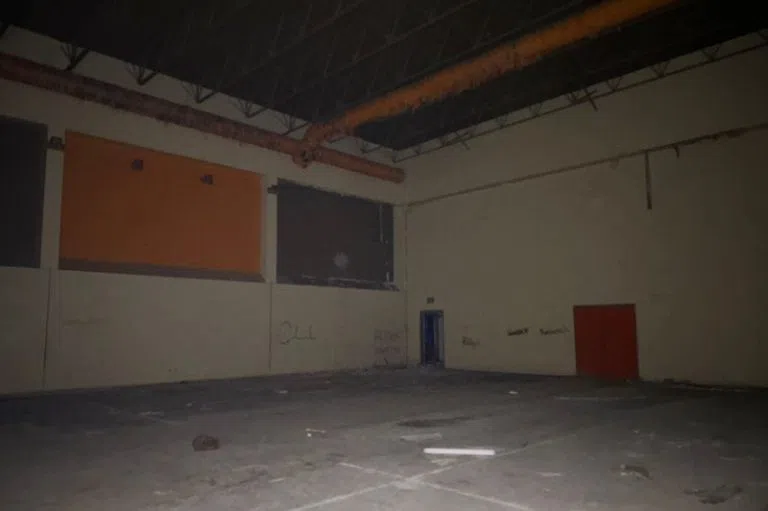
Candu High School contained two gymnasiums, spaces for woodworking and other arts along with dozens of classrooms. (Brittany Caffet/650 CKOM)

Classen moved to La Ronge a couple of years ago, but says nothing replaces the pull of Uranium City.

“Even just landing in here, it gives you that feeling that you’re home,” he said, his voice soft with memory. “Just the way it is.”

So, is Uranium City a ghost town? Maybe to outsiders. But to Classen, the ghosts have names and the empty streets still pulse with the life he remembers.

To him, the town isn’t haunted. It’s home.