Click here to sign up for our free daily newsletter
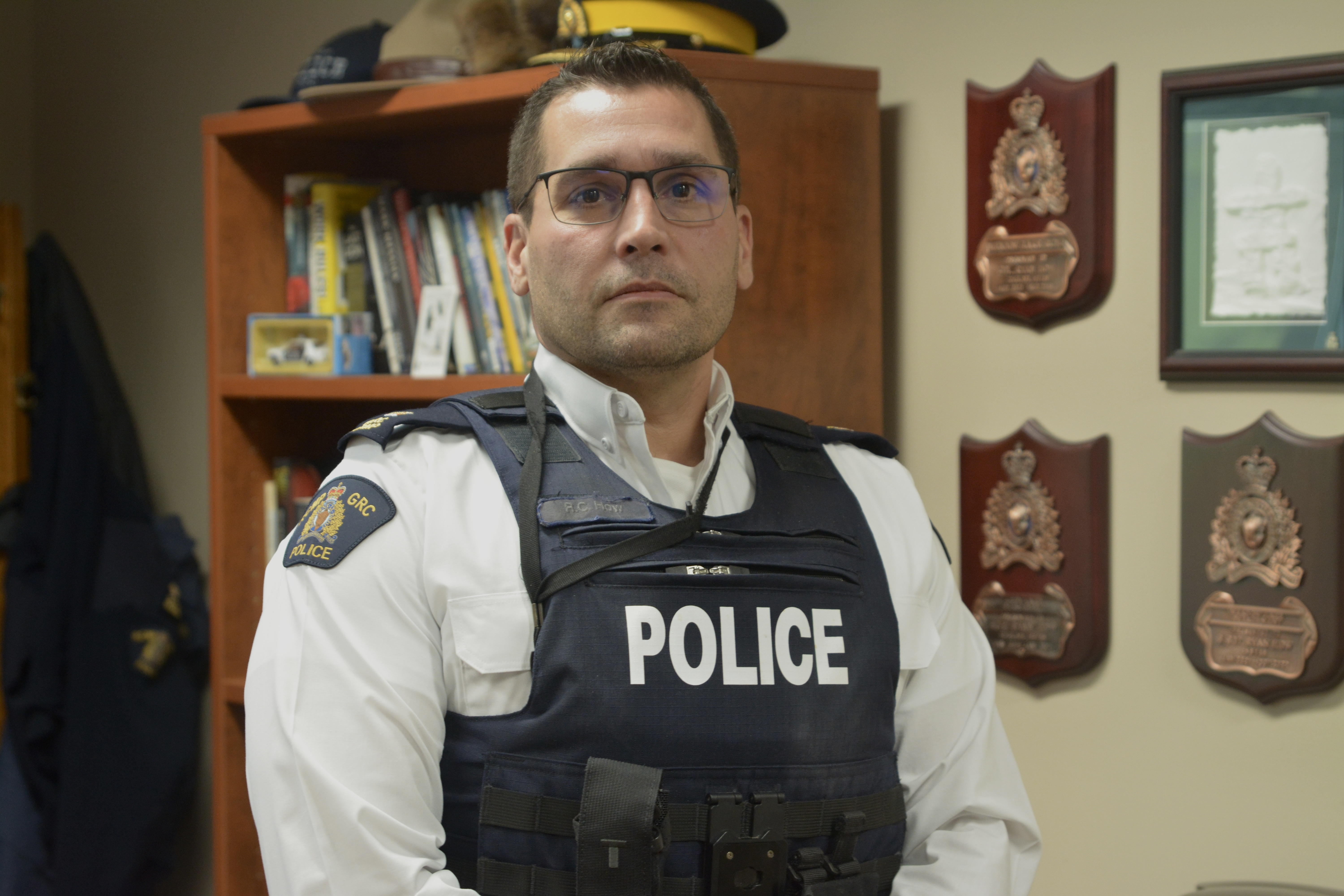
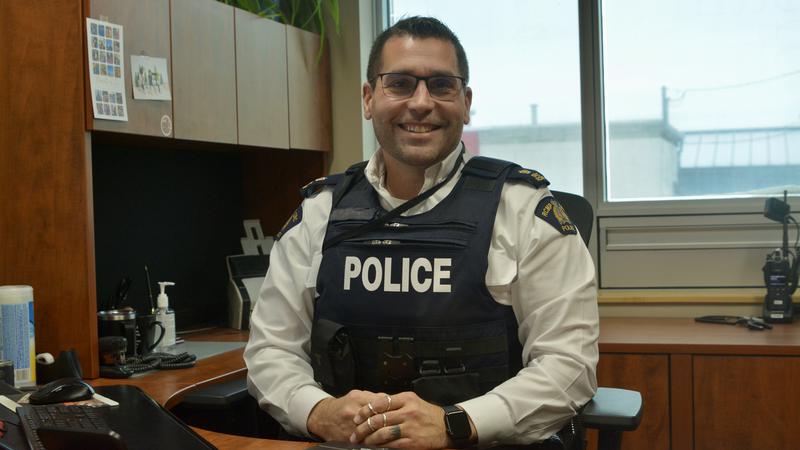
Battlefords RCMP commander Insp. Ryan How poses in his office during a year-end interview with battlefordsNOW, discussing crime trends, officer workload and policing priorities heading into 2026. (Kenneth Cheung/battlefordsNOW)
YEAR-ENDER CHAT

Crime trending downward in the Battlefords as RCMP doubles down on core policing

Dec 26, 2025 | 2:00 PM

Crime in the Battlefords is trending in the right direction. Local RCMP commander Insp. Ryan How said overall calls for service are down three per cent compared to the five-year average, even after what he described as one of the most difficult staffing stretches the detachment has faced in years.

“It’s a very challenging place to police here, but we’re seeing a nice reduction or stabilization of crime trends,” he said.

“We’re seeing a 4 per cent increase over the five-year average [in persons crimes], which is lower than what the province is seeing,” he said, referring to the latest report.

Property crime has also dropped significantly over a longer horizon.

“Five-year percentage change, we’ve seen an 11 per cent decrease in property crime. So, it is significant,” he said.

“There’s always concerns with violence, and we want to hear that the public is feeling safe beyond what the statistics are reflecting.”

Staffing ‘perfect storm’ but detachment “powered through”

How said the year did not unfold as police expected. Staffing levels were strong through the spring and into the summer, but injuries and unsuccessful cadet graduations quickly changed that.

He credited frontline officers with holding the line, but said the strain has taken a physical and mental toll on members.

“We want our members to recover, to rebuild, and to be as professional and responsive to the community as possible.”

He added that despite the challenges, members genuinely care about the community they serve.

“I can assure the public that the members here truly do care about their jobs and truly care about doing what’s right for the public.”

Battlefords RCMP commander Insp. Ryan How poses in his office during a year-end interview with battlefordsNOW, discussing crime trends, officer workload and policing priorities heading into 2026. (Kenneth Cheung/battlefordsNOW)

A frightening stabbing revealed a gap and changed how police communicate

One of the clearest lessons of the year came after a serious stabbing last winter.

“One thing we heard right away, as our members were responding, was that the public was unsure of what was going on, and that identified a gap for us that we’re not providing accurate and timely information to the public,” How said.

He said the uncertainty frightened people who were suddenly seeing a heavy police presence without explanation.

Since then, RCMP have leaned heavily on Voyent Alert and Sask Crime Watch notifications.

“It’s removed a lot of speculation and rumor about what the police are doing,” he said.

“That was part of an overall goal this year as well, to be open and transparent and really be forward facing… to really open the doors and remove the stigma of what people may think about policing.”

Over 600 downtown foot patrols and a push to deal with complex social needs

Visibility and presence were another priority.

“We dedicated over 600 foot patrols through the summer,” How said.

He emphasized that much of what officers encounter downtown is not crime in the traditional sense.

“A lot of the people that we’re dealing with downtown aren’t criminals. They’re suffering from serious mental and addiction issues,” he said. “So, we always try and find the gateway to get those people the help they need.”

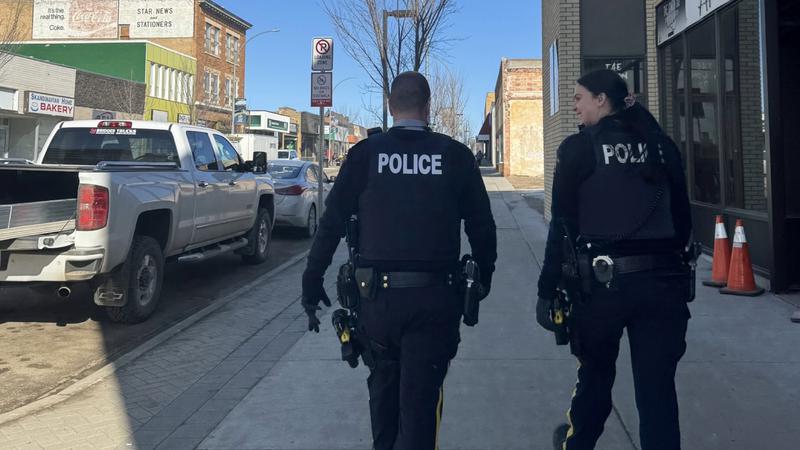
Officers patrol the downtown core. (submitted/ City of North Battleford)

Night patrol strategies also tied directly into property crime reduction.

“We wanted to do our best to address that, and simply driving around isn’t effective,” he said.

“So we went to good old fashioned foot patrols… and we are leveraging some technology… and we’re seeing a nice drop in our property crime statistics.”

Drones are now flying ‘almost daily’ – saving lives and protecting officers

One of the most significant success stories of the year was the detachment’s drone program. How stressed they are not used for curiosity or surveillance.

“They’re used for locating missing individuals, recovery of evidence or looking for suspects,” he said.

Their value has been especially clear during missing-person cases involving youth. In one instance, officers used drones to quickly locate a student who had left the school after threatening suicide, allowing police to search a large area in a short period of time.

Inside high-risk buildings, drones have replaced sending humans in first.

“It’s really mitigated the risk our members face if they have to go in and clear a house that they’re not sure somebody may be inside still,” he said.

“They’re flying almost daily,” he added.

Body cameras bring clarity, accountability and better evidence

The RCMP’s body-worn cameras have also become influential.

“It not only helps us capture evidence and really portray what the police are dealing with and present an accurate depiction of what we’re seeing in court, because just reading a report from a police officer may not fully encapsulate exactly the dynamic circumstances that they’re encountering,” How said.

“It also provides accountability both ways for both the public and the police.”

He said complaints can now be verified against real footage.

The RCMP began rolling out body-worn cameras nationally on Nov. 18, 2024, starting with select detachments.

First Nations relationships

One of How’s personal priorities has been strengthening trust with First Nations leaders.

“We have to be honest with our capacity… but at the same time, we have to be listening to what they want,” he said.

That effort has become deliberately personal, and he makes sure to remain in regular text contact with all Chiefs and council members.

Battlefords RCMP commander Insp. Ryan How, centre left, shakes hands with Red Pheasant Cree Nation Chief Cody Benson, centre right, in a photo taken after a recent meeting with the nation. (Red Pheasant Communications/Facebook)

He said visible trust at leadership levels encourages people to come forward.

“If we can show a strong relationship… that encourages people to trust us more,” he said.

That trust is especially critical in missing-persons investigations.

“We do believe that in a lot of our missing persons files, that somebody knows something,” he said. “So, if we can build those relationships and enhance communication… somebody will talk, and we will be able to bring resolution for the families.”

New RCMP building coming and Sask. Marshals will eventually fit into policing model

Planning continues for the RCMP’s new support services building in the former liquor store site.

“It’s definitely underway,” How said. “It’s going to bring more police officers working around into that building and a training facility as well.”

Meanwhile, discussions continue with the Saskatchewan Marshals Service (SMS) as it prepares to stand up its new regional headquarters in North Battleford early in the new year.

“We’ve had some excellent meetings… the framework’s already there,” How said, noting RCMP already works seamlessly with Highway Patrol and Conservation Officers.

Where marshals will fit will depend on evolving capacity.

“It’s really difficult to give a specific example right now… but definitely as time goes on and their capacity builds, we’re looking forward to whatever partnership they can bring to us,” he said.

Specialized units helped suppress violence and target offenders

How emphasized that policing in the Battlefords isn’t just about local officers.

“We really have to thank our Crime Reduction Team and Gang Task Force partners… the work they’ve done over the last few months specifically has been phenomenal in suppressing crime,” he said.

Their roles are distinct but complementary.

The Gang Task Force focuses on gun and gang-related violence, gathering intelligence, executing warrants and removing offenders and illegal weapons from the streets.

The Crime Reduction Team takes a similar approach but works more overtly, often in marked vehicles, moving into areas experiencing crime flare-ups to help suppress activity and support frontline officers.

The Warrant Enforcement Suppression Team also plays a key role when high-risk offenders need to be located and safely arrested.

Read more ‘It’s a battle’: Battlefords’ top Mountie says repeat offenders straining policing

Looking to 2026

For How, the coming year is about rebuilding capacity, maintaining momentum and deepening trust.

“We want to continue our goal of streamlining our police resources and being as efficient as possible,” he said.

Despite challenges, he remains optimistic.

“We really think that the Battlefords is on to something good,” he said.

Kenneth.Cheung@pattisonmedia.com