Click here to sign up for our free daily newsletter
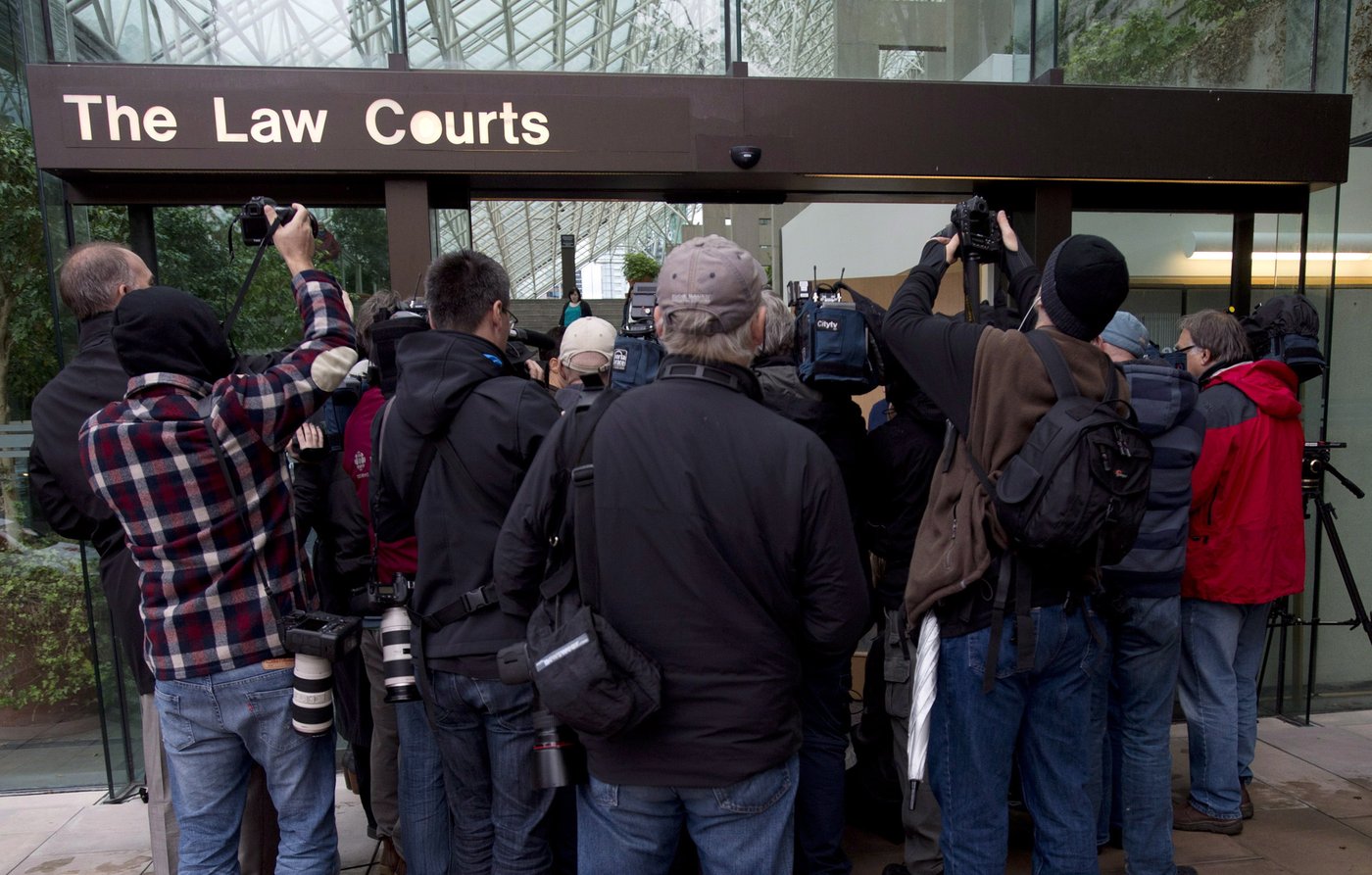
Media gather outside the British Columbia Supreme Court in Vancouver, B.C. Monday, Sept, 30, 2013. THE CANADIAN PRESS/Jonathan Hayward

B.C. judge finds murderer in contempt over ‘inmate code’ refusal to answer questions

Dec 4, 2025 | 4:34 PM

VANCOUVER — A British Columbia judge says a man convicted in the notorious Surrey Six murder case is guilty of contempt of court for refusing to answer questions out of fear of violating the “inmate code” against co-operating with law enforcement.

Cody Haevischer was found guilty of six counts of first-degree murder and one count of conspiracy to commit murder in October 2014, seven years after the gangland execution of six people at a Surrey apartment tower.

Haevischer is challenging his convictions in B.C. Supreme Court, claiming police misconduct amounted to an abuse of process along with “oppressive conditions” while he was in jail awaiting trial.

A ruling from Justice Martha Devlin posted online Thursday says Haevischer was cited for contempt after refusing to answer the Crown’s questions while testifying in July in his ongoing evidentiary hearing.


“Haevischer testified to his belief that violating the inmate code would place his life in immediate danger within jail,” the ruling says.

Haevischer refused to answer questions about the other people involved in the murders, including fellow members of the Red Scorpions gang, citing a “code” among inmates that prohibits co-operation with law enforcement under threat of “extreme violence.”

He told the court that “naming names or co-operating in any way” would make him a “rat” in the eyes of other inmates, knowing his refusal could jeopardize his credibility and possibly cost him his freedom.

“But if I did answer these questions and name names and talk about other people’s roles, it would put my life in danger,” he said. “It would cost me my life.”

Haevischer said it was common knowledge and part of prison culture that “ratting” on someone by giving evidence about their role in a crime is a violation of the “code.”

“You can’t do that,” he said.

The ruling says he then gave his account of the murders, and denied shooting the victims or being in the apartment when the murders occurred, an account “clearly inconsistent with the findings of guilt made against him.”

Justice Devlin says Haevischer also “conspicuously” omitted any mention of another perpetrator known as Person X, who pleaded guilty to three of the killings and the conspiracy to commit the murders.

He refused to answer the Crown’s questions that challenged his “narrative” about the murders, which spurred the citation for contempt, the ruling says.

Haevischer said he was refusing “regretfully” and without disrespect to the court, but was told by the judge that he was expected to answer questions and “your inmate code, as you’ve described it, isn’t a code that prevails in this courtroom.”

The ruling says Haevischer refused to answer the questions, and his claims of being under duress due to the possibility of being harmed or killed by fellow inmates lacked “an air of reality.”

Haevischer, the ruling says, claimed he was presented with an “impossible” choice to either answer questions and be labelled a “rat” or refuse to answer and be found in contempt.

The judge found his claims didn’t demonstrate an “express or implied threat” to support his claims of being under duress.

“He has only invoked the ‘inmate code’ in general terms and has relied on his understanding of the prison environment and the culture that pervades it,” the ruling says. “That is simply an insufficient evidentiary foundation, at law, to ground a defence of duress.”

“To protect the integrity of these proceedings and the justice system as a whole, I am satisfied that Mr. Haevischer’s contemptuous behaviour must be met with criminal sanction.”

This report by The Canadian Press was first published Dec. 4, 2025.

Darryl Greer, The Canadian Press