Click here to sign up for our free daily newsletter
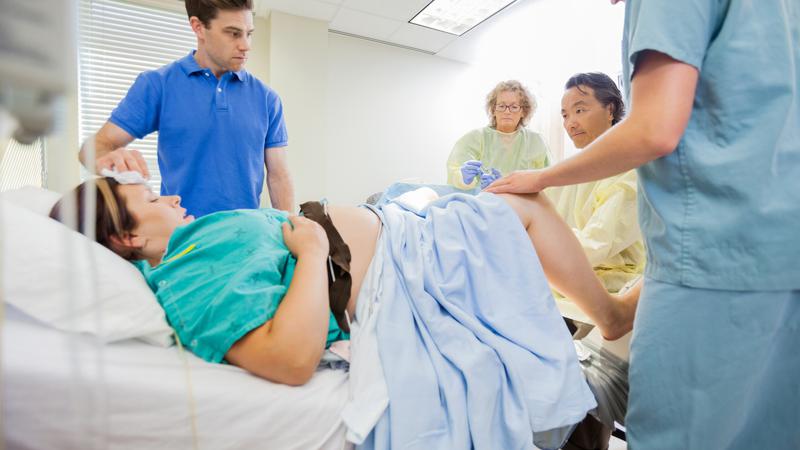
Saskatchewan OB-GYNs are facing more pressure when it comes to workloads. (ID 37130519 © Tyler Olson | Dreamstime.com)
"It's going to get worse."

Challenges in obstetrics and gynecology growing in the province

Nov 3, 2025 | 2:37 PM

An unprecedented move by a group of seven obstetrician-gynecologists in Kamloops, B.C. has those working in the same field in Saskatchewan keeping a close eye on what happens next.

The physicians submitted a joint resignation letter last month, stating safety issues due to a changing workload and the inability to recruit pushed them to a point where they no longer felt it possible to offer in-hospital maternity care. The move has left the health authority in Kamloops scrambling to find replacements and offering OB-GYNs compensation of $7,117 a day, plus after-hour premiums to work at the hospital.

“I think what’s happening in Kamloops is kind of a canary in the coal mine, so to speak. I think the pressures just cut so much for them. They said this is not sustainable, not safe, and chose to do this… but I think it’s reflective of many other parts of Canada,” said Dr. Lynn Murphy-Kaulbeck, president of the Society of Obstetricians and Gynecologists of Canada.

Having locum physicians fill in isn’t a sustainable practice, she said. And, if the problems that led to these resignations aren’t addressed, there will only be more in the future.


“There are already provinces that are experiencing shortages and it’s going to get worse as we continue to see that there’s more and more pressures within the system,” she said.

Saskatchewan is ‘reasonably well staffed’ when it comes to OB-GYNs, according to the Provincial Department Head of Obstetrics and Gynecology, Dr. Joanne Sivertson. There is a struggle, however, when it comes to recruiting sub-specialists like those in the maternal fetal medicine group, which take care of the highest-risk pregnancies.

“Without our high-risk pregnancies supported, that load comes even heavier on the remaining obstetrician-gynecologists across the province and the few maternal fetal medicine specialists that we have continue to feel increasing strain and pressures to get people seen,” Sivertson said.

“This is a time-limited specialty. As you can imagine, we only have so long to act on the issues that arise, and so we don’t have the luxury of allowing wait lists to grow.” – Dr. Joanne Sivertson

According to the Ministry of Health, there are currently nine job postings for specialist positions in Regina, Saskatoon, and Moose Jaw. As of March 2025, there were 102 licensed OBY-GYNs in the province – that’s in addition to family physicians, who may also offer maternal care services.

“For example, the now-retired Dr. Lalita Malhotra practiced family medicine in Prince Albert, and also provided obstetrics care. This is common in a number of centres across the province, as part of the care provided to expectant mothers,” the ministry wrote in an email to paNOW.

But Sivertson said they’re actually seeing fewer primary care physicians in Saskatchewan wanting to participate in obstetrical care, leading to an increasing load on the specialists.

“We’re also struggling with supporting services. We’ve seen fewer and fewer ultrasound techs available, for example. Our rural and regional sites especially are struggling to stay open. We’re seeing fewer rural sites providing obstetrical care, or at least, consistent obstetrical care. We’ve had more service disruptions over time, and we are struggling to ensure patients can continue to deliver as close to home as possible,” Sivertson said.

Addressing the challenges OB-GYNs face will have to be a multi-faceted approach. Sivertson would like to see better supports for primary care providers to re-engage or continue to participate in obstetrical care, and more training sites in subspecialties and support services. She said there also needs to be a more concerted effort to sustain services, not only in tertiary and regional centres, but also in rural centres.

“If we collapse down to only our larger centres… our centres are not designed to handle that capacity, and that’s where we could run the risk of seeing closures of communities maybe the size of Kamloops.”

Adding relief from other specialists across the country isn’t simple, since medical licensing is done provincially. Murphy-Kaulbeck said that process needs to be reviewed.

“We don’t have a pan-Canadian licensure. So, if somebody in Nova Scotia wants to go help another province, like B.C., they have to get a license in B.C. They have to get their credentials at the hospital in B.C. It can be an onerous process, and it can take a long time,” she said.

The Saskatchewan Ministry of Health said recruitment of specialist physicians is a key focus of the government’s Health Human Resources Action Plan. It referred to Dr. Tin-Wing Yen, who works in North Battleford, as a successful example of retaining specialist physicians in the province.

While OBY-GYNs in the province keep a close watch on what happens next in Kamloops, Sivertson said there is a way the public can help reduce the workload. She said they’re seeing an increase in the number of patients who have had no prenatal care, or extremely limited prenatal care, and that puts stress on emergency care providers.

“We don’t have ultrasound technologists in the middle of the night. We feel like we have limited information and the pregnancy risks are so much higher when we can’t help mitigate problems as they possibly arise – so, to our patients in the communities… please go seek prenatal care,” Sivertson said.

“It’s so important for you, for your baby, and even for the care that we can provide you to make it as safe as possible.”