Click here to sign up for our free daily newsletter
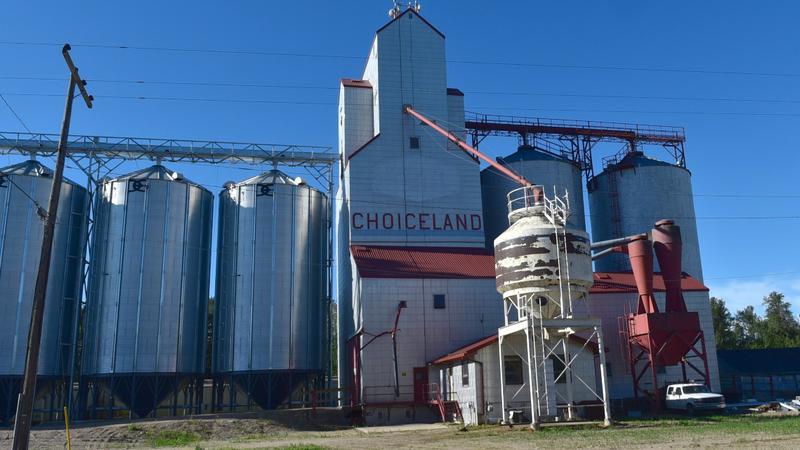
About 40 kms of land between Choiceland and Nipawin are one of the top locations for mining naturally occurring hydrogen. (Susan McNeil/paNOW)
Mining development

Hydrogen mine plan includes 40 km stretch between Choiceland and Nipawin

Oct 29, 2025 | 2:11 PM

A Canadian first could impact northern Saskatchewan, especially the area between Choiceland and Nipawin, according to Max Power, a junior mining company now based in Saskatoon.

Chad Levesque oversees investor relations for the company and told paNOW Saskatchewan, including parts of the North, has a lot of naturally occurring hydrogen.

“Saskatchewan’s got some very unique basement structure geology that’s very favourable for the production of naturally occurring hydrogen,” he said.

While it is not at the top of the list, the area between Choiceland and Nipawin is not that far down either.

“That’s something we’ll be developing here in the short-term future,” Levesque said.

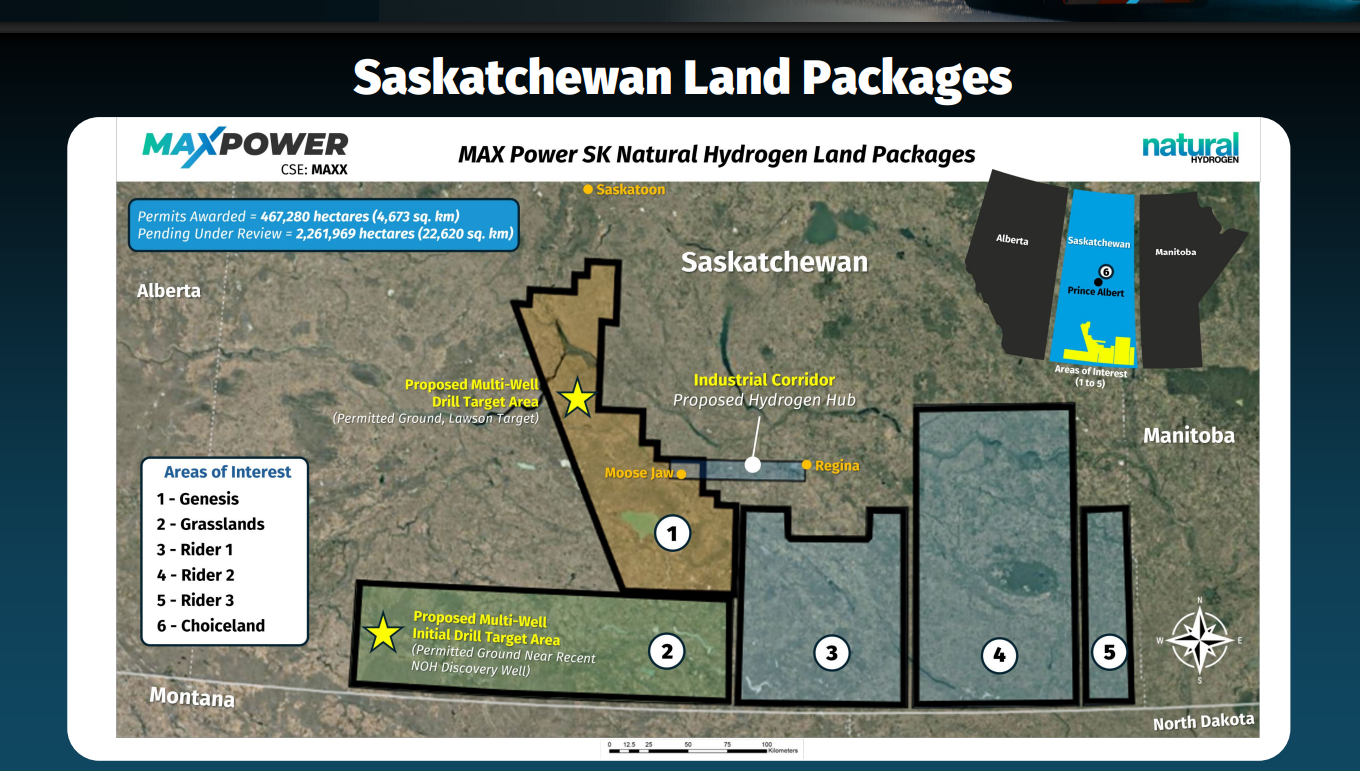
The Choiceland area does not show because it is too far north, but is listed as on of the top locations for hydrogen mining by Max Power. (screenshot/Max Power website)

Hydrogen is already used in many industries, including the creation of ammonia for crop fertilizers.

It serves as fuel for power production and generating heat for buildings. One of its attractions is that it burns clean and reduces greenhouse gases.

READ MORE: Government of Canada has a list of uses for hydrogen.

Manufacturing hydrogen means that GHGs are created, and the expense is higher so having a natural source address both of those concerns.

“Naturally occurring hydrogen is hydrogen that comes from the sub-surface of the earth, so Mother Nature is doing the work,” said Levesque. “It’s a brand-new energy, first new clean energy, really in decades, and Saskatchewan is one of the world leaders developing it.”

Max Power has drilling permits for 1.3 million acres right now and is working on another 5.7 million acres. The permits are for helium and associated gases, which included hydrogen.

The first two wells are set to be drilled in the ‘Lawson Target’ near Moose Jaw. The Lawson Target is part of a larger geographical zone called the Genesis Trend, which stretches 200 kilometres long in a north/south direction.

“This will create a lot of new jobs in the energy field and really open up a new enterprise of opportunities in the province. We do have a play very close to Prince Albert,” Levesque said.

A 40 kilometre-long area between Choiceland and Nipawin has the potential for stimulated hydrogen.

“When you have large iron formation that are rich in specific minerals, like magnetite, you can stimulate that iron formation to produce naturally occurring hydrogen and that’s one of our projects that we’re looking at in the Choiceland region,” Levesque said.

While hydrogen sources may be in Saskatchewan, a significant market for selling is in Europe and Asia where clean energy has been a priority for a longer period of time.

“The European Union is a little bit more advanced from an infrastructure standpoint in the hydrogen ecosystem. Places like Japan, parts of Asia are definitely…three to five years ahead from an infrastructure rollout standpoint,” he said.

Right now, over half of hydrogen produced is used to make ammonia which is used as fertilizer and a refrigerant and is worth about $250 billion per year.

“It’s a massive industry and it requires hydrogen to produce ammonia,” Levesque said.

“That’s one thing that we’re really excited about here in the province. If we can make a natural hydrogen discovery, we’d be one of the first countries in the world, one of the first provinces ever to be able to produce green ammonia and green methanol.”

In Alberta, they blend hydrogen with natural gas for cleaner home energy.

Saskatchewan has about 17,000 kilometres of distribution lines which transport natural gas as the primary home heating source. Being able to add 10 to 15 per cent hydrogen would have a big impact on reducing the province’s carbon footprint.

Natural hydrogen is cheap.

The current price for natural hydrogen is about $1/kilogram, which makes it comparable to natural gas prices.

When hydrogen comes out of the ground, it is a gas but can then be compressed into a liquid and transported by truck or pipeline, the same as natural gas.

“It’s the exact same technology and the exact same drill rigs that are utilized in the natural gas industry, utilized in the helium industry,” Levesque said.

While their first well is scheduled to be drilled on November 4, Max Power is confident enough in its success that they moved their operations from Vancouver to Saskatoon.

They may be the first company in Canada to drill for natural hydrogen, but they likely won’t be the last as about 150 companies are currently pushing to do the same. Of those, five about five have reached the point where they are ready to drill.

“So this is something that is right in the very early stages of development, but we’re very excited to be a leader in the space, and Saskatchewan’s got some of the most unique geology in the world for the development of natural hydrogen.

So it’s pretty cool that it’s right here at home, right in our backyard.”

susan.mcneil@pattisonmedia.com

On BlueSky: @susanmcneil.bsky.social