Click here to sign up for our free daily newsletter
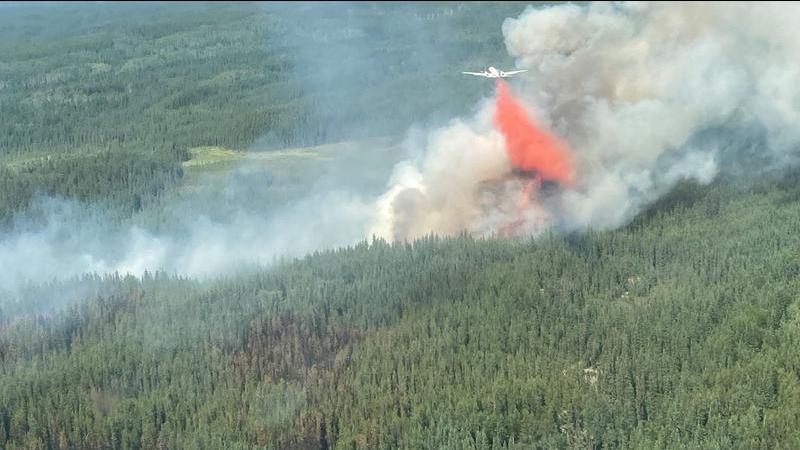
As wildfires destroy peatland, there are fewer areas people can use such ecosystems and further pressure on areas where they can. (Saskatchewan Public Safety Agency)
Muskeg Feature

Peatlands destroyed by wildfires in 2025 equal to fossil fuels burned by Canadians

Sep 15, 2025 | 6:00 AM

Peatlands, also commonly known as muskegs, are an important part of the eco-system in Northern Saskatchewan and many other parts of the world. They not only provide a crucial role in maintaining the carbon capture cycle where they exist, but they are also essential to the plants and animals native to these regions, as well as the people who rely on them to continue their traditional way of life.

The following is part of a four-part series of articles that focus on peatland and the impact they have on us all.

Wildfire emissions in 2025 are on track to be equal or greater than the emissions Canadian generate through fossil fuel usage each year.

Much of the reason for the large amount of emissions is due to the burning of peatland environments across the country. University of Alberta peatlands researcher and assistant professor David Olefeldt is an expert in the subject, and he said peatlands destruction contributes 90 per cent of the emissions released during a wildfire.

“Only a small amount of the carbon that is released through combustion is the trees and the plants you are seeing above ground,” he said.

“Wildfires can burn off per square meter anywhere from half-a-kilogram to three-four-five kilos of carbon per square meter in a peatland.”

Olefeldt explained northern peatlands cover three per cent of the global land area, but they store about 25 per cent of the global soil carbon. That’s because the plant material that accumulates in peatlands decomposes very slowly, which is the result of the waterlogged conditions where oxygen doesn’t get under the water table. As plant material such as mosses accumulate year-by-year, carbon becomes captured and buried.

“They are one of the largest carbon stores in the world, so they have provided this ecosystem service to us for a long time,” Olefeldt said.

“They had a cooling effect on the climate by taking carbon dioxide out of the atmosphere and storing it in the soil carbon, and ideally we would want that to continue to not revert into where peatlands are sources of carbon dioxide to the atmosphere which in turn creates this feedback loop where it actually amplifies the rate of warming.”

The rate which peatlands can become a source of wildfire emissions can be determined either through satellite observations or measurements by taking soil samples from the surface. Olefeldt noted burnt peatlands can become sources of emissions for several years and can also become a home to what’s called zombie fires, which can smolder throughout the winter and then restart as an above ground wildfire in the spring.

University of Saskatchewan Lecturer and Renewable Resource Management Program Coordinator Bryan Mood also spoke of the importance of peatlands as a carbon sink. He teaches an undergraduate course specifically focused on forest soils, which examines peatland environments, especially ones that are culturally significant to local communities.

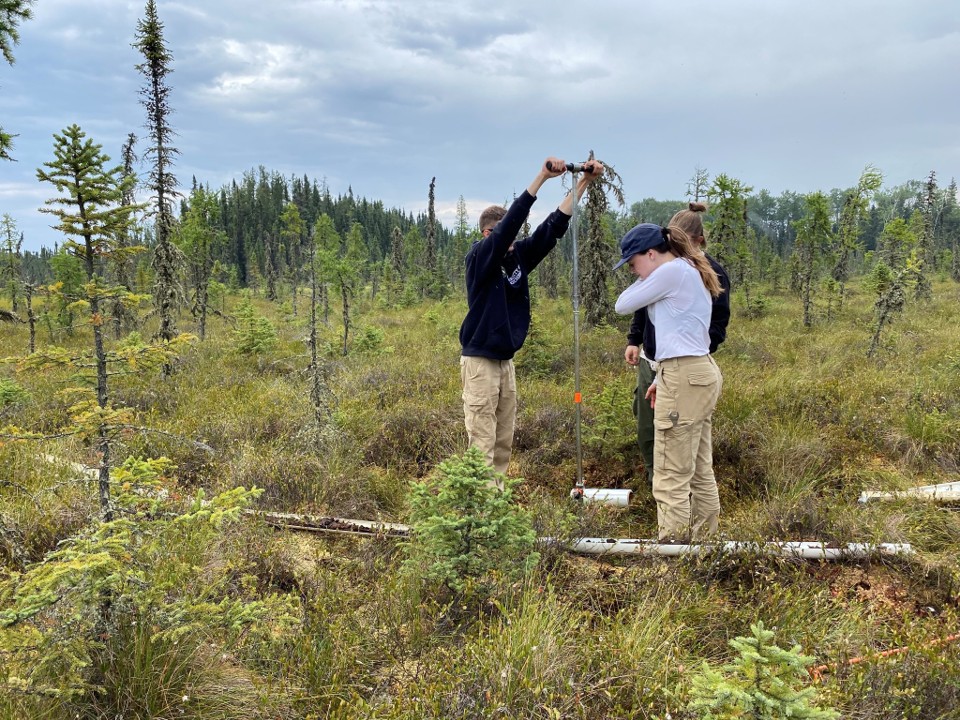
Bryan Mood and his students visit a Saskatchewan peatland every year to collect samples. (Submitted photo/Bryan Mood)
Plant surveys and core samples help to understand the plant communities and how much carbon is being stored. (Submitted photo/Bryan Mood)

“When we look at peatlands, they are actually a critical terrestrial carbon sink,” Mood said, stating they store between 400 and 550 gigatons of carbon across the world.

“Those peatlands in terms of its ecosystem services to carbon have been well established as one of the world’s largest terrestrial carbon sinks, but on the other side of it, those systems provide a lot of services to local communities through things like water filtration or different types of food and habitat for things like woodland caribou or a number other species and bird species as well, so very important in the general ecosystem of Saskatchewan.”

As wildfires destroy peatland, Mood said that means there are fewer areas people can use peatland and further pressure on areas where they can. Protecting those spaces, particularly for Indigenous people, is critical to maintaining traditional practices.

derek.cornet@pattisonmedia.com