Click here to sign up for our free daily newsletter
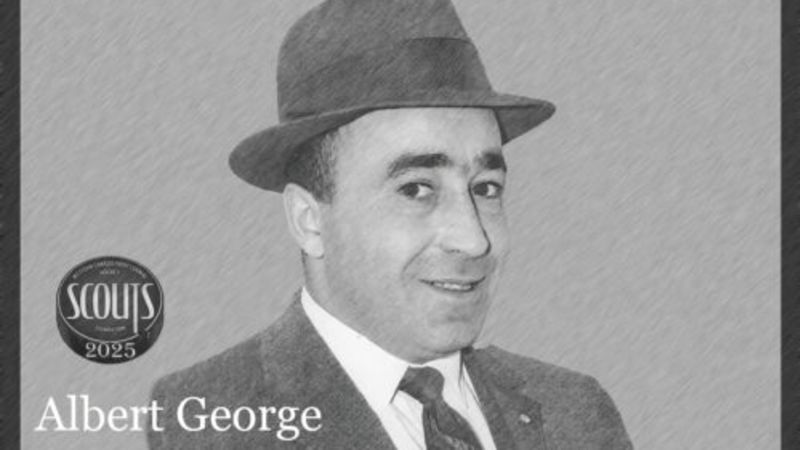
Born in North Battleford, Albert E (Jeep) George worked with the New York Rangers, NHL Central Scouting and Hartford Whalers. (Western Canada Professional Hockey Scouts Foundation/Website)
HIDDEN GEARS THAT KEEP HOCKEY RUNNING

North Battleford’s ‘Jeep’ George honoured as scouting legacy

Aug 16, 2025 | 7:00 AM

It was the nickname that came first.

During the Second World War, Albert George could often be found behind the wheel of a battered military Jeep, hauling aircraft parts across town to keep planes in the air.

The name stuck for the rest of his life — “Jeep” to everyone who knew him — and followed him from wartime service into the rinks and bus rides of a lifetime spent in hockey.

Four decades after his death in 1985, that name has been etched onto the Western Canada Professional Hockey Scouts Foundation’s Wall of Honour, alongside 29 other scouts whose work shaped teams and careers from the shadows.

Jeep’s son, David George, accepted the honour at a July 29 ceremony in Okotoks, Alta., where his father became the fourth inductee from the Battlefords area, joining Al Tuer, Graham Tuer, and Ron Delorme.

“It’s amazing. Honestly, it’s amazing,” David said.

“The man worked very, very hard his whole career that he worked as a scout. He worked very hard at everything he did. He’s just one of those guys. He was one guy that if you asked him to do something, he’d be more than happy to help.”

A career built on the love of the game

Jeep’s hockey story started long before the National Hockey League (NHL) came calling. In 1954, he and his brother helped launch the Beaver Bruins junior team in North Battleford, which fed players to the Estevan Bruins and, in those days before the draft, to the Boston Bruins.

In 1969, Emile Francis, then coach and general manager of the New York Rangers, tapped him to scout Western Canada. Over the next 15 years, Jeep covered hundreds of games each season — for the Rangers, NHL Central Scouting, and the Hartford Whalers — from small-town barns to big-city arenas.

“My dad used to see 200 hockey games a year,” David said.

“So you figure that out — that’s 200 days out of the year, all those days travelling and everything else. And then you write reports for every kid in Western Canada… So you’re writing reports all the time, you are going to hockey games and fittings all across Canada and into the United States.”

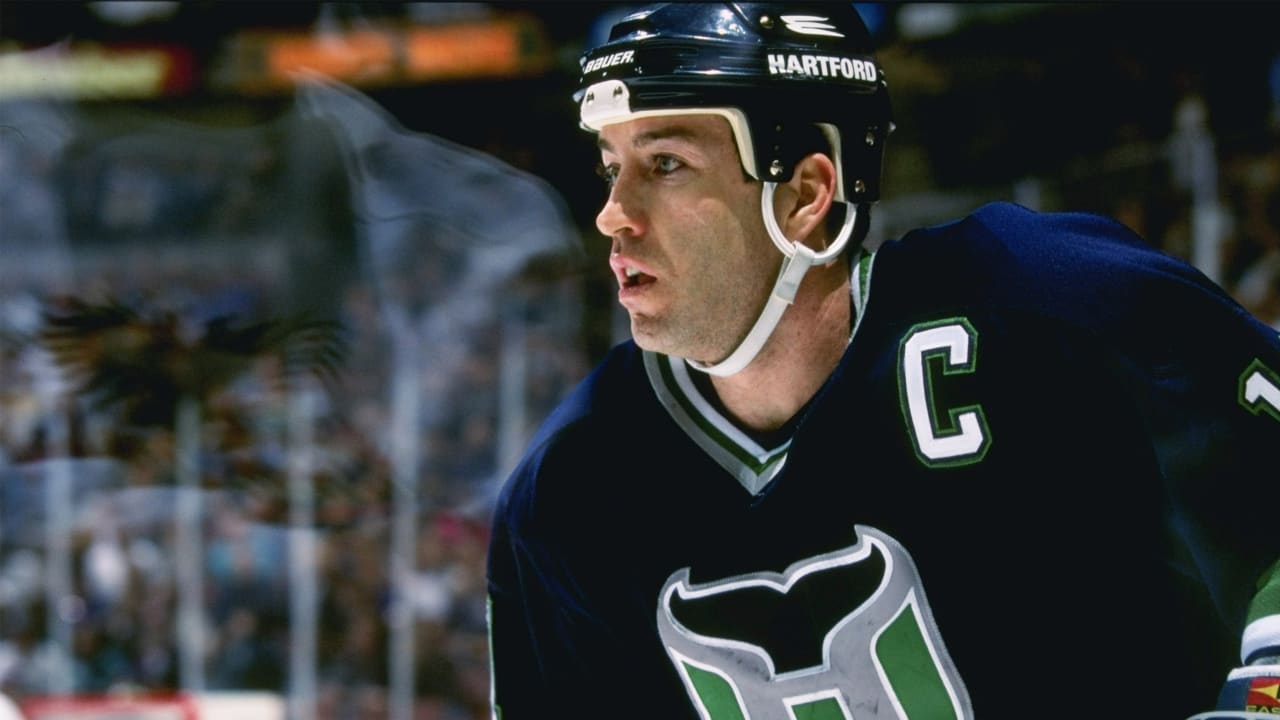
One of those reports was on Kevin Dineen, an “undersized fellow” who still became a 40-goal scorer in the NHL.

“He just loves the craft. He loves working at it,” David said.

Dineen spent the bulk of his NHL career with the Hartford Whalers, and also played for the Philadelphia Flyers, Carolina Hurricanes, Ottawa Senators, and Columbus Blue Jackets.

After retiring as a player, he moved behind the bench, serving as head coach of the Florida Panthers and later as an assistant coach with the Chicago Blackhawks. He then became head coach of the American Hockey League’s Utica Comets.

Kevin Dineen (NHL/website)

Hockey ran through the George family: David played and coached, his son Michael spent three years with the Battlefords North Stars, and his daughter Brittany played for the University of Saskatchewan Huskies before becoming an SJHL referee.

“When I say things like that, you always gotta thank the wife (Janet)… and my mother (Joyce) was also a big, integral part of the whole situation,” David said.

The Wall of Honour’s mission

For Garth Malarchuk, chair of the Western Canada Professional Hockey Scouts Foundation and a Toronto Maple Leafs scout for over 30 years, the Wall of Honour is about recognizing the people without whom championships rarely happen.

“Scouts aren’t put in the Hockey Hall of Fame,” Malarchuk said.

“If you don’t have good scouts as a hockey team, you usually don’t have a good team… So the scouts are important. They’re the bloodlines of usually whatever team they’re working for. So it was our way of recognizing, honoring these guys so that they wouldn’t be forgotten.”

The Wall — a seven-by-12-foot video display in Viking Rentals Centre in Okotoks — features photos and biographies of each inductee. Since 2023, 75 scouts have been honored, chosen by a committee of veteran scouts.

When it comes to Jeep George, Malarchuk’s memories go back to his own playing days in the Western Hockey League in the 1970s.

“I still remember seeing George at a lot of the games… because as a player, you notice ’em, when you’re warming up and whatever, you see the scouts sitting up in the stands,” he said.

“They were all great guys. They were so good and they helped us [and] they were so helpful with learning the scouting process… we used to travel together a lot with these guys and hear the stories about the old days… They were always fun.”

“We don’t want these guys to be forgotten and they shouldn’t be forgotten.”

Finding the forgotten

Behind the Wall of Honour is its memory-keeper, Gregg Drinnan.

A former sports reporter and editor with the Kamloops Daily News and Regina Leader-Post, Drinnan spent more than 40 years in newspapers. He now digs into archives, phone books and social media to identify scouts and track down their families.

“Over a matter of a couple of months, they (the foundation board members ) came up with a master list… and then I just subscribed to a place called newspapers.com and doing a lot of research through there,” Drinnan said.

“Through that and through NHL teams, through other scouts, just track down information.”

The criteria: generally 20 years or more in scouting, though shorter careers with exceptional dedication are also considered. Once an inductee is confirmed, the next challenge is finding living relatives — sometimes decades after the scout has passed away.

“We’ve been very fortunate… we’ve been able to find somebody every time,” Drinnan said.

“We’ve never decided to induct somebody and then said we’re not going to have anyone there for his family, so let’s stroke him off… it’s strictly, okay, here’s the 30 who are going in, let’s go find their families.”

Drinnan said Jeep was an easy choice for the “pioneers” category — a man whose scouting career began in the pre-draft era when NHL teams relied on affiliate junior clubs.

“You think of how we travel now… it wasn’t like that back in the 50s and 60s… I can’t imagine what it was like driving in the winters on gravel roads and the blizzards and freezing temperatures and all that kind of stuff night after night after night… but these guys did it.”

For David, seeing his father’s name displayed in Okotoks isn’t just about recognition, it’s about legacy.

“It’s really awesome that they actually have started something like this and just given recognition to those people that actually work so hard to make the National Hockey League and hockey in general a better thing… giving the young guys an opportunity to play at better levels.”

Kenneth.Cheung@pattisonmedia.com