Click here to sign up for our free daily newsletter
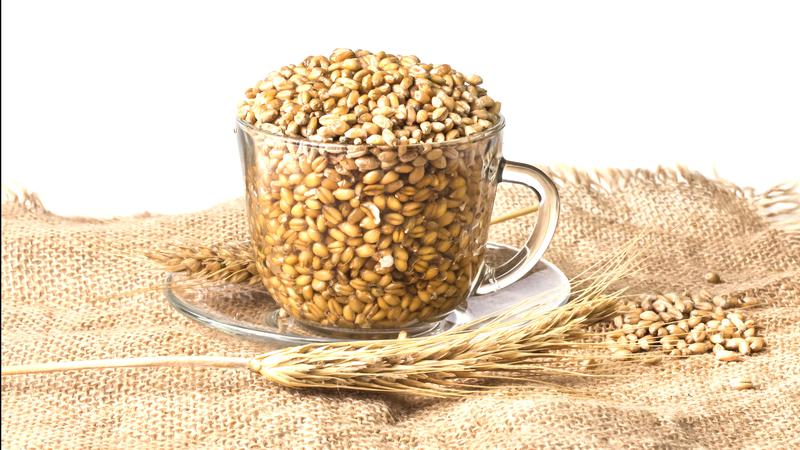
(ID 86277963 © Oksana Stepanova | Dreamstime.com)
Farmers on tariffs

‘Destabilizing’: Grain farmer; Cereals Canada brace for uncertainty amid tariff threat

Feb 4, 2025 | 4:34 PM

Uncertainty.

That word and feeling has become a unifier across the country since US President Donald Trump threatened tariffs on Canada.

“That’s really what the biggest problem right now is, there’s no certainty in the market, there’s no guarantee that these tariffs won’t be put on,” said Jeremy Welter, one of the vice presidents of the Agricultural Producers Association of Saskatchewan.

“Its destabilizing is what it is,” he said.

“It calls into question the investment that you’re putting into the fields every year as far as…your seeds, your chemicals, your inputs, your fertilizer, there’s no value in what we produce if the markets aren’t willing to take it or if everything we sell ends up trading at a hypothetically a 25 per cent discount.”

According to Leif Carlson, director of Market Intelligence and Trade Policy with Cereals Canada, they support the bi-lateral relationship that has been 90 years in the making.

“For cereals, grains and food products that are made from them, those are food that people eat,” he said.

“The imposition of unnecessary tariffs really will contribute to food inflation and higher prices and…at the same time, causing negative impacts for farmers and food processers and customers.”

Carlson explained that the US, generationally, has been an important customer.

“They’re our sixth largest customer for non-durum wheat, fourth largest for durum wheat, second largest export market for barley, and the largest market for oats,” he said.

“All those crops would be grown around Battlefords and Saskatchewan is a key producer of all of them.”

80 per cent of durum wheat for example comes out of the province and Carlson said trade disruptions will be felt.

Welter, who lives and works on his family farm near Kerrobert, roughly 1.5 hours from the Battlefords, said while it’s important to be aware of what labels like “Made in Canada” versus “Product of Canada” mean: roughly 51 and 90 per cent respectively, it was perhaps time to look to other markets.

“We have quite literally as a nation spent the last 90 years doing everything we can to eliminate a Canadian-only product,” he said.

“We’ve worked very hard in what has been by and large, a beneficial long-term relationship with the United States to become specialists.”

When it comes to the Western provinces’ ability for growing and producing grains? Welter said they’re second to none.

“In my opinion, I think we do it better than anywhere else in the world.”

According to the 2024 Farm and Food Prices Report, consumers are paying more while farmers are seeing less. For example, beer – made of hops and barley – experienced a 21 per cent increase in retail value and a – 3 per cent decrease as a commodity share.

“Saskatchewan as a microcosm, we are an exporting province,” he said.

“We wildly out produce what our population can realistically use.”

As such, Welter said the country has grown complacent and there is a need to see it at the “wake-up call that it is,” thus the need to expand horizons.

Carlson agreed about taking this as a wake-up call and said people didn’t think something like a trade war could happen between the Canada and the US. He explained it wasn’t long ago when Canada joined the US and Mexico to renegotiate the North American Free-Trade Agreement into what would become the Canada-United States-Mexico Agreement (CUSMA).

“At that time as well, there was a concern about how that relationship was going to play out and what ways Canadians could communicate to the US and the US officials,” he said.

“One of the things that was effect then was talking to people at the state level, whether it’s red states and blue states and certainly both.”

As it stands now, although there has been a month-long pause on Trump imposing the tariffs, Carlson said there’s a lot of anxiety around what may happen.

He explained that thinking back to just yesterday morning when the tariffs – at a per centage he called “unusual” – were in place and should it happen again, it may mean a decrease in supply.

“For every tonne of Canadian wheat or oats that moves down to the US, that the US buyer would have to pay that tariff on that shipment,” said Carlson.

Looking ahead, the director said looking for other interested parties within the US about the importance of trade between the countries that make up North America.

“We certainly think that having Americans talk to Americans about this is going to be more impactful.”

On Monday, U-S President Donald Trump agreed not to impose tariffs on Canadian imports until March 4th after striking a deal with Prime Minister Justin Trudeau.

Trudeau presented Trump with Ottawa’s plan to secure the border and tackle drug trafficking, but some aspects of the plan will need legislative changes passed by Parliament.

julia.lovettsquires@pattisonmedia.com

On BlueSky: juleslovett.bsky.social

— with files from the Canadian Press