Click here to sign up for our free daily newsletter
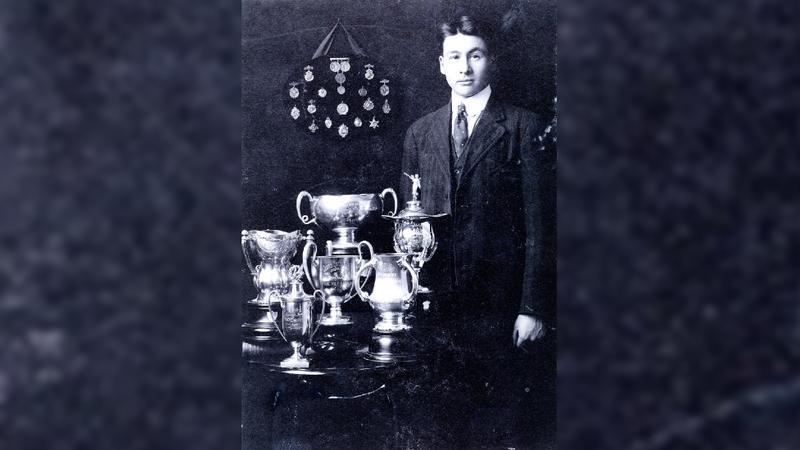
Alex Decoteau stands among his medals. (Submitted Photo/ Edmonton Police Service)
Decoteau Update

Decoteau family members to attend Passchendaele ceremony for fallen veteran

Sep 4, 2024 | 5:00 PM

When Michelle Decoteau was upgrading her education as an adult, she was given a book. Inside was a story about a man who achieved much in his 29 years.

Canada’s first Indigenous man to become a police officer, an Olympian and a war hero. However, this was not the first time she had come across this man and his storied, though albeit too short life. In fact, they shared a history and a last name.

“I knew growing up and heard of him through my grandpa and the stories at the kitchen table when we used to go out there,’ she said.

That man was her three-times great uncle Alex.

Now, the grassroots effort to honour Alexander Wuttunee Decoteau, who was born on Red Pheasant Cree Nation in 1887 and was struck by a sniper and fell near the Passchendaele Ridge in October 1917 is one step closer to fruition. A Canadian delegation is currently in development and will feature members of Decoteau’s family, will be traveling to Ypres to take part in Remembrance ceremonies in November.

“We’ve just become custodians of memorials and important tributes,” said Corinne MacLellan, honorary lieutenant colonel with the Halifax Rifles, referring to the organizers and the Passchendaele Society 1917, who started the project.

“I can’t think of a greater thing to do as a Canadian to pay homage to these people who made the ultimate sacrifice.”

Among the delegation will be Rick DeCoteau, great-great nephew of the runner who was once presented a gold pocket watch by King George V, said the family is now talking to each other and making decisions, though it took time.

“The emotions are basically pretty high right now,” he said in a phone call from his B.C. home.

He explained that over the years, whenever there was an event honouring his kin such as Alex Decoteau Park or other dedications throughout Edmonton where he served as a police officer in the early years of the 20th century, the younger DeCoteau was in attendance.

“Being born on the Red Pheasant reservation and then getting to where he got to….and then over time, people actually started recognizing who he was, what he’d done,” he said.

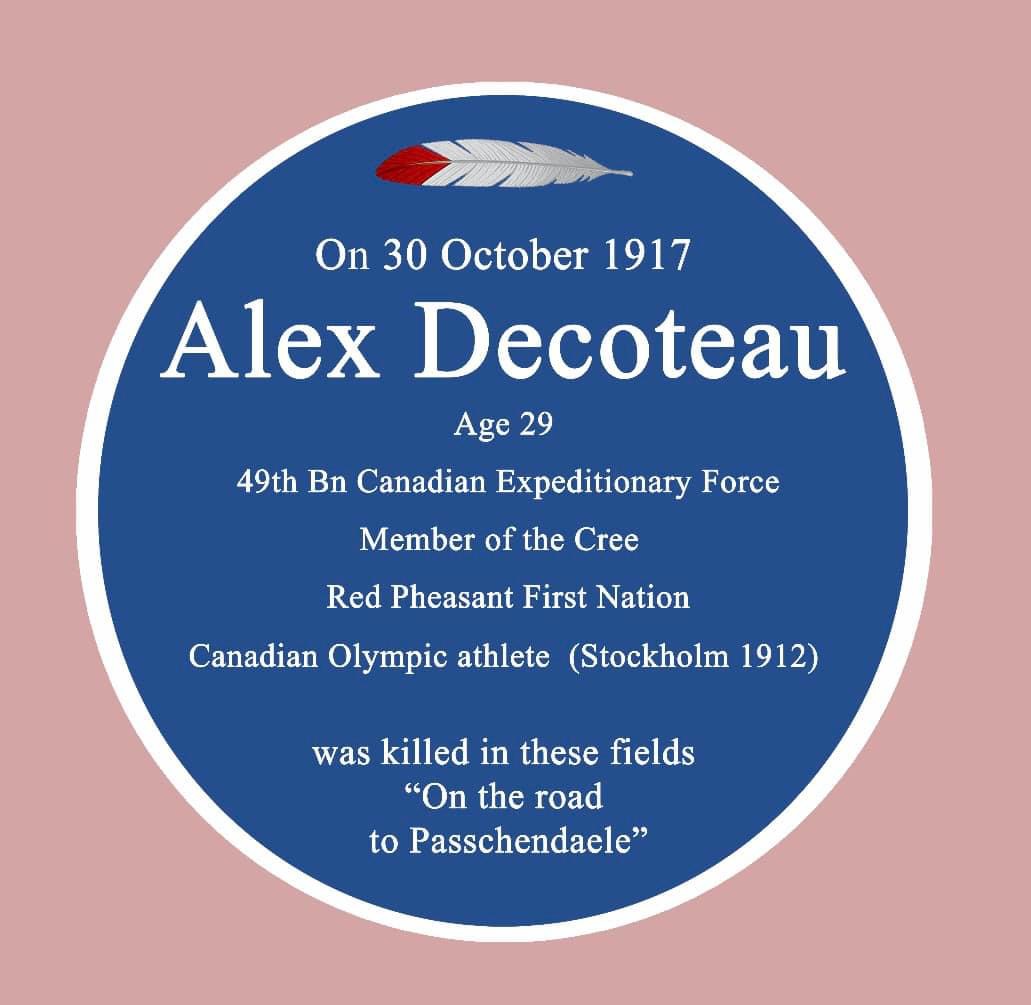
A mock up of the plaque. (Submitted/Corinne MacLellan)

That recognition from his adopted community and his legacy is still present within his former police force – once that Christa Laforce, corps sergeant major – said has been a progressive unit since its inception.

“It’s very humbling to know that even back then, times were certainly different, that we were still out in front…making those paths for future members,” she said, noting they also had the first female officer in Alberta in 1912.

Laforce, who is currently working out logistics to join the delegation, said that while she doesn’t know whether the members at the time thought about an emphasis on diversity, she said there was a recognition of Decoteau’s skills.

“He was a valued member of the organization,” she said.

“A short two years later, he was promoted to sergeant – although I appreciate not as many people back then – but that says something,” Laforce added.

Although the plaque will bear Decoteau’s name, it is in fact dedicated to more than 4,000 Indigenous soldiers who served in the Great War at a time when their home country didn’t want them. The trip will also honour Sam Glode, a highly decorated Mi’kmaq soldier who received the Distinguished Conduct Medal and members of the Mi’kmaq community will join the delegation.

While the itinerary is still being finalized, part of it will include a trip to Essex Farm Cemetary where John McCrae penned his poem, ‘In Flanders Fields,” a visit to Passchendaele Tour and Museum, a celebration of Indigenous Veterans Day, Trace Sam Glode Steps Day from Ypres to Messiness, Blue Plaque (which has undergone slight design modifications) dedication and Ypres Remembrance Day ceremonies.

According to MacLellan, one of the more powerful moments on the agenda will be when delegates see the graves.

“When you find your person it’s very emotional,” she said, noting there’s a sense of grief, pride, curiosity.

“You’re going back in time and it’s a strange thing ‘cause it’s a quiet understanding and a moment of silence.”

Meanwhile, Decoteau’s great-great-great-niece said while she can’t make the trip over to the battlefields, she commends the Passchendaele Society 1917 on their work.

“I think whatever they’re doing in finding bits and pieces of history and acknowledging them and the people,” she said.

“I think that they’re a great asset in our history and in our future making sure these last bits of gems aren’t forgotten.”

julia.lovettsquires@pattisonnedia.com

On X: jls194864